The Missouri Supreme Court rules shape how courts work throughout the state. These rules create a structure for civil procedure, criminal procedure, and small claims court proceedings. The state’s highest court enacts and modifies them through direct orders.
Major changes to these rules will take effect on July 1, 2025. Legal professionals, business owners and anyone dealing with Missouri’s court system need to learn about these rules, especially when handling civil procedure cases. The new modifications will affect time calculations, pleading requirements and the process for default judgment. The rules about withdrawing from representation (Missouri Supreme Court Rules 4-1.16) will also see key updates that lawyers must follow.
This piece breaks down Missouri’s rules of civil procedure, contempt provisions, and guardian ad litem requirements that shape legal cases statewide. You’ll learn about how these rules affect daily legal work and what changes to expect in 2025.
Table of Contents
- 1 Understanding the Missouri Supreme Court Rules
- 2 Where to Access the Rules in 2025
- 3 Key Categories of Missouri Supreme Court Rules
- 4 Important Rule Changes Coming in 2025
- 5 How These Rules Affect Legal Practice
- 6 Here are some FAQs about Missouri Supreme Court rules:
- 6.1 How does the Supreme Court rule?
- 6.2 How is the Missouri court system organized?
- 6.3 What kind of cases does the Missouri Supreme Court hear?
- 6.4 What did the Supreme Court rule about the Missouri Compromise?
- 6.5 Who can overrule the Supreme Court in the USA?
- 6.6 What did the Supreme Court rule on Trump’s immunity?
Understanding the Missouri Supreme Court Rules
Missouri’s judicial system stands on a foundation of carefully crafted guidelines – the Missouri Supreme Court Rules. These rules determine case progression through courts and impact everyone from attorneys to people who need to direct their way through the state’s legal system.
What are Supreme Court Rules?
Missouri’s Supreme Court Rules act as the procedural backbone of the state’s judicial system. They create standard practices for courts throughout the state and control everything from filing deadlines to evidence presentation. The Missouri Supreme Court gets its rule-making authority straight from the Missouri Constitution, which enables the court to “establish rules relating to practice, procedure and pleading for all courts and administrative tribunals“.
These rules hold substantial power within the legal system—they “have the force and effect of law”. All the same, they work within specific boundaries. The Supreme Court can’t use these rules to change substantive rights or modify laws about evidence, witness examination, or jury trials. The rules also can’t limit the right to appeal.
Missouri Supreme Court rules cover many areas of legal procedure. They include civil procedure rules for lawsuits between parties, criminal procedure guidelines, and specific regulations for cases like small claims court and guardian ad litem appointments.
How they differ from statutes
Supreme court rules and statutes both shape legal practice in Missouri but come from different government branches with distinct purposes. The Missouri legislature passes statutes as laws, while the judicial branch creates court rules through the Supreme Court’s constitutional authority.
This difference creates an important relationship: the Supreme Court creates these rules on its own, but the legislature keeps oversight power. The law states that “any rule may be annulled or amended in whole or in part by a law limited to the purpose”. So while the court usually “establish[es] rules relating to practice, procedure and pleading for all courts,” the legislature can change or cancel these rules through specific legislation.
The rules and statutes also differ in their focus. Missouri Supreme Court rules mainly deal with procedural matters—how cases progress through the system—instead of substantive law that sets rights and responsibilities. Legal practitioners find these procedures vital as they guide cases through court systems.
Who creates and updates them?
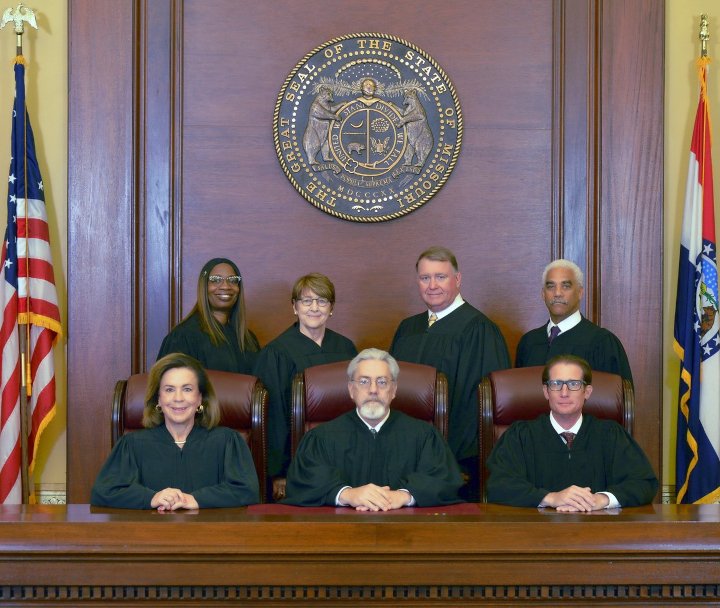
The Missouri Supreme Court alone can create and change these rules. This task falls under the Court’s constitutional powers to control judicial procedure across the state. The Court issues official orders to create new rules or update existing ones when changes become necessary.
New or revised rules must follow certain steps before implementation. The law requires that “the court shall publish the rules and fix the day on which they take effect”. A mandatory waiting period states that “no rule shall take effect before six months after its publication”. This gives legal professionals time to learn and adjust to procedural changes.
The Supreme Court of Missouri approved major rule changes about public access to court documents and redaction standards in December 2024. These changes take effect on July 1, 2026. This shows how the Court keeps refining and updating rules to meet the judicial system’s changing needs.
The Court provides guidance materials before implementing major rules to ensure everyone applies them consistently. This organized approach helps keep procedures stable while allowing court procedures to develop as needed.
Where to Access the Rules in 2025
Legal professionals need accurate Missouri Supreme Court rules to navigate the state’s judicial system effectively. The right sources will give practitioners reliable information they can use in 2025.
Official Missouri Judiciary Website
The Missouri Judiciary website stands as the main official source for current supreme court rules. A key difference exists that users should know about. The online collection of Missouri Supreme Court Rules and Supreme Court Operating Rules on this platform serves “as a convenience to the public only”.
These online versions are not considered official documents of the Supreme Court of Missouri.
The official documents are orders that the Supreme Court issues to create or change rules. You’ll find these official orders posted on the Judiciary’s website under the “Orders/Rules” section as they become available. This matters because the court approved major rule changes in December 2024 that will start on July 1, 2026.
Westlaw and Lexis Access
Legal databases are a great way to get complete access to missouri supreme court rules with features beyond just the text. Each major platform brings its own benefits:
Westlaw lets subscribers access “Vernon’s Annotated Missouri Rules” (VAMR). This resource has the rules plus annotations that explain context and interpretation. Legal practitioners will find these in the Statutes & Court Rules section.
Lexis provides “Missouri State and Federal Court Rules” with helpful search options. Subscribers can use these search features:
- Type direct rule citations in the Search box (e.g., a specific missouri supreme court rules of civil procedure citation)
- Use shortened citation formats (like “frcp 30”)
- Search specific rule types or subjects with the “HEADING” segment
- Find short titles, history, or introductory information in the “PREC” section
Lexis also has advisory committee notes with federal rules that explain amendments and help with interpretation.
Print Sources: VAMR and Missouri Court Rules Vol. I
Print publications remain solid resources for missouri supreme court rules, particularly for those who like traditional research methods.
Vernon’s Annotated Missouri Rules (VAMR) from West Publishing Company offers the annotated version of court rules. Law libraries keep this resource in their reference sections. It provides explanatory notes and cross-references that you might not find in digital versions.
Missouri Court Rules Volume I – State also from West, contains unannotated court rules in a complete collection of procedural guidelines. This volume has sections on:
- Supreme Court Rules
- Rules Governing the Missouri Bar and Judiciary
- Rules of Civil Procedure and accompanying forms
- Rules of Criminal Procedure and forms
- Ordinance Violations and Violation Bureaus guidelines
- Rules for Small Claims Division of Circuit Court
- Supreme Court Operating Rules
- Special rules for all three District Courts of Appeals
The print version comes with helpful supplements like forms and Advisory Committee Comments that help practitioners implement procedural requirements correctly.
Key Categories of Missouri Supreme Court Rules
The Missouri Supreme Court divides its rules into distinct categories that cover specific aspects of the state’s judicial system.
Rules of Civil Procedure
Missouri’s Rules of Civil Procedure are the foundations of dispute resolution between parties in civil actions. These rules guide everything from lawsuit initiation to final judgments. A civil action begins when a plaintiff files a petition against a defendant. The litigation process has several phases: pleading, discovery, trial, and judgment. Parties can file specific documents including petitions, answers, counterclaims, replies, cross-claims, third-party petitions, and their corresponding answers.
Rules of Criminal Procedure
The Missouri Supreme Court’s Rules of Criminal Procedure guide criminal cases through the courts. They set protocols from arrest procedures to sentencing guidelines. These rules protect constitutional rights while cases move efficiently through the system. You’ll find guidelines for handling evidence, witness testimony, and jury selection in criminal proceedings.
Rules for Small Claims Court
Small Claims Court rules offer a simpler way to handle disputes up to $5,000. The court uses relaxed evidence standards and efficient processes. Filing costs $27.50 plus service fees. Certified mail service costs $10.00, while personal service by deputy sheriff runs $36.00 per defendant. Lawyers can represent parties but aren’t required. Parties have ten days to appeal any decision.
Rules for Guardian ad Litem
Guardian ad litem (GAL) rules guide court-appointed representatives who promote children’s or vulnerable persons’ interests. New rules require GALs to meet their assigned children and custodial guardians within 21 days. Representatives can now take limited-purpose appointments, and parties can request one disqualification without cause within 30 days. Missouri will launch a formal complaint system through the Office of Chief Disciplinary Counsel in January 2026 for parties unhappy with GAL services.
Rules on Pleading and Default Judgment
Rule 74.05’s default judgment provisions apply when defendants don’t respond to legal actions. Defendants can overturn these judgments by showing “good cause” and a “meritorious defense” under Rule 74.05(d). Courts take a generous view of “good cause,” which includes honest mistakes and even negligence in late filings. Parties must file motions to set aside within a reasonable time, no more than one year after the judgment. The court won’t overturn a default judgment unless both good cause and meritorious defense are proven.
Important Rule Changes Coming in 2025
Legal practitioners in Missouri need to get ready for major rule changes coming in 2025. The Missouri Supreme Court continues to refine the state’s procedural framework. These changes will affect how legal practice works throughout the state.
Overview of Rule 75.01 and 81.05 updates
The Missouri Supreme Court’s order from October 1, 2024 outlines key revisions to Rules 75.01 and 81.05 that take effect July 1, 2025. These rules cover the trial court’s 30-day control over judgments and the 90-day extension period for timely after-trial motions. The court will publish updates with color-coded QuickRead versions. Red highlights show deletions while blue shows additions to help lawyers spot and understand the changes.
Lawyers should remember that the actual Order always takes precedence if it differs from the QuickRead version. Legal professionals must review these changes carefully as they affect the basics of post-judgment procedure.
New computation of time standards
The missouri rules of civil procedure will see adjustments to time computation standards that change filing deadlines and procedural timelines. The Supreme Court is fine-tuning how lawyers should calculate key periods for filing motions and responses. These changes matter because time computation touches every part of litigation from the first pleadings through appeals. Lawyers must understand them to stay compliant with court rules.
Changes to Rule 4-1.16 (Withdrawal from Representation)
Rule 4-1.16’s modifications about withdrawal from representation rank among the most important changes. The Supreme Court’s order dated June 30, 2025 makes these changes effective January 1, 2026. This rule sets out when attorneys can ethically end client relationships.
The revised rule follows guidance from the ABA Standing Committee on Ethics and Professional Responsibility’s Formal Opinion 516 (issued April 2, 2025). This opinion explains what counts as “material adverse effect” to client interests during withdrawal. The opinion covers:
- Circumstances that might harm client interests by a lot
- Situations where material adverse effects would be unlikely
- Solutions for withdrawal challenges
The updated rule will set clear standards for permissive withdrawal. It protects clients through reasonable notice periods and proper transfer of client materials. Attorneys must understand these changes well to stay ethical when ending client relationships.
How These Rules Affect Legal Practice
Missouri Supreme Court rules reach way beyond theoretical understanding and directly affect daily legal operations.
Impact on filing deadlines and procedures
The Supreme Court transfer procedure has been optimized with rule changes that take effect January 1, 2025. Attorneys don’t need to file applications in the Court of Appeals before seeking Supreme Court transfer. This removes a “largely futile formality” and creates the quickest way to process cases. More importantly, missed deadlines can destroy cases. Courts lack jurisdiction to examine merits if litigants miss appeal timelines, whatever the strength of underlying legal arguments.
Contempt of court and compliance expectations
The moving party must prove two elements to establish civil contempt: (1) the contemnor’s obligation to perform under a decree and (2) failure to meet that obligation. The burden then moves to the alleged contemnor to show that inability to comply wasn’t self-created. Courts maintain broad discretion with contempt remedies, from fines to imprisonment. A significant requirement states that contempt judgments must include specific factual findings that describe the contemptuous conduct.
Practical tips for attorneys and litigants
- Read Rule 83 completely before seeking transfer to understand the optimized procedures
- Keep track of implementation dates—some changes start July 1, 2025, others begin in 2026
- Default judgments need both “good cause” and “meritorious defense” to be established
- Prepare evidence that shows inability to comply wasn’t self-created when facing contempt allegations
Missouri Supreme Court rules are crucial for anyone who needs to traverse the state’s judicial system. These basic guidelines control civil litigation, criminal proceedings, and they affect how cases move through courts. New changes coming on July 1, 2025, will without doubt reshape legal practice in Missouri, especially when you have time computation standards, pleading requirements, and procedures for withdrawal from representation.
Legal professionals should keep track of these modifications. Updates to Rules 75.01 and 81.05 will change post-judgment procedures. Rule 4-1.16 changes will create clearer standards when attorneys withdraw from client relationships. The optimized Supreme Court transfer procedures will remove extra formalities and help practitioners work faster.
You can find current rules through official sources like the Missouri Judiciary website, legal databases such as Westlaw and Lexis, or print resources. Note that while online versions are convenient, only the official Supreme Court orders serve as authoritative documents.
Cases can fall apart if filing deadlines are missed or procedural requirements aren’t followed, whatever their merits. Lawyers must really know both current rules and upcoming changes. Default judgments, contempt proceedings, and guardian ad litem appointments follow specific protocols that need careful attention.
Missouri Supreme Court rules’ progress shows how the judiciary wants to balance speed with fairness. Lawyers who become skilled at these guidelines can direct cases through the legal system better and serve their clients well. Rule changes might be challenging at first, but they want to improve Missouri’s judicial process for everyone involved.
Here are some FAQs about Missouri Supreme Court rules:
How does the Supreme Court rule?
The U.S. Supreme Court rules by hearing cases, deliberating in private, and issuing majority opinions that establish binding precedent for the entire nation. Justices vote on the outcome and the reasoning, with the final written opinion reflecting the majority view. This federal process is distinct from the specific regulations found in the supreme court rules missouri, which govern the state’s own high court.
How is the Missouri court system organized?
The Missouri court system is organized on three main levels: the Circuit Courts at the trial level, the Court of Appeals in the middle, and the Missouri Supreme Court at the apex. The Supreme Court of Missouri has general superintending authority over all lower courts in the state. Its operations and the conduct of attorneys are governed by the missouri supreme court rules of civil procedure and other administrative rules.
What kind of cases does the Missouri Supreme Court hear?
The Missouri Supreme Court hears a variety of cases, including direct appeals involving the validity of a state statute or treaty, cases where the death penalty has been imposed, and matters involving constitutional questions. It also has exclusive jurisdiction over challenges to statewide elected officials and reviews decisions from the Public Service Commission. The procedures for bringing these cases are detailed in the Missouri Supreme Court Rules.
What did the Supreme Court rule about the Missouri Compromise?
In the infamous 1857 Dred Scott v. Sandford decision, the U.S. Supreme Court ruled that the Missouri Compromise was unconstitutional. The Court held that Congress lacked the authority to prohibit slavery in the territories, a decision that intensified national divisions. This federal ruling is a historical matter separate from modern interpretations of the supreme court rules missouri.
Who can overrule the Supreme Court in the USA?
A decision by the U.S. Supreme Court on a constitutional matter can only be overruled by the Court itself in a later case or through a constitutional amendment ratified by the states. Congress cannot directly overrule such a decision but can pass new legislation to limit its effect or address its impact. This principle applies at both the federal and state levels, where the Missouri Supreme Court Rules govern the state’s judicial process.
What did the Supreme Court rule on Trump’s immunity?
As of this moment, the U.S. Supreme Court has not issued a final ruling on former President Trump’s claims of immunity from criminal prosecution. The Court heard oral arguments on the matter in April 2024, and a decision is expected before the end of the term in late June or early July. This is a federal matter distinct from proceedings governed by the missouri supreme court rules 4-1.16 or missouri supreme court rules contempt.