Table of Contents
- 1 The Pivotal Role of Mid-Level Leaders
- 2 Empowering Mid-Level Leaders Through Development Programs
- 3 Strategies for Transforming Mid-Level Leadership
- 4 Real-World Examples of Leadership Transformation
- 5 Overcoming Challenges in Leadership Development
- 6 Measuring the Impact of Leadership Development
- 7 Conclusion
The Pivotal Role of Mid-Level Leaders
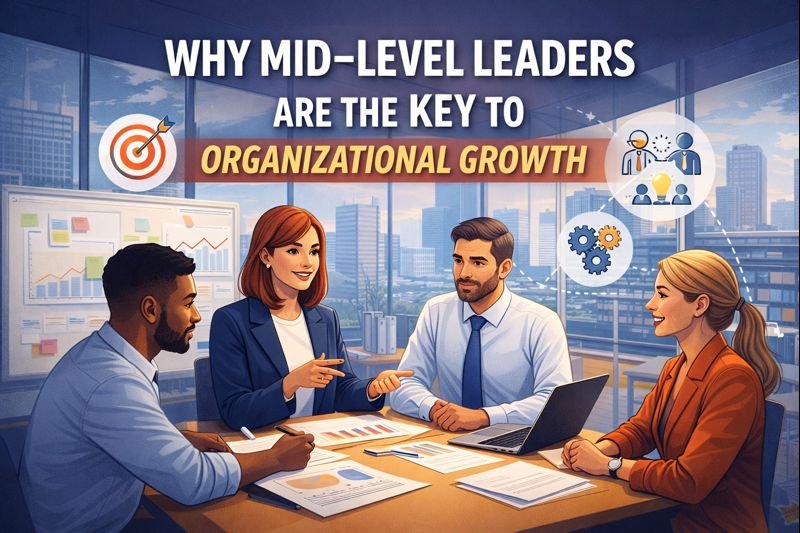
Mid-level managers act as the critical bridge between strategic vision and operational performance. They are uniquely positioned to interpret the high-level goals and strategies crafted by senior leaders and translate them into actionable initiatives for frontline and functional teams. Unlike executives who focus on long-term vision or frontline staff who are mostly engaged in immediate tasks, mid-level leaders serve as connectors, facilitating communication and accountability throughout the organization.
The impact of effective mid-level leadership cannot be overstated. Mid-level leaders influence much more than tactical execution; they shape organizational culture, maintain employee engagement, and inspire performance at every rung of the ladder. They also play a significant role in morale and productivity, helping to create a motivating environment and offering a direct line of feedback from frontline realities to top management, thus shaping and refining organizational strategies for maximum impact. Investing in strong talent management consulting is one way organizations can leverage this leadership tier for both current success and long-term, sustainable growth.
Too often, organizations overlook mid-level leaders as a resource for strategic advancement, unintentionally underutilizing their unique position and capabilities. Yet, empowering and maximizing their potential through professional development, regular coaching, and organizational visibility can lead to smarter decision-making, smoother implementation of new initiatives, and a workplace culture that values contributions at every level. Forward-thinking organizations recognize this and choose to elevate their mid-level managers with consistent support, targeted training, and formal recognition. This results in greater efficiency, agility, and the ability to rapidly adapt to shifting market conditions.
According to a recent Harvard Business Review article, mid-level managers who are empowered and engaged demonstrate increased creativity and drive business innovation during times of uncertainty, further underscoring their pivotal role when organizations face disruption or rapid change. By equipping these managers with the right tools and autonomy, companies can unleash untapped problem-solving potential that ripples throughout business units.
Empowering Mid-Level Leaders Through Development Programs
Leading companies understand that developing the skills of mid-level leaders is not just important, it’s essential for future-proofing the business. For example, Nissan North America’s partnership with Vanderbilt Business School led to the creation of the “Nissan Talent Up” program, a flagship initiative designed to grow a new generation of leaders ready to innovate and pivot in today’s fast-paced market. Such tailored programs go beyond generic leadership training, focusing instead on the nuanced capabilities needed to guide teams through periods of change, uncertainty, and opportunity.
Modern leadership development should combine a variety of approaches, such as dedicated workshops, seminars, and real-world leadership challenges. Exposure to cross-functional projects broadens their business acumen, while ongoing mentorship from senior leaders accelerates learning and supports professional growth. Organizations that align individual development with business objectives not only sharpen skills such as strategic problem-solving, communication, and change management, but also improve their leaders’ ability to inspire teams, influence culture, and spark innovation at every turn.
By encouraging mid-level leaders to seek out new knowledge, collaborate with their peers, and experiment with leading-edge ideas, companies empower them to approach problems creatively and champion smart risk-taking. These programs foster an environment where learning is continuous, mistakes are reframed as opportunities for growth, and leaders remain agile in the face of shifting priorities and market demands.
Strategies for Transforming Mid-Level Leadership
- Provide Tailored Training: Development programs should address the unique challenges and expectations mid-level managers face. In-depth training sessions on strategic thinking, agility, and people management help ensure they are prepared for shifting business realities. Training should also include practical simulations and scenario-based learning for immediate application back in the workplace.
- Foster Inclusive Leadership: Promoting diversity and encouraging leaders to consider multiple perspectives helps organizations adapt to changes and fuels innovation. Inclusive leaders build more cohesive and resilient teams, making it easier to navigate uncertainties and find creative solutions. Recent research by McKinsey supports that diverse leadership teams are more likely to outperform their peers financially.
- Encourage Cross-Functional Collaboration: Enabling leaders to participate in projects across departments broadens their expertise and strengthens a more resilient leadership team. This exposure promotes a holistic understanding of the business, helps break down silos, and fosters an ability to lead teams with varying skill sets.
- Implement Mentorship Programs: Mentoring connects mid-level leaders with senior executives, providing guidance, broadening networks, and supporting career development. Mentorship can accelerate readiness for greater responsibility, facilitate knowledge transfer across generations, and build relationships that foster long-term organizational loyalty.
- Recognize and Reward Leadership Excellence: Systems that recognize and incentivize leadership success reinforce the behaviors and outcomes organizations want to see replicated. Recognition programs, including awards, expanded responsibilities, and visible campaigns, signal that leadership growth is both valued and essential for advancement.
Real-World Examples of Leadership Transformation
Strong case studies underscore the benefits of focused mid-level leadership development. In highly competitive industries, organizations with robust coaching and mentorship frameworks have reported substantial returns, with some seeing up to a sevenfold increase in investment from these programs. These returns demonstrate how well-designed and executed leadership development initiatives boost workforce performance, deepen engagement, and deliver measurable improvements in both productivity and innovation.
Numerous global organizations have also seen their bench strength and succession pipelines improve by embedding comprehensive leadership pathways for mid-level roles. By investing in these critical team members, companies can future-proof their business and seamlessly respond to leadership vacuums that may arise from turnover, restructuring, or growth.
Overcoming Challenges in Leadership Development
Despite the clear upsides, implementing effective leadership development programs poses challenges. Many organizations struggle with resource limitations, budget restrictions, or deeply rooted cultural resistance to change. Getting buy-in from both executives and participants is crucial; leadership development must be positioned as a long-term investment rather than a short-term fix. This begins with a commitment from senior leaders, demonstrated by allocating the necessary budget, coaching time, and sponsoring emerging talent.
Change management strategies are also critical in overcoming skepticism and encouraging employees to embrace new ways of learning and leading. Internal communication, success stories, pilot programs, and consistent feedback loops help reinforce the importance and effectiveness of leadership development ensuring buy-in and adoption at all levels.
Measuring the Impact of Leadership Development
Success in leadership development is best validated through data-driven assessment. Organizations should take a holistic approach, tracking employee engagement ratings, retention metrics, team performance outcomes, and mid-level leaders’ progress towards program goals. Regular 360-degree feedback and ongoing performance reviews supply valuable insights into leadership growth and team impact. Using analytics to monitor the long-term health of the talent pipeline and internal promotion rates further validates development investments.
Transparent and consistent measurement, combined with open reporting on results, not only demonstrates the return on investment to stakeholders but also identifies areas for continuous program improvement. This cycle of measurement and refinement ensures that development efforts remain closely tied to organizational goals and evolving business needs.
Conclusion
Transforming mid-level leadership into a growth engine positions organizations for sustainable progress and competitive advantage. By prioritizing talent development, fostering inclusive and cross-functional leadership, and applying rigorous measurement, companies unlock the full spectrum of benefits from this vital leadership tier. Organizations willing to invest in their mid-level leaders are those best equipped to capitalize on opportunity, navigate uncertainty, and inspire outstanding performance at all levels.