Ensuring a top-tier commercial paving job is more than looks—it’s about safety, durability, and return on investment. When assessing the outcome of your commercial paving project, attention to detail is essential, as even small oversights can result in expensive repairs and liability issues later. Whether you’re updating a retail parking lot, improving an access road, or modernizing an office park roadway, knowing how to evaluate the craftsmanship of your commercial paving contractor can prevent costly repairs and future headaches. Since paving is a significant capital expenditure, a proper assessment allows property managers and business owners to enforce high-quality standards from start to finish, reducing the risk of unexpected maintenance or replacement needs.
Poor paving jobs can lead to premature cracking, water pooling, potholes, and costly liability issues like trip hazards or vehicle damage. Violations of local building codes can even lead to fines or forced repairs. By familiarizing yourself with the most important aspects of quality paving, you’ll safeguard your investment and ensure compliance with local safety and construction codes. Understanding what goes into a well-executed paving job can empower you to ask the right questions of your contractor and catch issues before they escalate.
Table of Contents
Examine the Surface Evenness
A high-quality commercial paving job should result in an even, smooth surface without dips, bumps, or waves. Uneven pavement looks unprofessional and can be hazardous to pedestrians and damaging to vehicles. Surface irregularities can become serious liabilities, leading to puddling, freeze-thaw damage, and early pavement deterioration. After the final roller pass, walk the paved area and check for level consistency from edge to edge, feeling for any unexpected dips or ridges. If you observe or feel uneven spots or notice pooling water after rainfall, ask your contractor for clarification or remediation before granting final sign-off. According to For Construction Pros, evenness is crucial in preventing long-term structural issues, making it one of the most important aspects to evaluate in your finished pavement.
Assess the Material Quality
Quality materials are the foundation of lasting pavement, directly influencing how the surface performs under stress from traffic, temperature changes, and weather exposure. Ensure your contractor uses industry-approved, top-grade asphalt or concrete mixes designed specifically for your region’s climate and the expected usage of the pavement. For example, parking lots with heavy truck traffic need stronger materials than sidewalks or light-use areas. High-quality materials resist weathering and load stresses better, leading to lower maintenance needs and longer pavement lifespan. Request product data sheets or mixing batch reports to verify that only premium materials are used for your project. If possible, ask your contractor to walk you through the selection criteria for the materials to ensure they align with national standards and best practices for your location.
Verify Proper Drainage Installation
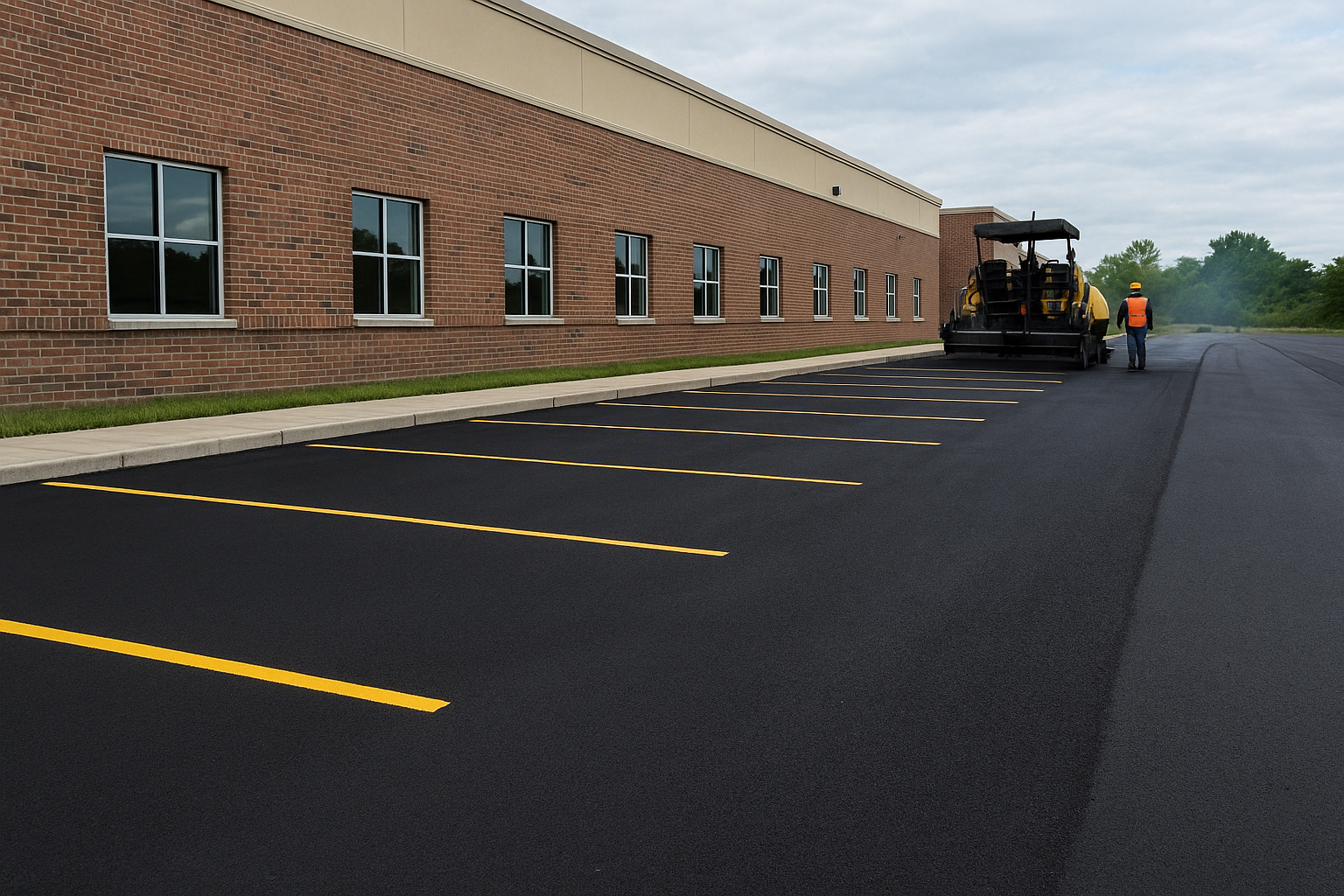
Drainage mistakes can quickly undermine any paving job, regardless of how smooth or thick the pavement is. If water is allowed to pool or flow improperly across the surface, it can infiltrate beneath the pavement layers, causing the base to weaken and the pavement to crack or fail. The installation should include proper sloping (a gentle grade) and appropriately placed drains, gutters, or catch basins so water flows away from the paved surface and does not accumulate in undesirable areas. Evaluate the visible slope visually, and if possible, observe how water moves across the surface during actual rainfall or water testing. Standing water can compromise the pavement’s integrity without adequate drainage, contributing to frost heaves, rutting, surface erosion, and increasing the risk of foundation failure. Always confirm that the finished paving slopes toward drainage points and that debris is not blocking drainage openings.
Check for Adequate Thickness
The thickness of every pavement layer, from the compacted sub-base to the finished surface, plays a major role in meeting pavement safety standards and ensuring long-term performance. When these layers are thinner than required, the pavement is more likely to fail early and struggle under heavy vehicle loads. This can lead to cracking, rutting, and potholes over time. As soon as surface damage appears, fast repairs are essential to maintain pavement safety standards and prevent wider deterioration. Small cracks can quickly grow if ignored. Using reliable repair materials helps control early damage and keeps the surface stable and safe for daily use. Strong results depend on careful construction and prompt maintenance. Property managers should confirm that contractors follow approved plans and pavement safety standards. Request clear records showing the thickness of the sub-base, base, and surface layers. Review drawings before work begins and consider checks after installation, such as core testing or depth measurements. Thin layers often signal poor site preparation or uneven material placement, which is why regular verification during and after construction is important.
Review the Contractor’s Credentials
The workmanship and reliability of your paving contractor are as important as material quality. Not all paving companies operate with the same level of professionalism and expertise. Before signing any contract, investigate the company’s reputation, verify its state and local licensing, and check references from previous commercial projects similar to your own. Reliable contractors should readily provide proof of insurance, relevant certifications, and a portfolio of completed work. Client testimonials and third-party reviews can also provide valuable insights into their consistency and integrity. As Consumer Reports highlights, validating a contractor’s credentials protects your project and finances, helping you avoid hiring unqualified or underinsured providers.
Inspect the Edges and Joints
Pavement edges and joints are vulnerable points, susceptible to water infiltration, weed growth, and structural separation if improperly constructed and sealed. These spots are often where the earliest pavement failures begin. Look for sharp, well-defined boundaries and joints that are cleanly filled and tightly sealed. The transition from pavement to curb or landscaping should be neat, without ragged edges or visible gaps. Inferior attention to these details can allow water, dirt, and weeds to penetrate, undermining the pavement base and causing separation or potholes over time. A quality contractor will carefully finish these areas and apply appropriate sealing compounds to maximize longevity.
Evaluate the Compaction
Proper compaction is essential for long-term pavement stability and strength. If the underlying soil, sub-base, or paving layers are not compacted to recommended density levels, your pavement may begin to settle or crack soon after installation. Ask your contractor about their compaction process for the subgrade and paving layers—including the equipment and specific methods. Modern contractors should use vibratory rollers or plate compactors and adhere to industry standards for the number of passes and compaction percentages achieved. Insufficiently compacted pavement will settle, crack, and fail prematurely. It’s best practice to demand documentation or on-site demonstrations of their compaction quality, and consider spot-testing during construction.
Consider the Warranty Offered
A reputable commercial paving contractor stands behind their work with a clear, written warranty. This warranty should detail which types of defects, such as cracking or surface raveling, are covered and the duration and process for filing a claim. Review the terms carefully to understand what defects or issues are covered, and the precise length of the coverage. Some contractors may offer extended warranties if you also purchase regular maintenance services. A solid warranty provides peace of mind for property managers and business owners. It signals that the contractor is confident in the quality of their work and committed to resolving any defects that may arise after project completion.
Final Thoughts
Assessing the quality of a commercial paving job is an essential step in property management that protects your investment and ensures safe, durable surfaces for everyone. By checking surface smoothness, material standards, drainage, thickness, contractor qualifications, edge construction, compaction, and warranty details, you can confidently secure long-lasting results—and avoid the pitfalls of poor workmanship. Thorough evaluation now protects you against expensive issues later, ensuring your property remains safe, accessible, and attractive for years. With a clear understanding of what to look for, you can maintain high standards and positive relationships with your paving contractors, leading to better value and performance on every project.