Table of Contents
Introduction
Site architecture is a foundational aspect of SEO that often determines how well your content performs in search engine rankings. The organization and structure of your website can either pave the way for success or create roadblocks that hinder discoverability and indexing by search engines. When designed intentionally, site architecture can reduce technical barriers for ranking and ensure that both users and search engines can efficiently access and understand your content.
Today’s digital competition means websites need to cater equally to algorithmic requirements and real visitor expectations. Without a clear structure, even the most valuable content may remain hidden, undermining your efforts to grow organic traffic or establish authority within your niche. By focusing on site architecture, you can lay the groundwork for improved search engine visibility, better user experiences, and more robust conversion rates.
Well-structured websites have a distinct advantage in guiding visitors seamlessly from landing pages to areas of core value, supporting internal linking, and consolidating topical clusters. This intentionality pays dividends, making the overall site more intuitive to navigate and helping visitors find what they’re looking for in fewer clicks. Search engines favor this clarity, rewarding it by highlighting well-organized sites in SERPs and improving their crawl efficiency. As businesses compete for the attention of both users and search crawlers, it’s clear that architecture forms the backbone of successful SEO strategies.
Enhancing Crawlability and Indexing
Search engines use sophisticated bots to crawl, discover, and index content across the web. A thoughtfully designed site architecture creates logical pathways that ensure these bots can efficiently access every important page. Organized hierarchies, using clearly defined categories and relevant subcategories, help convey the relationship between different pieces of content, guiding bots with context that aids in accurate indexing.
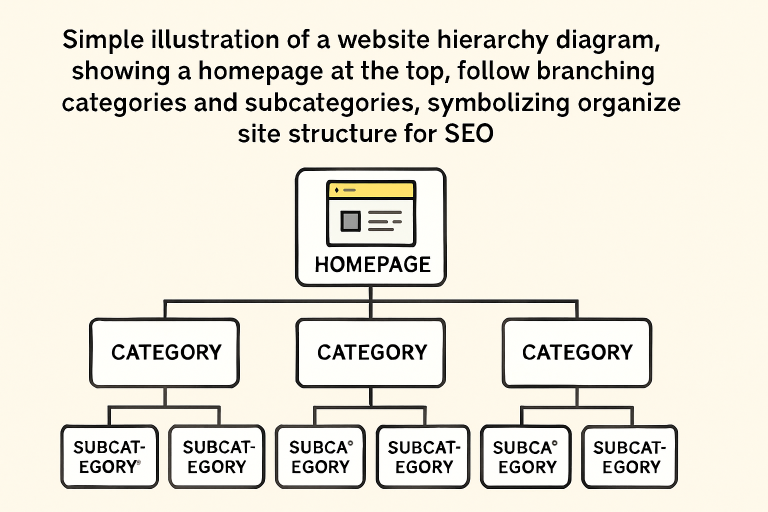
Studies show that sites with strong architectural hierarchies noticeably outperform those with flat or poorly constructed structures. For example, a site arranged in a pyramid-style structure allows key pages to be reached quickly, minimizing the number of clicks needed from the homepage. This hierarchy enhances accessibility for search bots and facilitates the discovery of deeper pages that might otherwise be overlooked. Such prioritization helps search engines understand which content takes precedence, leading to higher rankings for competitive search terms.
Improving User Experience Through Architecture
User experience is a crucial consideration that site architecture directly enhances. A logical, well-planned navigation structure allows visitors to find relevant information efficiently, reducing bounce rates and encouraging deeper engagement. Experts recommend implementing a “flat” site architecture, where all key pages are no more than three or four clicks from the homepage—making the website more intuitive and keeping users engaged longer. Enhancements like breadcrumb navigation and clear menu systems give users orientation, supporting both ease of movement and clarity about their place within the site’s hierarchy.
Google and other search engines reward sites that balance SEO best practices with an excellent user experience, as these features reduce friction and signal site quality. Satisfied users tend to explore more, which further boosts SEO through longer dwell times and lower abandonment rates.
Distributing Link Equity with Internal Linking
Internal linking is an essential tactic for distributing link equity—also known as “link juice”—across a website. By creating keyword-rich, contextually relevant links between your pages, you strengthen weaker content and guide both users and search engines to discover more in-depth, valuable resources. Linking main category or pillar pages to specific, in-depth posts enhances the authority of those target pages and helps search engines assign appropriate weight to highly relevant topics.
This interconnected approach doesn’t just benefit SEO; it also enriches the user journey by suggesting related content and promoting longer time on site. For example, travel sites may link from a broad “European Destinations” hub page to niche city guides, which in turn connect to local restaurant or event pages, creating a web of usefulness and relevance throughout the domain.
Establishing Topical Authority
Grouping related content into clear categories and subcategories is a strategic way to establish topical authority. When content about a specific theme is grouped well and supported by accurate, descriptive anchor text, search engines learn to recognize your site as an authority in that subject. Over time, this clustering signals to bots that your website consistently produces valuable content on these topics, making you more likely to earn top rankings for associated search queries.
For example, blogs with high-performing “Health and Wellness” sections often include subcategories for nutrition, exercise, and mental health, each of which is densely interlinked. This hierarchical structure communicates depth and breadth to search engines, increasing the chances of appearing as a primary resource for multiple related searches.
Generating Sitelinks and Maximizing SERP Visibility
A robust site structure does more than improve navigation and scalability. It significantly increases the chances of earning coveted sitelinks—those additional links featured beneath a main search result on Google. These sitelinks make it easier for users to discover vital sections of your site directly from search engine result pages, which enhances click-through rates and positions your website as an authoritative resource.
Because sitelinks are generated algorithmically, their presence is a strong indication of effective architecture. Sites with poor or confusing structures rarely gain this extra search real estate, missing out on valuable opportunities for traffic acquisition and brand visibility.
Best Practices for Optimizing Site Architecture
- Plan Before You Build: Map out your site using visualization tools or even simple flowcharts to define the hierarchy before you start development.
- Use Categories and Subcategories: Structure content into logical groups to aid navigation and highlight topical relevance for both search engines and users.
- Implement Internal Linking: Ensure that every page includes at least one related internal link to help spread link equity and maintain a seamless user journey.
- Optimize URL Structures: Adopt clean, descriptive, and human-readable URLs that accurately reflect your site’s hierarchy, making content easier to understand for both users and search engines.
- Ensure Mobile-Friendliness: With mobile-first indexing now standard, it’s vital that site architecture is responsive and functions seamlessly across all devices.
Final Thoughts
Effective site architecture is critical to achieving sustainable SEO success. It accelerates crawling and indexing, enhances user experiences, supports internal link strategies, strengthens your topical authority, and increases the likelihood of earning rich SERP features, such as sitelinks. By investing in a comprehensive, user-focused structure, you’re not only improving search engine visibility but also setting your website up for long-term engagement and credibility across evolving digital landscapes.