Maintaining reliable plumbing systems in busy commercial environments is crucial for ensuring smooth operations. High-traffic buildings—such as offices, retail centers, restaurants, and public facilities—place constant demand on their water lines, drains, and fixtures. With frequent use, minor issues can quickly grow into major disruptions that affect daily activities, tenant satisfaction, and overall safety. Establishing a proactive approach to plumbing care helps property managers anticipate problems before they escalate and ensures that essential infrastructure performs as expected.
Routine inspections, early leak detection, and strategic maintenance planning are key components of preventing costly breakdowns. Many facilities rely on professional support when navigating complex systems, much like businesses may seek commercial plumbing services in Utah for guidance on proper maintenance and long-term solutions. The goal is to maintain functionality, minimize downtime, and reduce the likelihood of emergency repairs. By investing in consistent monitoring and addressing minor concerns promptly, building owners can create a more resilient plumbing environment that supports both daily operations and long-term efficiency.
Table of Contents
Conduct Regular Inspections
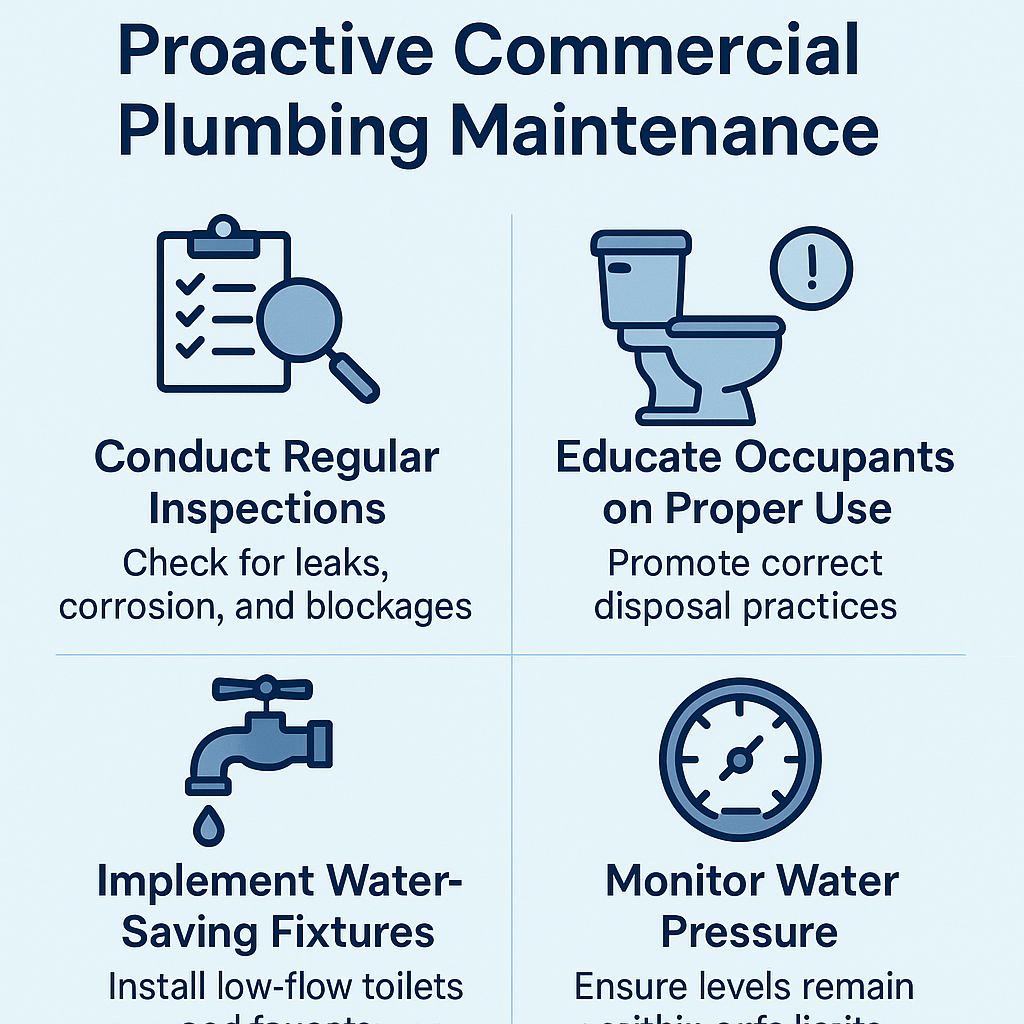
Routine inspections are crucial for evaluating commercial plumbing systems. These checks should cover visible elements, such as sinks, toilets, water fountains, and water heaters, as well as hidden pipes concealed behind walls or floors. The purpose is to detect early indicators of issues, including slow drains, damp patches, discoloration, corrosion, or leaks. Addressing these problems promptly can prolong the system’s lifespan, prevent emergencies such as burst pipes and water damage, and ensure regulatory compliance. Keeping regular maintenance records also supports insurance claims and accountability.
Educate Occupants on Proper Use
Preventing misuse is essential for minimizing plumbing emergencies in commercial buildings. Many problems arise from improper flushing, grease buildup, debris, or drain overloads. Regular reminders, such as meetings, notices, or signage, about safe materials and disposal practices help establish clear expectations. Clear waste disposal policies, reinforced with signage in restrooms, kitchens, and maintenance areas, decrease blockages and backups. Training staff to identify early signs, such as slow drainage, unpleasant odors, or water on floors, enables quicker intervention and reduces damage. Promoting prompt reporting of issues helps prevent minor problems from escalating.
Implement Water-Saving Fixtures
Investing in water-efficient fixtures benefits any commercial building. Low-flow toilets, urinals, faucets, and automatic shut-off valves cut water consumption while maintaining performance, reducing stress on pipes and infrastructure. These fixtures lower utility bills, support environmental conservation, and help avoid leaks or overflows from outdated components. Regular inspections and maintenance are essential to ensure optimal performance and prevent deterioration. Collaborating with plumbing experts enables businesses to identify and upgrade key fixtures in a cost-effective manner.
Monitor Water Pressure
Commercial properties should regularly check water pressure to prevent excessive stress on pipes, valves, and fixtures. Excessive pressure can lead to pipe bursts, leaks, and equipment failures, especially in large buildings with multiple systems. It’s advisable to install pressure regulators in areas where municipal water supply varies or fluctuates. Regular inspections and adjustments by qualified technicians ensure that pressure remains within safe limits, safeguarding plumbing systems and maintaining operational continuity. Even minor shifts in pressure can signal problems requiring immediate action.
Address Hard Water Issues
Hard water contains high levels of minerals, such as calcium and magnesium, which can cause plumbing issues over time. These minerals accumulate as limescale in pipes, appliances, and fixtures, leading to restricted water flow, reduced efficiency, and potential blockages or failures. Limescale can also decrease the lifespan of water heaters and appliances, resulting in higher maintenance costs. A water softening system provides an effective solution by neutralizing these minerals, thereby protecting plumbing, reducing the need for repairs, and improving overall efficiency. Regular descaling and water testing help prevent deposits, keeping systems running smoothly. Addressing hard water early preserves investments and maintains efficient plumbing for the long term.
Prepare for Emergencies
Despite preventive measures, plumbing problems can still arise unexpectedly, even during periods of high activity. Developing and updating a solid emergency plan is essential for any commercial property. Staff, particularly those in maintenance or operations teams, should be familiar with the locations of water shut-off valves and have up-to-date contact information for trusted plumbing professionals. Conducting regular emergency drills enables staff to respond swiftly to leaks, burst pipes, or backups, thereby minimizing water damage, operational downtime, and confusion. Effective communication, clearly assigned roles, and quick-access emergency kits enhance resilience during plumbing emergencies.
Conclusion
By adopting a proactive, comprehensive maintenance plan, fostering a culture of proper use, and utilizing modern, efficient fixtures and advanced technologies, high-traffic commercial buildings can significantly reduce the risk and frequency of plumbing emergencies. These basic yet powerful strategies help ensure trouble-free operation, protect valuable infrastructure, and maintain a safe and sanitary environment for all occupants—regardless of facility size or function. Ultimately, investing in prevention, education, and modern solutions gives peace of mind to building owners, managers, and everyone who relies on the facility daily.