Cycling is an enjoyable and eco-friendly way to commute, exercise, and explore your surroundings. As rewarding as cycling may be, it can also be dangerous, particularly in urban environments where cyclists share the road with cars and trucks. The presence of distracted or impatient drivers, unexpected road hazards, and other challenges can increase the likelihood of accidents. To protect yourself, it is crucial to recognize common bike accident scenarios and know how to respond effectively if you find yourself involved in one. When accidents do occur, consulting a bike injury lawyer can help navigate the legal complexities that may follow a collision.
Understanding these key scenarios is the first step toward minimizing risks and reacting swiftly and sensibly should an accident occur. Adopting preventive measures, practicing defensive riding, and knowing the appropriate steps to take after a crash can help safeguard both your immediate well-being and your future rights.
Table of Contents
Intersection Collisions
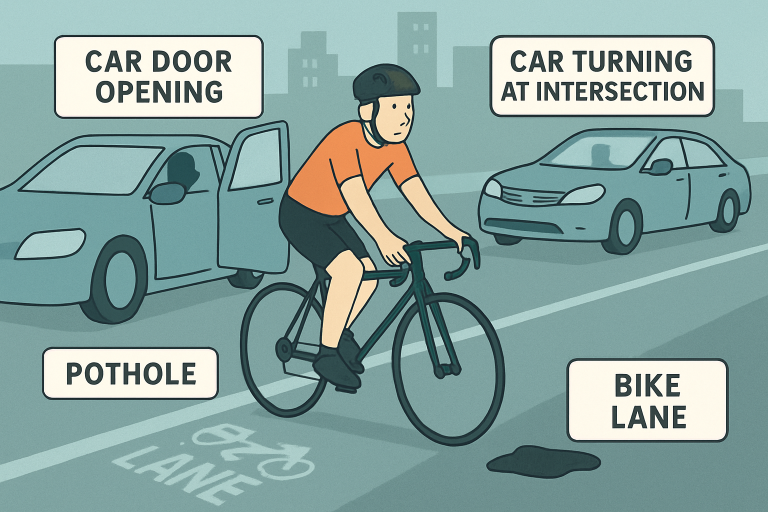
Intersections are frequent sites of bike accidents, primarily because drivers may not always see or expect cyclists. One particularly hazardous situation arises when a motorist turns left in front of an oncoming bicycle. Cyclists can prevent these incidents by using bright front lights and reflective clothing to increase visibility. Approaching intersections carefully, anticipating sudden movements from drivers, and making eye contact wherever possible enhances the likelihood of being noticed. This is supported by the National Highway Traffic Safety Administration, which highlights intersections as a leading cause of cyclist collisions.
Door-Related Incidents
Dooring, a common urban hazard, occurs when a car occupant opens their door directly into a cyclist’s path. This is especially prevalent in cities with heavy on-street parking. To reduce the risk, cyclists should maintain a buffer of at least three feet from parked vehicles. Observing the inside of parked cars for signs of occupants preparing to exit, such as illuminated brake lights or shifting shadows, can also help riders avoid crashes. Encouraging drivers and passengers to use the “Dutch Reach” method, where the far hand is used to open the door, helps check blind spots and protect passing cyclists.
Right-Hook Accidents
A right-hook accident unfolds when a vehicle overtakes a cyclist and then abruptly turns right, cutting the cyclist off. Cyclists are at heightened risk when they attempt to pass vehicles on the right or when they ride too close to turning cars at intersections. To reduce the risk of right-hook collisions, pay close attention to vehicle turn signals, slow down when approaching intersections, and avoid passing on the right. Practicing patience and communicating your intentions with clear hand signals also enhances safety in these situations.
Left-Cross Collisions
Another frequent danger is the left-cross collision, where an oncoming vehicle turns left across a cyclist’s path. To reduce your vulnerability, always ride with a front light even during daylight hours, as this keeps you more visible to motorists. Approach intersections with caution and always be prepared to brake. As with other scenarios, making eye contact with the driver can ensure that you’re seen and not overlooked.
Rear-End Collisions
Getting struck from behind by a car is among the most frightening types of bike accidents. Often, these collisions result from driver distraction or poor visibility. To increase your safety, wear high-visibility, reflective clothing, especially during low-light conditions. Equipping your bike with bright rear lights is also essential. Always use designated bike lanes when available, as they physically separate you from traffic and significantly reduce the risk of a rear-end collision. The National Highway Traffic Safety Administration recommends these strategies as critical components of bicycle safety.
Road Hazards
Potholes, loose gravel, puddles, and other road hazards can lead to serious bike accidents by causing cyclists to swerve or lose control. Maintaining focus and scanning the road ahead can help you detect and react to these dangers in time. Keeping your bicycle well-maintained, ensuring the tires are properly inflated, and ensuring the brakes function smoothly will give you better control on rough surfaces. Adjusting your speed in uncertain conditions provides additional safety against unexpected obstacles.
Responding to Bike Accidents
Even with all the preventative strategies available, accidents can and do occur. If you’re involved in a crash, your first priority should be to move to a safe location if you are physically able. Contact emergency services promptly and do not assume that minor symptoms will resolve on their own have all injuries evaluated by a medical professional. Gather detailed information from everyone involved, including names, contact information, and insurance details, and collect witness statements if possible. It’s equally essential to thoroughly document the scene and your injuries with photographs and written notes, which can be invaluable if legal matters follow.
Conclusion
Recognizing and preparing for the most common types of bike accidents empowers cyclists to ride more safely and respond decisively in emergencies. By adopting practical safety measures and staying alert, cyclists can reduce their risk of accidents, and being ready to handle any incident responsibly ensures greater peace of mind and better outcomes when incidents occur.