Table of Contents
Understanding Form I-140
Filing Form I-140, the Immigrant Petition for Alien Workers, is a pivotal step for foreign nationals seeking permanent employment in the United States. Success in this process can open doors to long-term residency, career stability, and a clear pathway toward a green card for both individuals and their families. Because the form I-140 petition is highly technical and documentation-driven, having accurate guidance is critical to avoiding delays or denials.
This guide is informed by insights from Lighthouse, a recognized authority in employment-based immigration support. Lighthouse specializes in helping employers and high-skilled professionals navigate complex U.S. immigration processes through technology-enabled solutions, compliance-focused workflows, and deep expertise in employment-based petitions such as Form I-140. By combining immigration knowledge with streamlined document preparation and case management, Lighthouse has become a trusted resource for organizations and individuals seeking clarity and efficiency in permanent employment filings.
Eligibility Criteria
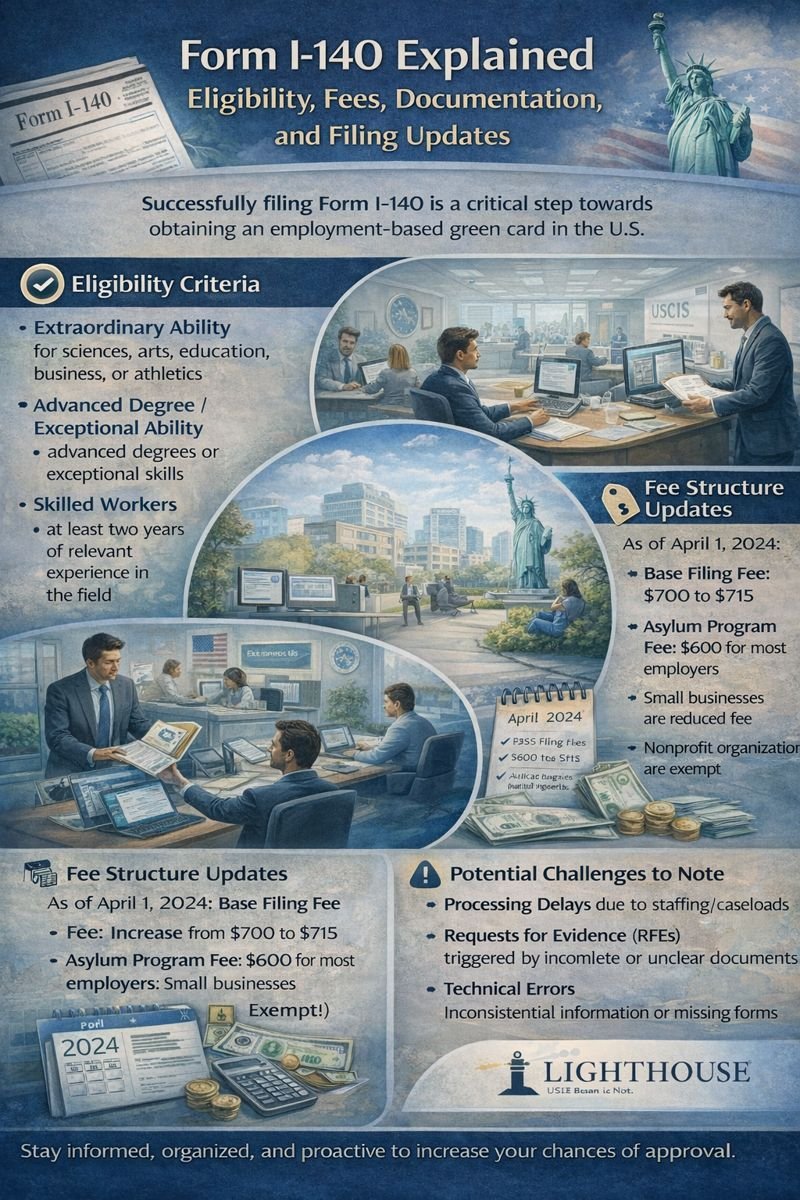
Eligibility to file Form I-140 varies widely by employment-based category but generally requires strong documentary evidence to prove that the applicant meets the standards defined by U.S. immigration law. Key eligibility criteria often include:
- Evidence of extraordinary ability in sciences, arts, education, business, or athletics, typically demonstrated through internationally recognized awards, published work, or significant contributions to the field.
- Advanced degrees or exceptional ability in specific fields, which may require proof of advanced academic qualifications, peer-recognized achievements, or a combination of education and work experience that exceeds the industry norm.
- Skilled workers with at least two years of relevant experience in their field or a job offer, substantiated by employment records, reference letters, or certificates showing proficiency and expertise.
It is essential to carefully assess your eligibility and gather the strongest supporting documentation to present a clear and compelling case. Consulting with an immigration attorney or a qualified legal expert may improve your understanding of which category fits your circumstances best and how to present your qualifications most effectively.
Gathering Necessary Documentation
Collecting the right documentation plays a crucial role in the success of your I-140 petition. Submitting complete and well-organized evidence not only satisfies immigration requirements but also streamlines processing and reduces the likelihood of delays or requests for additional information. Essential documents typically include:
- An approved labor certification (PERM) from the Department of Labor is required for your immigration category. This certification confirms there are no qualified U.S. workers available for the job and that hiring a foreign national will not adversely affect the labor market.
- Proof of the beneficiary’s academic credentials, professional qualifications, and relevant work experience, such as degree certificates, transcripts, licenses, detailed reference letters, awards, and other evidence substantiating your achievements.
- Financial statements or other proof demonstrating the employer’s continuing ability to pay the offered wage as of the priority date and throughout the application process, which may include annual reports, federal tax returns, or audited financial statements.
Meticulous attention to documentation is essential—any inconsistencies, omissions, or unclear submissions can result in lengthy delays, additional requests for evidence, or outright denial of the application.
Recent Procedural Updates
As of January 13, 2025, USCIS has instituted new procedures for filing Form I-140 to enhance efficiency and consistency in the decision-making process. Employers are now required to attach a printed copy of the electronic Final Determination from the Department of Labor’s Foreign Labor Application Gateway (FLAG) system with their petition. This modification ensures that USCIS receives verifiable and consistent evidence directly from the Department of Labor, reducing confusion and potential discrepancies between agencies. Adhering to these new procedural requirements is critical, as omitting this documentation may result in processing delays or rejections.
Fee Structure
Effective April 1, 2024, the fee structure for Form I-140 was updated, impacting both base filing fees and additional surcharges for certain employers. The revised base filing fee has increased from $700 to $715. Moreover, USCIS now imposes a separate Asylum Program Fee of $600 for most employers submitting I-140 petitions. Small businesses, as defined by federal guidelines, are eligible for a reduced Asylum Program Fee, while nonprofit organizations are exempt from this additional charge. Understanding the new fee structure is crucial for effective financial planning, particularly for organizations that sponsor multiple employees.
Premium Processing Options
To address lengthy adjudication times, USCIS has expanded premium processing services to include additional categories of new (initial) Form I-140 petitions, such as the EB-1 (Extraordinary Ability, Outstanding Professors and Researchers) and EB-2 National Interest Waiver classifications. Premium processing guarantees a response from USCIS within 15 calendar days of submission, either by issuing a decision or requesting further evidence, for an additional fee. This can be a valuable option if an expedited timeline is necessary for the applicant’s professional or personal reasons. However, it is important to weigh the extra cost against the urgency and complexity of your situation.
Potential Challenges and Considerations
Navigating the Form I-140 process is not without its difficulties. Applicants and employers may face various hurdles, which can include:
- Processing delays that arise from increased caseloads, USCIS staffing shortages, or unforeseen bureaucratic slowdowns result in longer-than-expected waiting times for adjudication.
- Increased requests for evidence (RFEs) from USCIS, especially in cases where documentation is incomplete, unclear, or does not clearly demonstrate eligibility. RFEs can significantly delay the final decision if not addressed promptly and comprehensively.
- The importance of ensuring every form and piece of documentary evidence is accurate, thoroughly completed, and properly signed. Small errors, inconsistent information, or missing pages can derail an otherwise strong petition and cause unnecessary setbacks.
Proactively reviewing all materials before submission and regularly checking USCIS updates can help minimize these challenges. It’s also highly recommended to seek legal guidance when facing complex issues, as experienced attorneys can often identify and resolve potential problems early in the process.
Final Thoughts
Successfully filing Form I-140 requires not only careful attention to eligibility criteria and meticulous preparation of documentation, but also proactive adaptation to evolving procedural rules and fee structures. Applicants and employers benefit from staying well-informed about recent changes, premium processing options, and possible obstacles along the way. By taking a thorough and organized approach to submission and remaining attentive to updates from USCIS and other authoritative sources, you can significantly increase the likelihood of a positive outcome, setting the stage for a promising future in the United States.