Table of Contents
Assessing Your Home’s Current State
Transforming an outdated home into a modern masterpiece begins not with a sledgehammer, but with careful evaluation. Begin by thoroughly inspecting the structural elements, including the foundation, roofing, and support beams. Outdated plumbing, electrical systems, and insulation should all be flagged for updates. A comprehensive assessment will help you prioritize projects and identify both problem areas and potential high-impact improvements—laying the groundwork for a successful transformation. To learn more about the stages and services involved in large-scale renovations, click here.
Look for design elements that limit the flow of natural light, create unnecessary barriers between rooms, or detract from the property’s overall appeal. This process will not only help you plan smart renovations but can also reveal timeless features worth preserving. Consulting with licensed professionals for home inspections can provide valuable insights and help you avoid surprises as you move forward.
Embracing Open Floor Plans
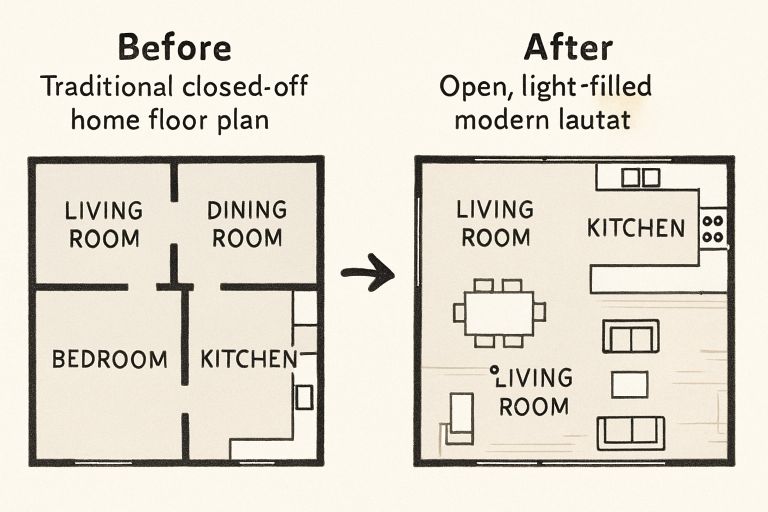
One hallmark of a modern home is the use of open, fluid spaces that foster connection and maximize light. Removing non-load-bearing walls between common areas, such as the kitchen, dining room, and living room, can instantly transform cramped layouts into airy, multifunctional living spaces. Open floor plans not only nurture a sense of togetherness but also make entertaining guests much more enjoyable.
Before making any structural changes, consult an architectural professional who can determine which walls are safe to remove and whether you’ll need reinforcements. These changes may also require permits; therefore, be sure to check local regulations before commencing construction.
Updating Kitchens and Bathrooms
Kitchens and bathrooms are among the most frequently used spaces in any home, making them high-priority areas for an upgrade. Modernizing these rooms can include installing new countertops, cabinets, and fixtures, as well as replacing outdated appliances with energy-efficient models. Updated lighting and sleek, minimalist hardware can further enhance a contemporary look. Don’t overlook accessibility and ease of use—features such as pull-out shelves, walk-in showers, and touchless faucets can offer both luxury and practicality.
Incorporating Smart Home Technology
In today’s era of rapid technological advancement, smart home upgrades are no longer optional for those seeking a modern lifestyle. Incorporating smart thermostats, lighting systems, security cameras, and voice-activated assistants can greatly improve day-to-day comfort and efficiency. Many of these solutions are relatively simple to install and offer long-term savings by optimizing energy use.
Enhancing Curb Appeal
First impressions matter, and your home’s exterior is the first thing visitors and potential buyers notice. You can enhance curb appeal with simple upgrades, such as a fresh coat of paint, modern light fixtures, and well-designed landscaping. Adding inviting walkways, upgrading front doors, and maintaining the yard can all contribute to a revitalized exterior. Sleek, modern house numbers and mailboxes can be the finishing touches that tie everything together.
Preserving Character While Modernizing
While modernization is crucial for comfort and longevity, some historic or vintage elements of your home add irreplaceable charm. Strive to maintain and restore original hardwood floors, moldings, and built-in features whenever possible. These touches can serve as elegant reminders of your home’s history, even amidst state-of-the-art updates. Achieving the right balance between old and new ensures that your renovation feels intentional, not generic.
Prioritizing Energy Efficiency
Modern homes aren’t just about looks—they’re also about sustainability and savings. Enhancing energy efficiency is one of the smartest investments you can make. Upgrade windows and doors to reduce drafts, replace outdated HVAC systems with high-efficiency models, and improve insulation for year-round comfort. If your budget allows, consider integrating renewable energy sources, such as solar panels, which can significantly reduce long-term energy costs and make your home more eco-friendly.
Planning and Budgeting
A well-executed remodel requires careful planning, a comprehensive budget, and a clear understanding of your priorities. Lay out your goals, research costs, and create a detailed schedule. Professional guidance from contractors, architects, or designers can help you anticipate challenges, comply with codes, and select materials that will withstand the test of time. Prioritize renovations based on their impact and feasibility to maximize the best value for your investment.
Stick to your budget by setting aside a contingency fund for unexpected expenses. Transparent communication with all parties involved in the project can help keep the renovation on track and minimize costly mistakes.