Investing offers exciting opportunities for financial growth and the potential to build long-term wealth, but it is not without risks, especially the risk of becoming a victim of securities fraud. As markets continue to evolve and new, sometimes complex, investment products are introduced, it becomes ever more important for investors to be vigilant and know how to spot and avoid fraudulent activity. By understanding these risks, you can make more confident decisions, reduce your susceptibility to scams, and take meaningful steps to secure your hard-earned assets. Whether you are an experienced investor or just getting started, learning how to protect yourself from fraud is essential. If you ever suspect you are being targeted or need professional advice, you should not hesitate to reach out to experienced Florida investment fraud lawyers for guidance tailored to your situation.
Securities fraud undermines trust in the financial system and can inflict devastating financial harm, ranging from the loss of retirement savings to the collapse of entire investment portfolios. Today’s fraudsters have access to sophisticated technology and often disguise their schemes to appear legitimate. This means that investors must not only remain vigilant but consistently do their homework and rely on credible resources to help identify suspicious activity. Protecting yourself is not a solitary endeavor; it serves the health of the broader financial markets. Widespread fraud erodes confidence among all participants, so each investor has a role to play in preventing it. At its core, the fight against fraud is built on a foundation of education, caution, and proactive action, backed by trusted professionals and reliable resources.
Table of Contents
Understanding Securities Fraud
Securities fraud refers to a range of illegal activities involving misleading, deceptive, or manipulative practices in the trading of stocks, bonds, mutual funds, or other financial products. These unlawful acts can occur in both public and private markets and may involve any party to the transaction, brokers, corporate insiders, fund managers, or even third-party promoters. Even sophisticated investors can fall prey to new schemes that exploit emerging technologies, such as “phishing” attacks that trick individuals into revealing sensitive information or outright market manipulation on social media.
The hallmark of securities fraud is that investors are manipulated by false or incomplete information, causing them to make decisions they would otherwise avoid. Large-scale schemes might involve market manipulation, such as illegal short selling or spreading false rumors to influence stock prices. Smaller-scale cases could be as simple as a broker or financial advisor giving clients a misleading prospectus or failing to disclose important risks about a product. Ultimately, all forms of securities fraud erode investor confidence and highlight the need for vigilance, skepticism, and ongoing education. Recognizing the many faces of securities fraud is a vital first step to mounting a strong defense.
Common Types of Securities Fraud
- Insider Trading: This occurs when someone trades on material, non-public information, often to gain an unfair advantage. Examples include executives purchasing their own company’s stock just before the announcement of a major business deal or breakthrough earnings.
- Pump and Dump Schemes: In these scams, fraudsters use misleading statements and aggressive promotion, often online, to artificially inflate a stock’s price. After driving demand higher, they sell their shares at inflated prices, quickly leaving new investors saddled with depreciating assets. These schemes can devastate inexperienced investors lured by the prospect of big, fast gains.
- Ponzi Schemes: These scams generate “returns” for earlier investors using capital supplied by new investors, without producing actual profits from legitimate investments. Charismatic organizers may entice investors with promises of above-market returns, but such schemes always collapse in the end once the flow of new funds dries up.
- Misrepresentation or Omission: This form “conceals” material facts, fails to disclose crucial information, or outright lies about aspects of a product or company. When investors operate under false pretenses, they make decisions that can lead to significant financial loss. All too often, fraudsters bury red flags in complex documentation or use high-pressure tactics to keep investors off balance.
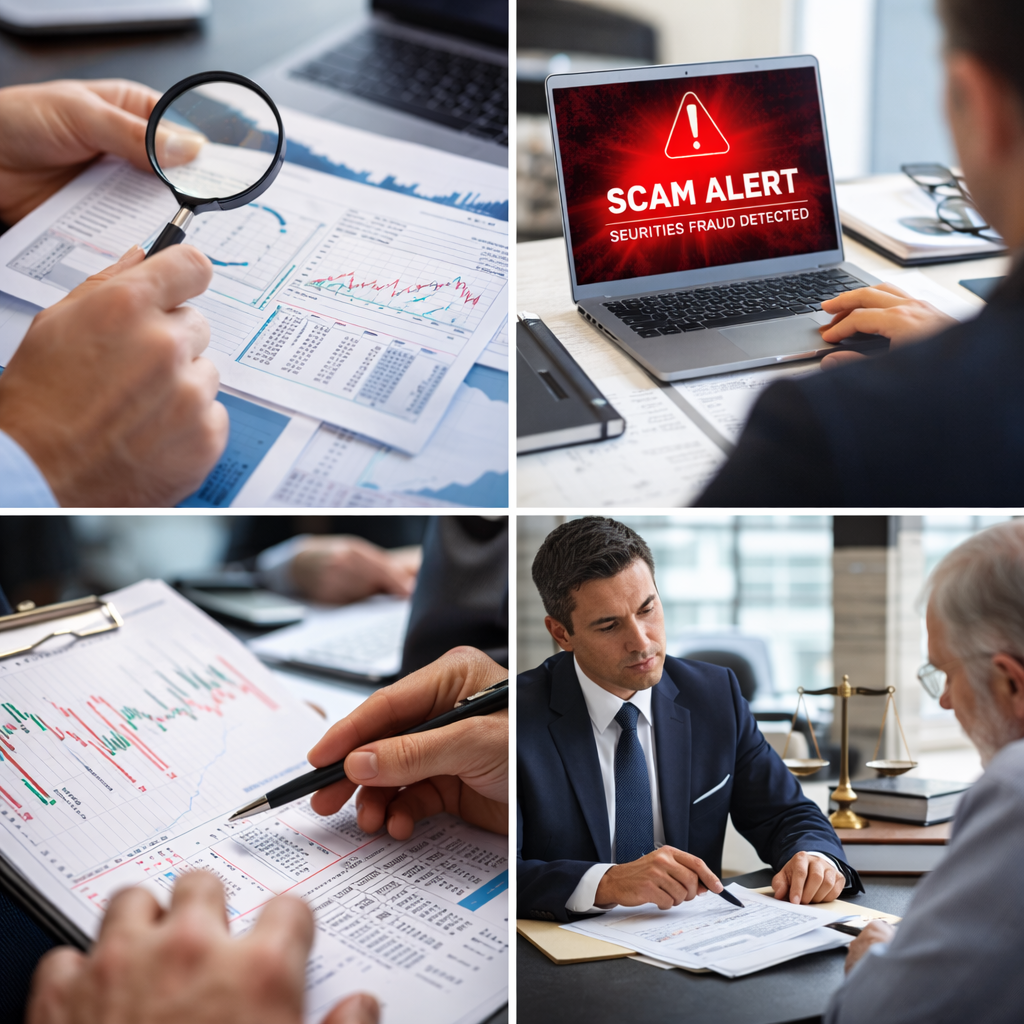
Red Flags to Watch For
Staying vigilant and spotting red flags is crucial for avoiding most securities fraud scenarios. There are classic warning signs that should prompt any investor to pause and think critically:
- Offers that promise guaranteed, high returns with little or no associated risk. No legitimate investment can guarantee large profits without any possibility of loss, so such claims should always be met with skepticism.
- Receiving unsolicited offers for investments via emails, phone calls, direct messages on social media, or even in-person pitches from individuals or companies you don’t know. Legitimate opportunities rarely come without any prior relationship or meeting.
- Tactics that urge you to act quickly, invest substantial sums, or keep the deal secret. Fraudsters may use high-pressure sales tactics to prevent you from fully considering the risks or seeking outside opinions.
- A lack of detailed, transparent information about the investment, the person selling it, or the organization’s history. When basic questions go unanswered, or if official records cannot be located, it’s a clear signal to step away.
- The use of confusing jargon, overly technical documents, or explanations that seem designed to intimidate or distract instead of enlighten. If you can’t get straightforward answers, that’s a sign of trouble.
If you notice any of these red flags, don’t rush to sign on the dotted line. Exercise caution, press for more information, and verify what you’ve been told using trusted third-party sources, including government agencies such as the U.S. Securities and Exchange Commission.
Steps to Protect Your Investments
- Conduct Thorough Research: Before handing over any money, do your homework. Investigate the company’s business plan, leadership team, and financial statements. Read independent reviews and news coverage to identify any warning signs or complaints. The Consumer Reports guide to recognizing fraud can help you spot common tricks used by scammers and evaluate opportunities more effectively.
- Verify Broker Credentials: All brokers and financial advisors must be licensed and regulated. Use resources from agencies like the Financial Industry Regulatory Authority (FINRA). The BrokerCheck tool lets you confirm that someone is registered and provides a record of disciplinary actions or complaints, if any.
- Be Skeptical of Unsolicited Offers: Investments that come to you unexpectedly, even if they sound compelling, deserve extra scrutiny. Always consult an independent licensed advisor before making decisions based on unsolicited advice.
- Understand the Investment: Never invest in something you do not fully comprehend or feel pressured to buy. Take your time to ask questions until you are satisfied. If it’s overly complicated or marketed using intimidating language, step back and assess if it’s a good match for your goals.
Resources for Investors
Protecting yourself also means using reliable information and trustworthy experts. There are numerous resources to help you double-check claims made by promoters, check the backgrounds of financial professionals, and keep track of emerging scams. Knowledgeable organizations and government agencies offer up-to-date tips, educational guides, and online tools specifically designed for investors at every level of experience. Some of the most valuable resources include:
- What You Can Do to Avoid Investment Fraud (Investor.gov) – offers comprehensive tips on avoiding common scams and strategies to protect yourself in the financial markets.
- Avoid Fraud (FINRA) – provides education, scam alerts, and tools to help you identify known fraudsters in the investing community.
Conclusion
Vigilance, education, and a healthy dose of skepticism are every investor’s best defenses against securities fraud. You are ultimately responsible for your financial decisions, so take ownership of your education, choose your advisors carefully, and don’t be afraid to ask tough questions. The resources provided by government agencies and nonprofits can empower you to make informed choices, and experienced legal professionals can provide additional support if needed. By staying informed and proactive, you help make the investment environment safer not only for yourself but for the entire financial community.