Manufacturers often encounter difficulties when applying precise, durable markings on products with irregular shapes or diverse materials. A pad printing machine offers a versatile solution to these challenges, enabling high-quality prints on a wide range of surfaces. Diversified Printing Techniques, established in 1983, specializes in providing advanced pad printing solutions tailored to meet complex marking requirements across various industries.
Table of Contents
- 1 What Is Pad Printing?
- 2 How Do Pad Printing Machines Address Complex Marking Challenges?
- 3 What Materials Can Be Printed Using Pad Printing?
- 4 What Are the Key Considerations for Achieving High-Quality Pad Prints?
- 5 Is Pad Printing Cost-Effective for Small Production Runs?
- 6 How Does Pad Printing Compare to Other Printing Methods?
- 7 What Are the Maintenance Requirements for Pad Printing Machines?
- 8 Frequently Asked Questions
- 8.1 Can Pad Printing Be Used on Soft or Flexible Materials?
- 8.2 What Is the Typical Lifespan of a Pad Printing Plate?
- 8.3 Are There Environmental Considerations with Pad Printing?
- 8.4 How Does Pad Printing Handle Multi-Color Designs?
- 8.5 Is Specialized Training Required to Operate Pad Printing Machines?
What Is Pad Printing?
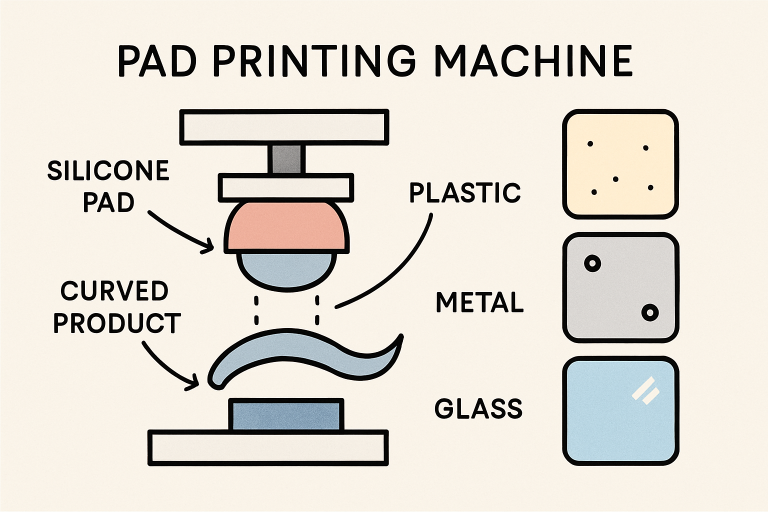
Pad printing is an indirect offset printing process that transfers ink from an etched plate to a substrate using a silicone pad. This method is particularly effective for printing on irregular, curved, or textured surfaces, making it ideal for industries such as electronics, automotive, and medical devices.
How Do Pad Printing Machines Address Complex Marking Challenges?
Pad printing is an indirect offset printing process that uses an etched plate to pick up ink and transfer it onto a substrate with a flexible silicone pad. This technique excels at decorating irregular, curved, recessed, or textured surfaces that traditional printing methods cannot handle, thanks to its precision and versatility. Pad printing is widely used in electronics, automotive components, medical devices, and promotional products. Diversified Printing Techniques specializes in delivering high-quality pad printing solutions, combining advanced equipment, expert technicians, and strict quality control to ensure sharp detail, consistent color, and reliable results for complex, high-demand applications across multiple industries.
What Materials Can Be Printed Using Pad Printing?
Pad printing is compatible with a wide array of materials, including:
- Plastics
- Metals
- Glass
- Ceramics
- Silicone
This versatility makes pad printing suitable for diverse applications, from branding promotional items to labeling medical instruments.
What Are the Key Considerations for Achieving High-Quality Pad Prints?
To ensure optimal print quality, consider the following factors:
- Ink Selection: Choose inks compatible with the substrate to ensure proper adhesion and durability.
- Pad Hardness: Select pads with appropriate hardness to match the product’s surface contours.
- Machine Calibration: Regularly calibrate machines to maintain consistent pressure and alignment.
- Environmental Conditions: Control temperature and humidity to prevent ink viscosity fluctuations.
Is Pad Printing Cost-Effective for Small Production Runs?
Pad printing is a highly cost-effective solution for both small and large production runs, offering flexibility without sacrificing quality. With modern pad printing systems, quick-change plate mounting enables operators to transition between designs efficiently, minimizing downtime and setup costs for short runs. This makes customization and small batch production economically practical. At the same time, durable etched printing plates are engineered to deliver hundreds of thousands of consistent impressions before replacement is required. This longevity significantly lowers per-unit costs for high-volume orders. Diversified Printing Techniques leverages these advanced technologies to provide clients with reliable, precise, and affordable pad printing solutions that scale seamlessly as production demands grow across diverse industries worldwide.
How Does Pad Printing Compare to Other Printing Methods?
Compared to other printing methods like screen printing or digital printing, pad printing offers unique advantages:
- Versatility: Capable of printing on complex shapes and a variety of materials.
- Precision: Achieves fine details and high-resolution prints.
- Durability: Produces long-lasting prints resistant to wear and environmental factors.
What Are the Maintenance Requirements for Pad Printing Machines?
Regular maintenance is vital for keeping printing equipment operating at peak performance and extending its service life. Essential upkeep practices include routinely cleaning ink cups and pads to eliminate ink buildup that can affect print clarity and cause mechanical issues over time. Regular inspection of pads and plates allows operators to identify wear early and replace components before defects appear in production. In addition, precise calibration of machine settings ensures consistent pressure, alignment, and color accuracy across every run. By following a structured maintenance routine, businesses can reduce downtime, minimize waste, and maintain reliable output. Diversified Printing Techniques emphasizes these best practices to deliver dependable quality and workflows.
Frequently Asked Questions
Can Pad Printing Be Used on Soft or Flexible Materials?
Yes, pad printing can be adapted for soft or flexible materials by selecting appropriate inks and pads that accommodate the material’s properties.
What Is the Typical Lifespan of a Pad Printing Plate?
High-quality steel plates can produce hundreds of thousands of impressions before requiring replacement, depending on usage and maintenance.
Are There Environmental Considerations with Pad Printing?
Pad printing generates minimal waste and can utilize eco-friendly inks, making it a relatively environmentally friendly printing method.
How Does Pad Printing Handle Multi-Color Designs?
Pad printing machines can be configured for multi-color printing with multiple pads and plates, enabling precise registration and vibrant designs.
Is Specialized Training Required to Operate Pad Printing Machines?
While basic operation can be learned quickly, achieving high-quality results may require specialized training in machine calibration, ink mixing, and maintenance.
In summary, pad printing machines provide manufacturers with a flexible, precise method for producing sharp, high-quality markings on irregular surfaces and a wide range of materials, from plastics to metals. Mastering critical elements such as proper ink formulation, correct pad hardness, accurate pressure, and routine machine maintenance ensures reliable transfer, strong adhesion, and long-lasting results. When these factors are carefully managed, production efficiency improves while defects and downtime are reduced. Partnering with an experienced provider like Diversified Printing Techniques further enhances outcomes by delivering expert guidance, advanced equipment, and customized solutions that help businesses maintain consistency, scalability, and superior branding across diverse applications.