Table of Contents
- 1 Embrace the Buy-and-Hold Approach
- 2 Diversify Your Portfolio
- 3 Implement Dollar-Cost Averaging
- 4 Rebalance Your Portfolio Regularly
- 5 Focus on High-Quality, Dividend-Paying Stocks
- 6 Stay Informed and Adapt to Market Changes
- 7 Consider Real Estate Investments
- 8 Leverage Technology and Data Analytics
- 9 Final Thoughts
Embrace the Buy-and-Hold Approach
A foundational principle of long-term investing is the buy-and-hold strategy. This method involves purchasing securities such as stocks, bonds, or funds and maintaining ownership through various market cycles, regardless of short-term volatility or temporary declines in value. The discipline to hold investments over years—or even decades—lets investors benefit from the general upward trend of the market, taking advantage of periods of recovery and growth that follow downturns. Over time, market appreciation and the reinvestment of earnings work together to generate compounding returns, a concept described as earning returns on both the original investment and on previous gains. The power of compounding over time can yield exponential growth, even from relatively modest initial investments. Many legendary investors, including Warren Buffett, attribute significant success to buy-and-hold investing, as this approach diminishes the emotional impulses to sell during downturns and encourages steady wealth accumulation.
When implementing this strategy through a digital platform like ridgelineapps.com, investors gain additional tools for tracking performance and portfolio integrity, supporting disciplined, long-term results. Automated reporting dashboards and alerts can help ensure that investors stay the course, stick to their chosen asset allocation, and resist the urge to make frequent, costly trades.
Diversify Your Portfolio
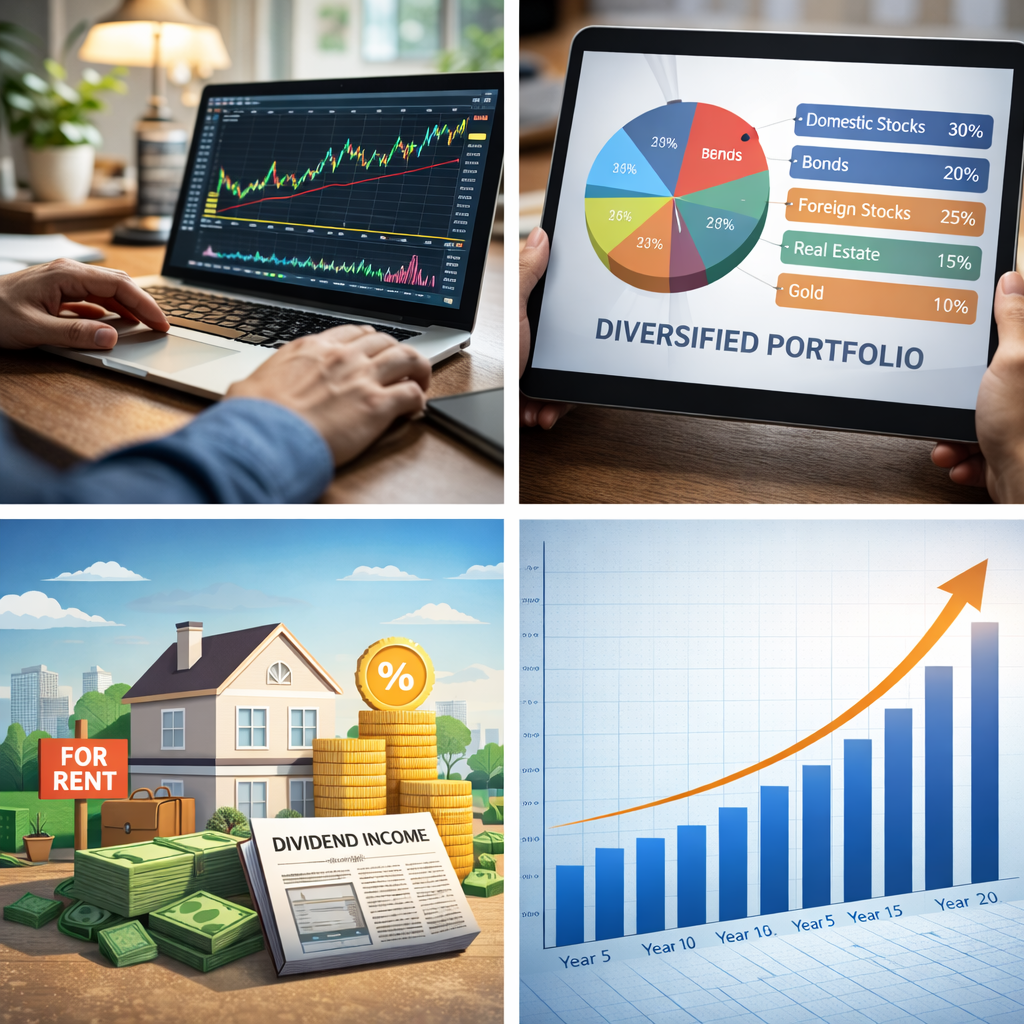
Diversification serves as a critical safeguard against risk in volatile markets. Rather than putting all assets into a single stock or sector, wise investors spread their capital across a range of asset classes, including domestic and international equities, bonds, real estate, and commodities such as gold or agricultural products. This reduces the potential impact if one investment performs poorly, as gains in other parts of the portfolio can help offset losses. Including a mix of growth-oriented stocks, historically stable bonds, liquid cash equivalents, and tangible assets helps smooth overall performance across different market and economic cycles. Diversification also encourages investors to think beyond short-term gains, focusing instead on building a resilient, adaptable portfolio designed for the long haul. According to research featured by the World Economic Forum, balanced diversification is one of the cornerstones of profitable investing over time, helping investors weather both bullish periods and financial crises.
Implement Dollar-Cost Averaging
Dollar-cost averaging is a disciplined investment approach in which a fixed dollar amount is invested at regular, preset intervals—monthly, for example, regardless of the asset’s current price. This technique ensures that more shares are purchased when prices are low and fewer when prices are high, resulting in a lower average cost per share over time. By sticking to a schedule, dollar-cost averaging makes it easier to remain committed and reduces the temptation to try to time the market, a strategy that studies show can erode returns due to frequent trading and emotional decision-making. For investors prone to “paralysis by analysis,” this approach creates a reliable, automatic plan and smooths out the emotional highs and lows of investing. By committing to consistent investments, individuals are less likely to let emotions influence their decisions during turbulent periods, allowing growth to compound steadily.
Rebalance Your Portfolio Regularly
Rebalancing ensures that your portfolio retains its intended risk and return profile. Over time, certain assets may outpace others, leading them to constitute a larger-than-intended portion of your portfolio and, if not addressed, introducing more risk or diminishing potential returns. For instance, if stocks rally and their share of your portfolio grows, your overall risk increases. Periodically reviewing and readjusting your investments, for example, shifting gains from outperforming sectors to those that have lagged, helps keep your asset mix in line with your long-term objectives and risk tolerance. This process should be undertaken regularly, such as annually or semiannually, or whenever there is a significant market movement that skews your allocation. This process is key to long-term performance consistency and discipline, allowing investors to avoid unintentional concentration and better protect their wealth. Guidance for effective rebalancing can be found on platforms like Investopedia.
Focus on High-Quality, Dividend-Paying Stocks
Stocks from companies with a long history of paying and increasing dividends offer unique advantages for long-term investors. Dividends provide regular, reliable income, even during periods of market stagnation, and evidence indicates that companies that steadily pay dividends tend to be more financially sound and better managed than non-dividend payers. Reinvesting those dividends in additional shares accelerates compounding, as future dividends are paid on a growing base of invested capital. Dividend income can also cushion the impact of declines in share price, adding stability to total returns. Furthermore, companies that increase their dividends historically outperform those that do not, as dividend growth signals underlying financial strength and management’s confidence in the business’s outlook.
Stay Informed and Adapt to Market Changes
To sustain investment growth, staying up to date on market dynamics is essential. Financial markets are influenced by global economic indicators, central bank policies, industry trends, and geopolitical events, all of which can impact the value and trajectory of your investments. Setting aside time for regular review of economic updates, earnings reports, and financial news ensures you are aware of developments that could affect your holdings. Successful investors must be open to making measured adjustments to their strategy as needed, whether that means shifting exposure between sectors, responding to major regulatory changes, or simply re-evaluating personal risk tolerance as life circumstances change. Flexibility and a willingness to update your investment strategy ensure portfolios remain responsive to changing environments, especially in increasingly complex and interconnected global markets. Sites such as BBC News and The Wall Street Journal routinely provide insights that can guide informed decision-making and help investors secure better outcomes.
Consider Real Estate Investments
Adding real estate to your investment mix introduces a unique balance of capital appreciation, rental income, and tax advantages. Real estate, whether held directly or through Real Estate Investment Trusts (REITs), often operates under different economic pressures than stock or bond markets, delivering added diversification and potential for stable returns. Rental properties can provide a steady stream of income while appreciating in value over the long term, and owners may be eligible for tax deductions related to mortgage interest, property taxes, and depreciation. Direct property investments require more involvement, but even passive investors can access real estate’s benefits through REITs, which trade on stock exchanges. Real estate assets are less correlated with traditional financial markets, often providing a buffer during times of stock market volatility. The benefits of including real assets are well documented by investment outlets such as Kiplinger, which highlight their role in balanced portfolios.
Leverage Technology and Data Analytics
Innovations in technology, especially artificial intelligence (AI), machine learning, and big data analytics, have revolutionized the ways investors analyze markets and identify opportunities. Advanced investment platforms and robo-advisors can swiftly sift through global financial data, uncovering patterns or signals that may not be apparent to human analysts. Real-time analytics help investors respond proactively to evolving trends, manage risk more effectively, and fine-tune portfolio allocations with greater precision. Visualization tools, predictive modeling, and scenario analysis enable both professional asset managers and retail investors to make more confident decisions, even in volatile markets. By leveraging these state-of-the-art resources, investors can access competitive advantages that were previously out of reach for all but the largest institutions.
Final Thoughts
Applying these proven strategies will help support and grow your investments for the future. By combining discipline, diversification, regular evaluation, and modern digital tools, investors can foster more reliable and enduring financial outcomes regardless of market conditions. The commitment to learning, adapting, and employing time-tested techniques ensures that your path to wealth is both stable and sustainable for years to come.