As the legal and technological landscape changes, estate planning has become more complex and nuanced. Modern Power of Attorney (POA) developments are at the forefront of this evolution, shaping the way families and individuals protect their interests. Understanding these shifts helps you stay proactive with your plans and ensure your wishes are honored. To take appropriate steps, individuals need to recognize the critical importance of staying current and aware of industry best practices. For more in-depth discussions about evolving legal tools in estate administration, visit estate planning.
The Power of Attorney, once a relatively straightforward document, is now subject to frequent legislative updates and technological innovations. The impact of these changes is significant for anyone seeking a secure and flexible approach to incapacity planning. By incorporating newer approaches to digital records, mandatory reporting, and enhanced agent accountability, it is possible to greatly reduce vulnerability to fraud or mismanagement.
The regulatory landscape has also shifted. Recent legal reforms, such as the Uniform Power of Attorney Act (UPOAA), are making POAs more consistent across states. Preparedness now requires regular document reviews and swift adaptation to new rules as they emerge. As families look to the future, thoughtful estate management is more important than ever.
Modern POA documents encompass much more than only financial and healthcare decisions. They address digital assets, mandate oversight, and protect against the risks of ambiguous or outdated forms. These trends go beyond basic documentation and expand the ways your agent can act in your best interest. Staying informed about developments and requirements could save your loved ones substantial time and resources.
Table of Contents
- 1 The Evolving Role of Power of Attorney in Estate Planning
- 2 Legal Reforms Enhancing POA Effectiveness
- 3 Technological Innovations in POA Management
- 4 Addressing Digital Assets in POAs
- 5 Increased Scrutiny by Financial Institutions
- 6 Mandatory Agent Training and Reporting
- 7 Regular Updates: A Necessity for Effective POAs
- 8 Conclusion
The Evolving Role of Power of Attorney in Estate Planning
The POA allows an agent to manage key financial and medical choices when authorized. While early POAs were static, today’s best practices call for adaptability and clarity. This is driven by the broader application of the POA to cover new asset classes, including online and digital holdings, and by the need to reflect changing family circumstances and relationships. As digital banking and paperless healthcare records become more widespread, so does the need for forward-thinking legal documentation.
Legal Reforms Enhancing POA Effectiveness
Adopting the Uniform Power of Attorney Act (UPOAA) has streamlined and clarified agent responsibilities, promoting cross-state recognition and reducing disputes with banks. For instance, Michigan’s implementation of the UPOAA clarifies terms, standardizes agent powers, and addresses the growing threat of elder abuse. These regulatory changes make successful estate planning more accessible and uniform.
Technological Innovations in POA Management
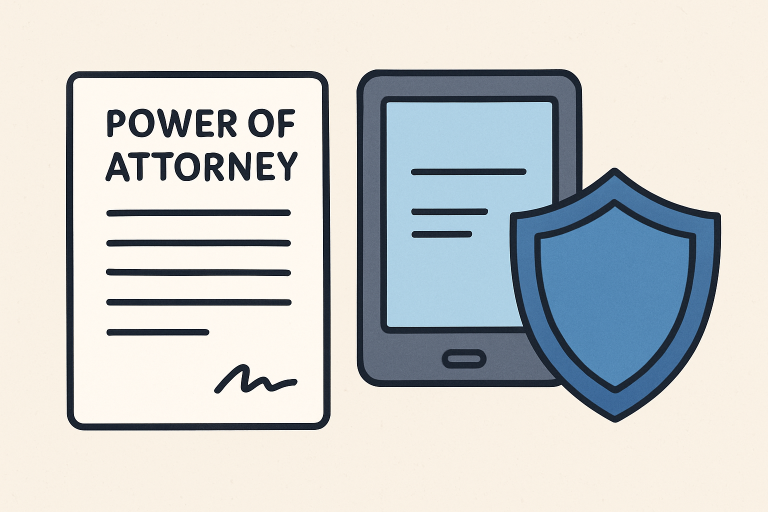
New technology has allowed people to draft, store, and even execute POAs entirely online. Virtual notarization and digital signatures, authenticated with robust encryption, enable POAs to be finalized even when travel or physical presence is not possible. This increases access, particularly for those with limited mobility or emergency needs. Technology also supports easier communication with financial institutions, helping secure swift recognition of legal documentation.
Addressing Digital Assets in POAs
The rapid growth in cryptocurrency, online banking, and digital business requires special consideration. If POAs do not address digital assets, families may struggle to access essential resources or information. Adding clear language about digital asset management is fundamental for modern estate plans.
Increased Scrutiny by Financial Institutions
Many financial institutions now thoroughly vet every POA they receive. Concerns about outdated, incomplete, or poorly worded documents lead to more frequent rejections or legal delays. Any uncertainty in a POA’s language may grant institutions grounds to deny transactions. As a result, it is crucial for clients to ensure their POA is current, detailed, and compliant with today’s standards to avoid costly issues when the document is needed most.
Mandatory Agent Training and Reporting
As awareness of elder financial abuse has grown, several states have introduced training requirements for agents. These courses, sometimes required before duties begin, address legal, ethical, and practical responsibilities and may be paired with periodic reporting mandates to courts or family members. These efforts increase transparency and protect principals from exploitation.
Regular Updates: A Necessity for Effective POAs
Shifts in personal or family situations, legislation, and available technology necessitate regular review and updating of your POA to remain practical and enforceable. It is recommended to revisit your plan every two to three years, or when significant life changes occur. By seeking professional legal advice, you can ensure your estate plan and Powers of Attorney remain efficient, compliant, and representative of your wishes.
Conclusion
An effective Power of Attorney does more than grant authority; it adapts to legal and technological realities to protect your future. Modern trends expand the importance of thoughtful planning, frequent reviews, and informed selection of trusted agents. Staying ahead of legal, financial, and digital developments ensures that your estate is managed as intended, preserving your legacy while reducing stress for those you care about.