Table of Contents
- 1 Introduction
- 2 Comprehensive Site Assessment
- 3 Engaging Stakeholders Early
- 4 Developing a Conceptual Site Plan
- 5 Conducting Feasibility Studies
- 6 Detailed Engineering and Technical Design
- 7 Environmental Impact Assessment
- 8 Permitting and Regulatory Compliance
- 9 Construction Documentation
- 10 Construction Management
- 11 Final Thoughts
Introduction
Embarking on a civil engineering project requires a structured approach to ensure success. Each stage of the process plays a vital role in the overall efficiency and quality of the end result. Whether developing a new residential community, a commercial complex, or critical infrastructure, an effective workflow begins with robust planning and carries through to diligent project execution. For those seeking expertise in site development engineering, understanding each step in this process is crucial.
An organized civil design workflow prevents costly errors, reduces the risk of delays, and ultimately delivers projects that benefit both communities and the environment. By bringing together technical knowledge, regulatory compliance, community input, and construction oversight, teams can deliver sustainable, resilient projects.
Comprehensive Site Assessment
Every successful project starts with an in-depth site assessment. This step involves evaluating the land’s topography, studying soil conditions, analyzing hydrology, and assessing existing utilities and infrastructure. Such a comprehensive investigation reveals both constraints and opportunities, shaping the design direction from the outset.
Understanding a site’s environmental and physical attributes enables engineers to anticipate potential challenges, including unstable soils, flood risks, and land-use conflicts. Early recognition of these issues drives informed decision-making and prevents costly redesigns later on. Research published by the American Society of Civil Engineers highlights the benefits of thorough site analysis in delivering successful civil projects.
Engaging Stakeholders Early
Successful civil design is rarely the product of technical expertise alone. Engaging property owners, regulatory officials, and community members as early as possible provides valuable insights that improve outcomes and reduce the likelihood of disputes or opposition later in the process.
Early collaboration builds trust, encourages community buy-in, and ensures that differing priorities are addressed before the design is finalized. By weaving stakeholder perspectives into the project’s DNA, designers foster outcomes that align with local expectations and are more likely to attain necessary approvals.
Developing a Conceptual Site Plan
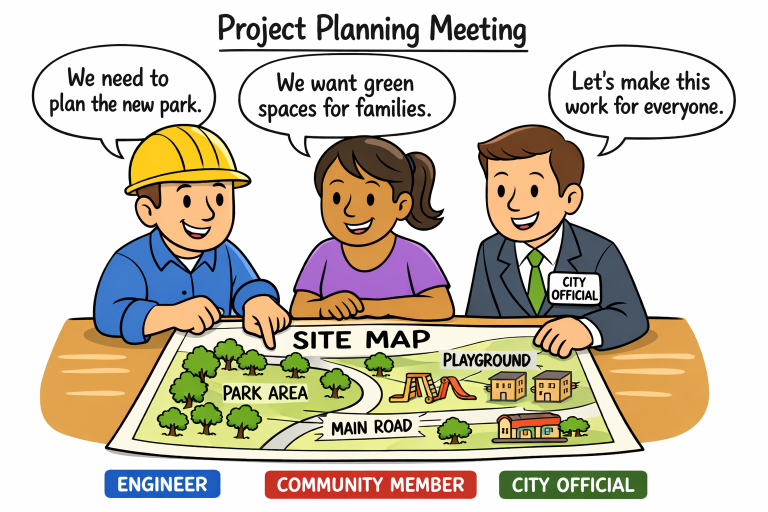
With site data gathered and stakeholder feedback incorporated, the design team moves on to creating a conceptual site plan. This document maps out proposed land use, circulation routes, building placement, stormwater management, and public spaces. It is an evolving document, subject to several iterations as designers address concerns and refine the project’s vision.
Effective conceptual planning helps avoid costly changes later. It is the phase where imagination meets pragmatic design, setting a clear foundation as the project progresses into greater detail.
Conducting Feasibility Studies
No project is immune to economic, technical, or regulatory obstacles. Feasibility studies conducted after conceptual planning provide a critical checkpoint to evaluate the project’s practicality. This stage examines cost estimates, compliance with zoning laws, environmental impacts, and construction risks.
Feasibility studies can also identify opportunities to optimize the project or pursue alternate approaches that might reduce costs or enhance sustainability. For instance, the U.S. Environmental Protection Agency demonstrates the economic and environmental benefits of thoughtful site development.
Detailed Engineering and Technical Design
With concept and feasibility confirmed, engineers dive into the granular details. This stage produces precise engineering drawings, detailed specifications, and calculations for site grading, utilities, drainage systems, roads, and structures. Advanced CAD software and modeling tools are often used to visualize and validate every aspect of the project.
The technical design phase ensures compliance with safety standards and local codes while setting the foundation for reliable construction documentation. Collaboration among multiple engineering disciplines is common to integrate structural, mechanical, and electrical elements smoothly.
Environmental Impact Assessment
Many civil projects require an environmental impact assessment (EIA) to evaluate effects on local ecosystems, water resources, and communities. The EIA process identifies risks to wildlife habitats, assesses the impacts on air and water quality, and proposes measures to mitigate negative effects.
Project teams adapt their plans based on EIA findings, helping eliminate or reduce environmental harm while smoothing the path to regulatory approval. Transparent reporting and community input are essential components of responsible civil design.
Permitting and Regulatory Compliance
Navigating the web of regulations, zoning codes, and approval processes is an inevitable part of any civil project. Engineers must secure all necessary permits from local, regional, and, in some cases, federal bodies before construction can proceed.
Working closely with the relevant authorities ensures that the project remains compliant and avoids costly legal hurdles. Proper documentation, timely submissions, and clear communication are key to securing approvals and maintaining momentum.
Construction Documentation
Once all approvals are obtained, the team prepares detailed construction documents. These include final drawings, technical specifications, schedules, and contract documents, all of which guide construction teams and contractors during the build phase.
Clear, up-to-date documentation minimizes misunderstandings, provides reference points throughout construction, and serves as the backbone of quality assurance.
Construction Management
The final step in the civil design workflow is construction management. Civil engineers and project managers oversee progress, coordinate with contractors, and handle any challenges that arise on site. Their role includes conducting inspections, verifying the quality of materials and workmanship, and ensuring compliance with plans and regulations.
Effective construction management is critical for keeping projects on schedule and within budget. It also ensures that the finished product matches the vision established during design, thereby fulfilling community needs, regulatory requirements, and sustainability goals.
Final Thoughts
Structured workflows are the backbone of successful civil engineering projects. From initial site assessment to final construction oversight, each step serves a purpose, guiding teams toward efficient, sustainable, and resilient solutions. By following these essential steps, project teams can overcome obstacles, deliver lasting infrastructure, and contribute to vibrant communities.