Domestic violence is still experienced by a quarter of the female and one-tenth of the male population in the United States. Knowing about restraining orders is fundamental for the victims of domestic violence.
According to a domestic violence restraining order lawyer, restraining orders are judicial measures designed to protect a person by imposing constraints on the offender or anyone who is harassing the individual seeking protection. Consult a domestic violence restraining order attorney to see what legal options are available for you to get such an order.
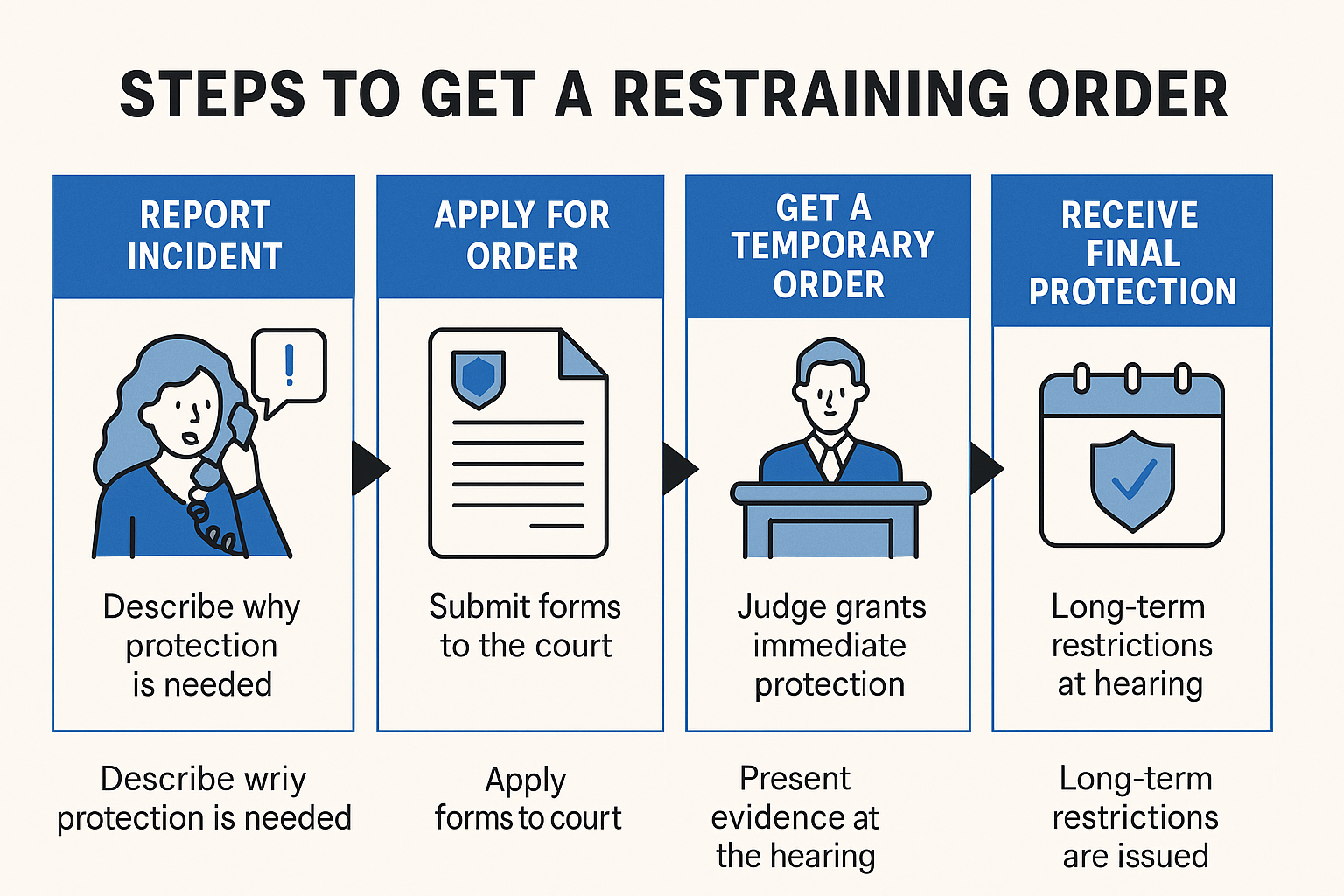
The judge will evaluate the situation (most of the time, on the same day) and then make a ruling about whether or not the immediate, temporary protection is necessary. The court subsequently moves forward with the procedure of evaluating the necessity of a long-term order.
Let us examine in detail the legal safeguards that are provided to victims of domestic violence and the steps one should take to be granted this court order.
Table of Contents
- 1 Understanding Domestic Violence and Its Impact
- 2 What Is a Restraining Order?
- 3 Types of Restraining Orders
- 4 Eligibility Criteria for Obtaining a Restraining Order
- 5 The Application Process for a Restraining Order
- 6 Preparing for the Hearing
- 7 What Happens During the Hearing?
- 8 Enforcing a Restraining Order
- 9 Resources for Victims of Domestic Violence
Understanding Domestic Violence and Its Impact
Domestic violence usually gets depicted as a loop of behavior aimed at dominating the victim. It consists of physical violence, threats, psychological control, and financial deprivation. The extent to which domestic violence can inflict harm is influenced by the actions of the victims and the whole society as a whole. The lack of emotional assistance and understanding for the victims of domestic violence frequently makes it harder for them to ask for help.
According to the Law Offices of Adam M. Cain, LLC, people who are charged with these crimes may face harsh and devastating outcomes, including going to prison and losing various relationships.
The recognition of domestic violence can’t be forced upon some communities. There should be a comprehensive change in society’s attitude towards domestic violence. The various members of the community are the ones that would benefit the most from the process of awareness and eventual fight against the problem.
What Is a Restraining Order?
A restraining order is a legal command that restricts one person’s actions towards another, also known as a protective order. Some orders address transient issues such as living arrangements or short-term child custody when safety is concerned.
A victim who requires protection submits an application requesting the court to assess their case and decide whether the imposition of temporary or long-term restrictions is legal under state law.
Types of Restraining Orders
Different types of protective orders for different phases of a domestic violence case are mostly provided by states. When the police encounter a dangerous situation, they frequently issue emergency directives, which are then reviewed and approved by a court upon formal application. Temporary orders are usually in place until a hearing, which allows the court to delve deeper into the matter. After a complete hearing during which both parties can present their case, judges may then give out a longer-term or “permanent” order if the evidence justifies a grant of protection.
Eligibility Criteria for Obtaining a Restraining Order
Every state has its own standards for granting a protective order against domestic violence. The eligibility criteria include inflicting bodily harm, attempting to intimidate, stalking, harassment, or applying physical force.
There are states where the court must first analyze the evidence to verify if the parties have a specific relationship, for example, being married, divorced, in a relationship, parents, living together, or related family members. Different types of evidence can be put forward like photographs, emails, texts, hospital records, or police reports, but in some states, no proof needs to be provided when filing at the court.
As the requirements vary from state to state, people very often confirm their eligibility for the state’s specific criteria or get in touch with a legal aid or victim advocate who would guide them in the local procedures as a way of seeking help.
The Application Process for a Restraining Order
The procedure normally begins with the submission of the relevant court forms by a person, which describe the incidents of abuse and the relationship of the parties involved. These forms are typically available at courthouses and on the official court websites. Court clerks or domestic violence advocates often provide assistance in various areas for individuals struggling to comprehend the documentation.
The judge will assess the documents that have been submitted and the request is typically granted on that very day. As a result, courts can issue a temporary restraining order to provide immediate protection until the scheduled hearing occurs. Normally, cases of domestic violence are waived off from payment of court fees, especially for applicants coming from low-income families. It is important to keep all the completed forms and payment receipts for the confirmations since these documents are proof that the recordkeeping is done correctly.
Preparing for the Hearing
A hearing is a procedure held by the court wherein it can gather more information before making a decision on the restraining order extension. The parties involved in the case usually provide different types of evidence, for instance, messages, pictures, health papers, or even witnesses’ statements, which is the usual practice. Recounting the incidents and deciding which way to present the matter will help the court’s comprehension of the case.
You might want to have attorneys or legal aid groups that provide you with necessary support in terms of document preparation, court procedure explanation, and trial expectations. Getting there early plus getting the paperwork ready is a superb way to lessen anxiety on the trial day by quite a lot.
What Happens During the Hearing?
The judge examines the evidence and also hears the witnesses for both sides. The protection seeker tells the story of the events leading to the lawsuit and potentially responds to the judge’s inquiries. The party opposing the protection can also present evidence or summon witnesses. Usually, judges want to know if state law backs up the issuance of a protective order and if there still is a necessity for additional protection.
The judge examines the case facts and then makes a decision regarding the restraining order. It can be ratified, modified, or rejected, and the judge also specifies the applicable restrictions.
Enforcing a Restraining Order
A restraining order is a legal document issued by the court that police can uphold. Individuals protected by the order must always have a copy with them to display at work, school or home as a measure of their personal safety. If any event takes place that concerns the order, recording the time, date, and situation will aid the police and court in understanding what type of incident it was. In quite a few states, the breaching of the restraining orders is treated as a crime. The police usually have a set way of dealing with reports of noncompliance that they follow.
Resources for Victims of Domestic Violence
Domestic violence victims can choose from a great many different resources. The local shelters and crisis centers that offer these services, along with safety planning, counseling, and crisis intervention, are also available. Confidential assistance is provided by national and state hotlines and they can be a connection to the nearby support services. Legal aid groups are also available to potential clients seeking to secure protective orders, prepare for court, etc. Meanwhile, people in support groups can feel accepted and understood while going through a challenging time.