Selecting the right roofing material is a crucial decision for homeowners looking to maximize the longevity, performance, and beauty of their home. The roof is your home’s primary shield against harsh weather, from blazing sun and torrential rain to heavy snow and high winds. With so many material options available, understanding the key differences will help you make a smarter, longer-lasting investment. Whether you plan to renovate, build new, or upgrade, working with a trusted roofing contractor can simplify the process and ensure high-quality results from the very start.
Durable roofing materials not only protect your property but can also improve energy efficiency and increase curb appeal—two factors important to both comfort and resale value. Choosing wisely means balancing factors such as climate, budget, maintenance, and style. Your roof should be able to withstand the unique weather patterns in your region while visually blending with the architectural tone of your neighborhood and home.
Table of Contents
Factors to Consider When Choosing Roofing Materials
1. Climate and Weather Conditions
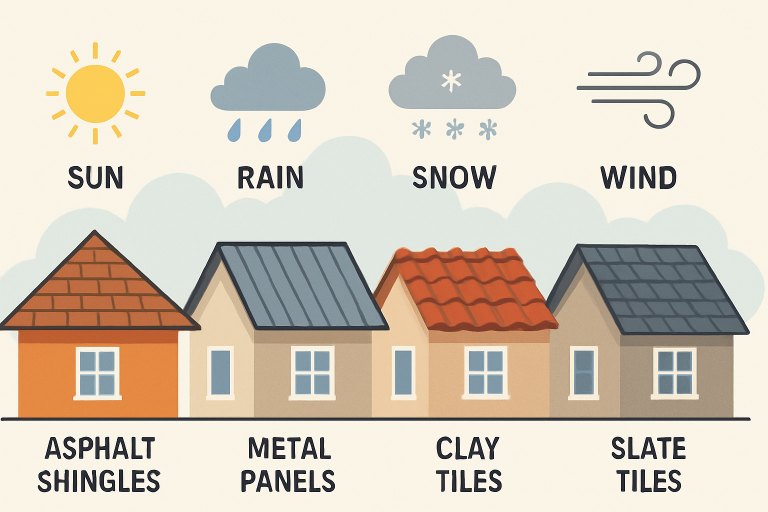
Climate dramatically affects how long a roofing material lasts and how well it functions. In areas with high temperatures and intense sunlight, look for materials that resist UV damage and reflect heat, such as metal or clay tiles. For wetter climates with significant rainfall, asphalt shingles and metal roofs are both water-resistant and less likely to leak or mold. If you live where snow and ice accumulate, choose materials like metal or slate that shed snow easily and withstand freezing temperatures. In regions prone to strong winds or hurricanes, it’s important to opt for roofing designed and rated for wind resistance, such as high-quality asphalt shingles or interlocking metal panels.
2. Longevity and Durability
One of the main reasons for replacing a roof is the natural breakdown of material over time. Asphalt shingles typically last about 20-30 years, making them a go-to for affordability. If you’re seeking a longer-term solution, metal roofing may last 40-70 years and is highly weather-resistant. Clay and concrete tiles can reach 50 years or more, while slate—one of the most enduring options—can last over a century when properly installed. Your choice should reflect both your short-term budget and long-term expectations.
3. Energy Efficiency
Roofing materials can significantly affect your home’s energy use by influencing how much heat is absorbed or reflected from your structure. Cool roofs, which are engineered to reflect sunlight, reduce air conditioning costs in hot climates. Metal roofing also excels in heat reflection and overall energy savings. On the other hand, clay and slate tiles have natural insulating properties, helping regulate temperatures in your home year-round. Learn more about how roofing affects energy consumption from the U.S. Department of Energy.
4. Maintenance Requirements
Different roofing materials require varying levels of upkeep. If you’re seeking a low-maintenance option, metal, slate, and composite shingles need little attention after installation. Asphalt shingles require occasional inspections and may need individual replacements over time. Wood shingles or shakes, while offering beautiful aesthetics, need regular resealing and monitoring for rot or insect damage. Choosing a lower-maintenance material can save time and unexpected costs in the long run.
5. Aesthetic Appeal
The look of your roof plays a major role in your home’s visual impression. Traditional homes tend to look best with asphalt shingles, wood shakes, or classic slate. Modern home designs often pair well with sleek metal or flat concrete tiles. If you reside in a Mediterranean or Spanish revival-style house, clay or terracotta tiles are an excellent match. Consider the historical context of your neighborhood and existing exterior colors and textures when making your selection.
6. Budget Constraints
Cost is an essential factor throughout your selection process. Asphalt shingles tend to be the most budget-friendly initially, but may require more frequent replacement. Metal, slate, and tile options come with higher upfront costs, yet offer extended lifespans and energy savings that could reduce expenses over the years of ownership. Calculate the total lifetime cost rather than focusing solely on the purchase price—sometimes a larger initial investment saves you more in the long run. Curious about average roofing costs nationwide?
Popular Roofing Materials and Their Characteristics
1. Asphalt Shingles
- Pros: Affordable, easy to install, widely available in many colors and textures.
- Cons: Shorter lifespan, can be vulnerable to extreme wind or hail.
- Best For: Homeowners looking for budget-friendly options in mild to moderate climates.
2. Metal Roofing
- Pros: Exceptional durability, energy-efficient, fire-resistant, and recyclable.
- Cons: Higher initial costs; noise can be an issue during storms unless soundproofing is added.
- Best For: Areas with heavy weather, snow, or when a modern appearance is desired.
3. Clay and Concrete Tiles
- Pros: Extremely long-lasting, stylish, and can withstand fire and rot.
- Cons: Heavier than other options—can require structural reinforcement—and have a higher installation price.
- Best For: Mediterranean or Spanish-style homes, and regions with hot, dry climates.
4. Slate Roofing
- Pros: Highly durable, beautiful natural finish, environmentally friendly.
- Cons: Costly and heavy, requiring skilled installation and reinforced structures.
- Best For: Luxury properties, historic renovations, or buyers wanting a roof that lasts a lifetime.
5. Wood Shingles and Shakes
- Pros: Unique, natural appearance; effective insulator; eco-conscious option if sourced sustainably.
- Cons: Demands regular maintenance; susceptible to fire, molds, and insect infestation.
- Best For: Rustic, traditional, or cottage-style homes seeking a natural finish.
Conclusion
Deciding on the right roofing material means weighing many factors: climate, durability, aesthetics, budget, and more. By taking the time to compare your options and understanding the impact of each material, you’ll secure a roof that elevates your home’s protection, energy performance, and visual charm for years to come. Whether you opt for tried-and-true asphalt, sleek metal, or classic clay, work with experienced professionals and invest in quality materials to get the best results for your home and family.