
Table of Contents
Understanding DDoS Attacks and Their Consequences
The threat of Distributed Denial-of-Service (DDoS) attacks has grown substantially in recent years. These attacks typically involve malicious actors overwhelming a network, application, or online service with massive amounts of traffic, aiming to make legitimate access impossible. The consequences can be severe, including financial losses, damaged reputation, and lost customer trust. To thwart these disruptions, organizations now treat DDoS prevention and mitigation as a key part of their cybersecurity plans. Leveraging a robust DDoS protection service and integrating advanced security systems are foundational for safeguarding mission-critical operations.
As the scale and sophistication of DDoS threats advance, so too must organizational response capabilities. A modern approach means deploying technology that filters, blocks, and absorbs these massive traffic surges before they reach the targeted infrastructure. This philosophy prioritizes minimizing downtime and enabling business continuity regardless of the nature or size of an attack.
Proactive Defense Strategies
Rather than waiting for an attack to happen, forward-thinking companies use proactive measures to prevent DDoS incidents or limit their impact. Network redundancy is frequently adopted, distributing resources across multiple servers and geographically diverse data centers. This ensures that, even if one location is overwhelmed, others continue to function normally.
Other proactive strategies include deploying real-time traffic analysis to detect unusual spikes or patterns indicative of malicious activity. This early detection is vital for stopping an attack before it fully escalates. Rate limiting is another key tactic that limits the number of requests a server accepts within a given timeframe, reducing the risk that malicious bots will overwhelm network resources.
According to CSO Online, combining these strategies with robust staff awareness and security protocols prepares organizations to withstand a range of potential scenarios.
Advanced DDoS Mitigation Services
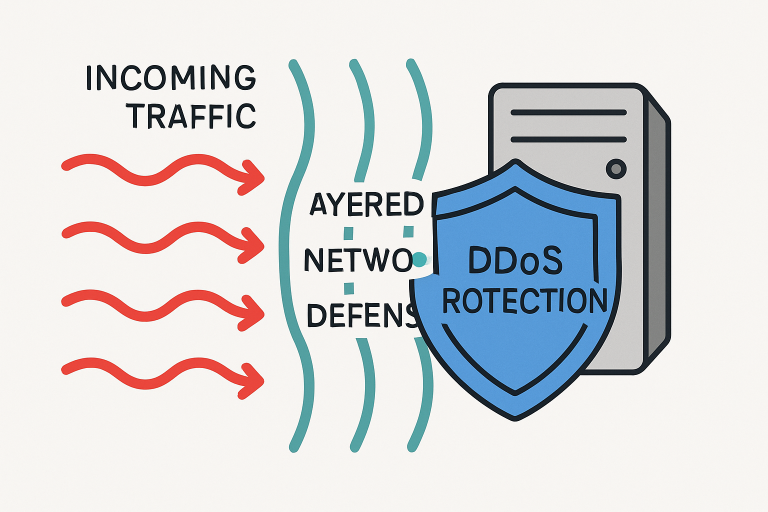
Due to the sheer scale and complexity of modern attacks, many organizations augment their defenses by partnering with specialized mitigation providers. Services like those offered by Cloudflare and Akamai use global networks to filter out or absorb harmful traffic before it reaches client systems. These providers continuously update their detection and response mechanisms, staying ahead of emerging attack vectors.
For example, Cloudflare reported blocking an 11.5 Tbps DDoS attack, underscoring the importance of choosing partners with substantial global reach and proven technology. These services ensure no single point of failure is exploited, and that even record-breaking traffic surges are intercepted far upstream of the victim network.
More on these advances and others in DDoS mitigation can be found in ZDNet’s DDoS primer.
Adaptive Defense Mechanisms
Attackers consistently evolve their tactics, which makes adaptive defense essential. Machine learning algorithms now play a pivotal role by recognizing subtle anomalies and rapidly adjusting responses in real time. Artificial intelligence is trained to distinguish legitimate traffic from the noise of a bot-driven attack, enabling faster, more accurate interventions.
Behavioral Analysis and Automated Response
Many organizations establish detailed baselines for normal network behavior, making it easier to spot and isolate suspicious traffic flows. Automated response systems kick in when threats are detected, automatically rerouting, throttling, or blocking malicious packets, even before human intervention is possible. This real-time action shrinks the response window and dramatically reduces the risk of disruption.
Case Studies of Successful DDoS Mitigation
Recent high-profile events highlight the critical importance of multi-layered DDoS defense strategies. In 2025, Microsoft Azure successfully mitigated a staggering 15.72 Tbps DDoS attack, underscoring how cloud-based, scalable protections can absorb even unprecedented traffic surges. Around the same time, Cloudflare blocked an 11.5 Tbps assault, maintaining uninterrupted service for its clients and safeguarding their trust during extreme conditions. These incidents illustrate that technological safeguards alone are insufficient; effective mitigation requires integrating advanced tools, skilled cybersecurity teams, and proactive planning. Organizations that implement comprehensive, adaptable defenses are far better positioned to maintain operational continuity, protect sensitive data, and respond decisively to evolving threats. Ultimately, resilience against DDoS attacks hinges on coordination among strategy, expertise, and technology.
Continuous Monitoring and Security Improvement
The landscape of DDoS threats is constantly evolving, making continuous vigilance essential. Cybersecurity teams must proactively monitor network activity, regularly audit system architecture, and update security measures to address emerging vulnerabilities. Conducting simulated attacks or stress tests allows organizations to evaluate their defenses under realistic conditions and identify potential weaknesses. By maintaining this proactive approach, companies ensure that their networks remain resilient, mitigating the risk of disruption and staying ahead of attackers who constantly adapt their tactics.
Security Audits and Future Prep
Regular audits play a crucial role in identifying vulnerabilities within an organization’s systems, allowing companies to address weaknesses before they are exploited. Coupled with continuous investment in employee training and the latest security technologies, these measures help organizations stay ahead of evolving cyber threats. By fostering a proactive approach, businesses ensure their security posture is dynamic, resilient, and able to adapt to new challenges, protecting critical data, maintaining operational continuity, and sustaining stakeholder trust in an ever-changing threat landscape.
Conclusion
In today’s increasingly hostile digital environment, distributed denial-of-service (DDoS) attacks pose a significant risk to organizations of all sizes and sectors. These attacks can overwhelm networks, disrupt services, and lead to reputational and financial damage if left unaddressed. A robust defense requires a multi-layered strategy that combines proactive prevention measures, real-time monitoring, and advanced mitigation services to detect and neutralize threats before they impact critical systems. Incorporating adaptive, intelligent defense technologies, such as AI-driven traffic analysis and automated response mechanisms, enhances resilience against evolving attack methods. By remaining vigilant, continuously updating defenses, and preparing for new attack vectors, organizations can maintain uninterrupted access for users, safeguard operational stability, and protect sensitive data from malicious disruption.