Table of Contents
- 1 Introduction to Master Data Management (MDM)
- 2 Understanding Data Governance
- 3 The Intersection of MDM and Data Governance
- 4 Benefits of Integrating MDM with Data Governance
- 5 Challenges in Implementing MDM within Data Governance
- 6 Real-World Applications and Case Studies
- 7 Best Practices for Successful MDM and Data Governance Integration
- 8 Final Thoughts
Introduction to Master Data Management (MDM)
Master Data Management (MDM) is a core practice for ensuring that an organization’s key data assets remain consistent, accurate, and well-maintained across all business units. Centralizing master data enables companies to establish a reliable source of truth, supporting collaboration and operational efficiency. Good MDM practices foster data integrity and allow stakeholders to trust and effectively utilize information throughout organizational processes. Whether you are optimizing enterprise-wide systems or striving for regulatory compliance, adopting the right approach to MDM labeling can be a differentiator in achieving reliable outcomes.
With digital transformation accelerating business, the challenges of managing rapidly growing data volumes have become more pronounced. Organizations need robust MDM strategies to eliminate data silos, harmonize conflicting records, and lay the foundation for their data governance objectives. By integrating MDM within broader data governance frameworks, businesses can enhance internal workflows while reinforcing accountability when handling critical data.
Understanding Data Governance
Data governance provides the guidelines and standards necessary for maintaining secure, compliant, and high-quality data. This discipline encapsulates the various policies, procedures, and responsibilities required to oversee data stewardship at every level of an organization. By defining who owns the data, how it can be used, and how long it is retained, governance initiatives safeguard the organization against data misuse and regulatory penalties.
Proper data governance ensures that data remains reliable, accessible, and resilient, enabling organizations to respond with agility to both market opportunities and regulatory requirements. Governance functions extend from the establishment of roles and permissions, through to the enforcement of data lifecycle management and risk reduction policies. Greater awareness of best practices in data management is crucial for organizations aiming to succeed in today’s information-driven economy.
The Intersection of MDM and Data Governance
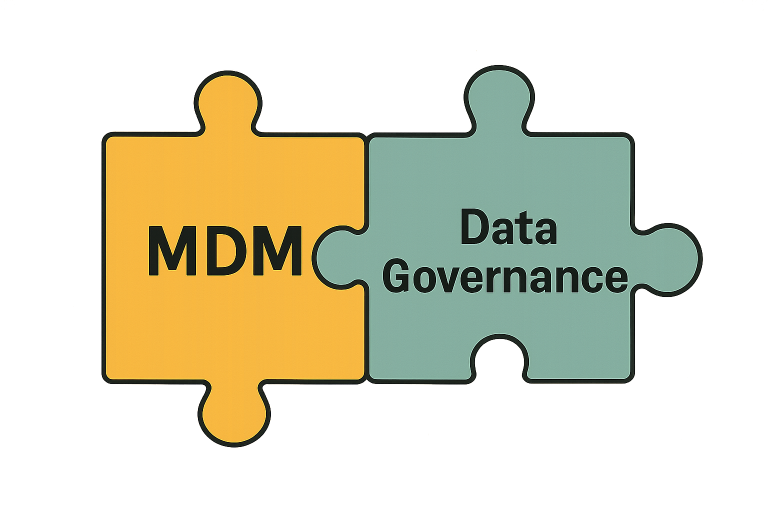
The interplay between MDM and data governance creates a comprehensive ecosystem in which data is structured, governed, and made actionable across business operations. MDM provides the technology and practical approach necessary to consolidate critical data elements, while governance initiatives shape the policies and compliance expectations that guide those efforts. When MDM and governance are implemented in tandem, both technical and strategic goals are more easily achieved.
This symbiotic relationship allows businesses to resolve data conflicts, overcome inconsistencies, and enforce standardized processes across disparate teams and platforms. By bridging gaps between data silos and aligning master data initiatives with governance rules, organizations are better equipped to create value from their information assets. As detailed by Harvard Business Review, successful data governance relies on consistent, accurate data as much as it does on robust policies.
Benefits of Integrating MDM with Data Governance
- Enhanced Data Quality: Bringing together MDM and governance reduces the likelihood of duplicate or inconsistent records. This improvement in data quality makes analytical efforts more trustworthy and actionable.
- Regulatory Compliance: Organizations can more confidently meet regional and industry-specific data requirements by adopting a unified approach to management and stewardship.
- Improved Decision-Making: Reliable, centralized data enables faster, better decisions across management and operations by minimizing confusion and delays caused by conflicting records.
- Operational Efficiency: When teams work from the same set of trusted data, processes are streamlined and productivity is maximized while manual interventions are minimized.
Challenges in Implementing MDM within Data Governance
Integrating MDM with data governance is not without its hurdles. Many organizations face deeply entrenched data silos that complicate efforts to standardize and harmonize information assets. Additionally, obtaining stakeholder buy-in can be difficult, particularly when operational change threatens established habits or workflows.
Complex data landscapes, especially in large multinational organizations, further complicate the effort, demanding effective strategies, clear lines of accountability, and advanced technology capable of handling diverse data formats and sources. These organizational and technical challenges can be mitigated by open communication, stakeholder engagement, and a focus on continuous improvement.
Real-World Applications and Case Studies
Industry leaders have demonstrated that investing in robust MDM solutions, paired with structured governance frameworks, yields significant improvements in data accuracy and regulatory compliance. SAP’s Master Data Governance, for example, is widely regarded as a market leader, offering solutions that strengthen master data quality and embed compliance into everyday business tasks.
From retail to healthcare and financial services, organizations are leveraging integrated approaches to standardize key data domains, foster cross-team collaboration, and reduce their exposure to costly regulatory risks. These cases underscore the value of enterprise-wide alignment and the right mix of technology and policy integration.
Best Practices for Successful MDM and Data Governance Integration
- Establish Clear Objectives: Set precise, measurable goals at the outset. Identify what you hope to achieve through MDM and governance cooperation, and ensure all key stakeholders are aware of these aims.
- Engage Stakeholders: Broaden participation to include data stewards, technical teams, compliance officers, and business unit leaders. Regular workshops and communication channels help maintain alignment.
- Implement Robust Policies: Develop and enforce guidelines that standardize data processes, ensure proper use, and protect data privacy. Periodic reviews can ensure these remain up to date as business needs evolve.
- Leverage Technology: Invest in modern data management platforms that integrate quality monitoring, compliance controls, and real-time data access. Leading platforms often offer modular tools that make it easy to adapt to changing requirements.
Final Thoughts
Successfully integrating Master Data Management with data governance lays the foundation for trusted, compliant, and actionable data. This union not only lifts the quality and usability of enterprise data but also enhances business decision-making and reduces operational complexities. As organizations race to leverage data for strategic advantage, the necessity of coordinated MDM and governance strategies will only increase. Proactive organizations that address their technical and organizational challenges today will be best positioned to harness tomorrow’s opportunities.