Every year, thousands suffer injuries due to slip and fall accidents, many of which occur on someone else’s property. For individuals seeking compensation for their injuries, understanding property owner liability is key. The process requires clear legal guidance, supported by evidence and knowledge of the circumstances surrounding the incident. Whether you are an injured visitor or a property owner seeking to protect your interests, knowing how to prove or defend against liability is essential. If you need legal assistance for slip and fall cases in New Jersey or Pennsylvania, the attorneys at Sattiraju & Tharney focus on representing both plaintiffs and defendants in personal injury law.
Slip-and-fall claims involve complex legal standards and require careful investigation to determine responsibility. Factors like weather and poor maintenance contribute to accidents. Without proper evidence, proving negligence is difficult, especially when multiple parties share responsibility. These cases need clear explanations of property owner duties and understanding of state-specific rules, such as the need to show that an owner should have known about the hazard, which can significantly impact the claim.
Table of Contents
Understanding Property Owner Responsibilities
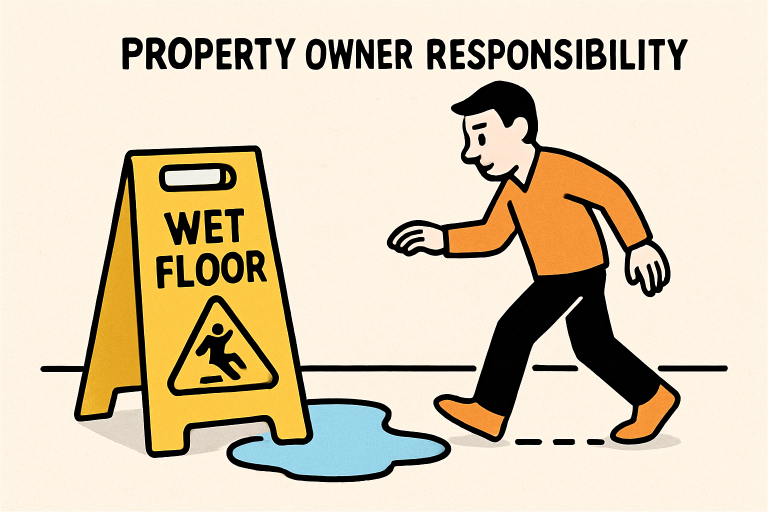
Property owners and occupiers have a legal duty to provide a reasonably safe environment for those who enter their premises. This responsibility is especially significant for businesses that invite customers onto their property. Owners must regularly inspect their property for hazards, promptly repair them, and post clear warnings when a dangerous condition is identified but has not yet been remedied. Negligence typically arises when an owner fails to take these reasonable steps and an injury results.
For instance, a spilled drink in a grocery store aisle requires prompt cleaning and the placement of a warning sign. If the hazard is left unaddressed for an unreasonable period and someone is injured, the store may face liability for failing to fulfill its duty of care. Similar principles apply to landlords and homeowners who must ensure walkways, driveways, and common areas are safe for both guests and residents.
Elements Required to Establish Negligence
Proving liability in a slip and fall accident centers on four primary elements of negligence. Each element must be demonstrated by the injured party (plaintiff) to have a valid claim:
- Existence of a Hazardous Condition: The claimant must show that a hazardous condition existed, such as a puddle of water, icy steps, or broken flooring. The hazard should present an unreasonable risk of harm, not an everyday minor risk most people could anticipate and avoid.
- Knowledge of the Hazard: The injured party must demonstrate that the property owner knew or should have known about the hazard through regular inspection or because it existed for a sufficient period to be discovered by reasonable means.
- Failure to Address the Hazard: It must be shown that the property owner or occupier failed to act reasonably in addressing the hazard—either by fixing it, warning visitors, or making it inaccessible until repaired.
- Direct Causation: Finally, there must be a direct link between the property’s hazardous condition and the injuries sustained by the plaintiff. Without clear causation, even clear negligence may not result in owner liability.
Gathering Evidence to Support Your Claim
Evidence is vital in any slip and fall claim. Without tangible proof, assertions of negligence are unlikely to succeed in court. Consider collecting the following when building a case:
- Photographs: Take pictures of the hazardous condition and the accident scene as soon as possible to preserve a visual record before any changes or repairs occur.
- Surveillance Footage: Request copies of any video footage from security or nearby cameras, as these may capture the moment of the incident and substantiate your claim.
- Witness Statements: Secure testimonies from anyone who saw the incident or can attest to the dangerous condition.
- Maintenance Records: Obtain records of property inspections and repair logs, as they can reveal whether regular care was provided or hazards were ignored.
- Medical Reports: Preserve medical documentation for all injuries and treatments received following the fall, which can support compensation claims by establishing the link between the incident and the harm suffered.
The Impact of Comparative Negligence
In many states, the principle of comparative negligence applies when both parties share some degree of fault. If the injured person contributed to the accident by failing to protect their own safety, for example by ignoring posted warnings or wearing inappropriate footwear, their compensation may be reduced by their percentage of fault. For example, if the court establishes the injured party was 30 percent responsible due to distraction, damages awarded may be reduced by that proportion. In rare circumstances, when the injured party is determined to be more than half responsible, some states bar recovery entirely.
Comparative negligence is an evolving legal concept.
Statutory Variations Across States
The law on slip-and-fall liability varies from state to state. Some states require proof that the owner had “constructive knowledge” of a danger, while others apply strict rules for certain property types. In California, for instance, property owners are obliged to maintain their premises in a reasonably safe condition and can be held liable for harm if they fail to do so. Florida law, however, places greater responsibility on the injured party to prove that the property owner had prior notice of the hazard or should have known of it through regular maintenance. These variations make it vital for claimants to research or consult a local attorney on the specific rules in their jurisdiction before proceeding with legal action.
Conclusion
Navigating a slip-and-fall claim requires a clear understanding of property owner duties, the elements of negligence, and evidence collection. To strengthen your position, focus on documenting the hazardous condition, demonstrating owner knowledge, and clearly linking the fall to your injuries. Awareness of comparative fault and state differences in the law is equally important for setting reasonable expectations and maximizing recovery. Whether you are defending a property claim or pursuing damages, diligence and legal knowledge are your best resources for a favorable outcome.