When navigating the complexities of insurance claims, a clear understanding of key roles like insurance adjusters and appraisers can significantly affect your outcome. Although both professionals are crucial to resolving claims, their responsibilities, authority, and the points at which they become involved are distinct. To fully grasp the process, it is helpful to know the main differences between these two, as explained in detail in this resource on insurance adjuster vs appraiser.
Adjusters and appraisers bring different expertise to the table. Adjusters typically lead the investigation and negotiation stages, while appraisers step in when there is a disagreement over the valuation of damages. This balance ensures both the insurer and policyholder have a fair shot at resolving claim disputes efficiently, without requiring litigation.
Understanding the precise capacity of each can save policyholders time and help avoid common pitfalls during the claims process. Knowing when to request an appraisal, or when an adjuster’s interpretation is final, helps parties act in their best interest. For those dealing with complex or high-value property claims, a detailed assessment from an experienced professional like an insurance appraiser in Connecticut can be particularly impactful.
Table of Contents
Roles and Responsibilities
Insurance adjusters and appraisers each have specific roles that serve different interests in the claims process:
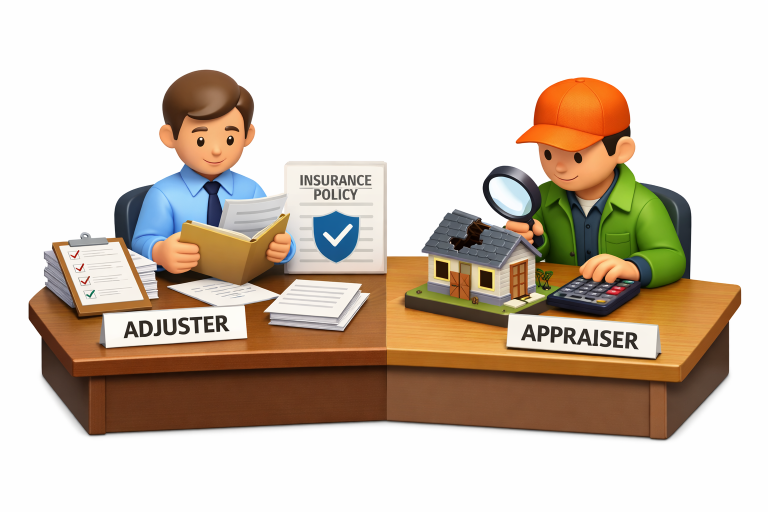
- Insurance Adjusters: Adjusters review the details of a claim by examining evidence, inspecting damaged property, interviewing involved parties, and interpreting the insurance policy. Depending on their roles, such as staff adjusters, independent adjusters, or public adjusters, they may act on behalf of the insurer or the policyholder. Their main goal is to establish whether coverage exists and help determine liability and the amount for settlement.
- Insurance Appraisers: Appraisers focus on determining the value of the property damage only. Usually brought in when there is a dispute over settlement value, the appraiser is responsible for providing an impartial assessment of loss. Unlike adjusters, they do not decide on coverage or liability but merely quantify the amount of damage in question.
Authority and Decision-Making
Adjusters wield considerable authority during most of the claims process. They have the final say when it comes to coverage, determining liability, and settlement negotiations. Their assessment often directs the insurer’s response to a claim, including how much to offer in settlement. Appraisers are limited solely to calculating the financial value of losses and do not intervene in policy interpretations or coverage disputes. Their findings typically come into play only if the parties cannot agree on the amount owed.
When to Engage an Appraiser
Appraisers are called in when negotiations between the policyholder and insurer stall on the question of how much damage occurred or the cost of repairs. This situation arises after the adjuster’s assessment if either party feels the proposed settlement does not accurately reflect the actual loss. Most insurance policies outline an appraisal process: each side appoints its own appraiser, and together these appraisers select an impartial umpire. The majority decision determines how much the insurer must pay. This approach gives both policyholders and insurers a mechanism to resolve disputes without going straight to court, usually resulting in faster outcomes and lower legal costs.
Legal Considerations
Legal clarity is critical in these roles. For instance, several court rulings have reinforced that public adjusters cannot serve as appraisers in the same claim if the contract requires each appraiser to be “disinterested.” This principle ensures impartiality in the appraisal process and prevents conflicts of interest. State laws and recent legal precedents continue to shape the boundaries and ethical obligations for adjusters and appraisers, impacting how claims are resolved, especially in high-stakes disputes. To stay updated on legal changes, many in the industry rely on recognized institutions like the Insurance Information Institute for best practices.
Educational and Certification Requirements
Insurance adjusters are licensed and regulated by the state. Requirements usually include state-approved coursework, licensing exams, and continuing education to ensure adjusters remain current on changes in law and best practices. Appraisers, particularly those working with automobile damage, often come from automotive repair backgrounds and may need certifications specific to their appraisal field. Regulatory expectations differ by state, but both professions are subject to oversight to ensure accuracy and impartiality in their work.
Impact on Claim Outcomes
The timing and involvement of adjusters and appraisers can significantly influence claim outcomes. Early engagement with an adjuster sets the tone for negotiations, while involving an appraiser during a value dispute helps ensure the final settlement accurately reflects the loss. Policyholders who understand these roles and exercise their right to an appraisal when necessary often secure better outcomes and accelerate the resolution process by minimizing unnecessary delays or disputes.
Conclusion
Navigating insurance claims successfully demands a sound understanding of the unique roles occupied by adjusters and appraisers. Adjusters manage the primary investigation and negotiation phases, setting the direction for claim resolution, while appraisers bring impartiality when a valuation dispute emerges. Knowing when to call upon each professional provides policyholders with greater control and confidence throughout the process, ultimately ensuring that claim settlements are fair, prompt, and based on accurate assessments.