For Fort Mill homeowners, an electric vehicle can fit naturally into a routine that includes commuting, school drop-offs, errands, and trips across the greater Charlotte area. The right home setup starts with daily habits, not simply the fastest equipment available. A thoughtfully planned EV charger installation can make charging easier to manage while accounting for the home’s parking layout and electrical capacity.
Whether a vehicle is parked in an attached garage, a detached garage, a carport, or a driveway, the goal is the same: dependable charging that is safe, convenient, and appropriate for the household. Fort Mill’s mix of newer neighborhoods and established homes means electrical panels, parking distances, and outdoor exposure can vary considerably from one property to the next.
Table of Contents
Start With Daily Driving Needs
Estimate how far and for how long the vehicle travels on a typical weekday, and account for parking time at home. A Fort Mill driver with short routes and full overnight parking may have different needs than someone with frequent long trips between South Carolina and Charlotte. Weekend travels, school activities, and multiple household vehicles should also influence the decision. For example, a driver with modest travel and long parking might prefer slower charging, while someone who returns late or leaves early with a larger battery might need faster charging. The key is whether the system can reliably restore energy before the next drive.
Home electrical planning can overlap with other resilience goals. If a Fort Mill household is considering generator installation, it is useful to discuss both projects together so that the electrical system, panel space, and priority loads are considered as a single coordinated plan.
Compare Level 1 And Level 2 Charging
Most home EV charging falls into two categories. Level 1 equipment generally connects to a suitable standard household outlet and charges more gradually. Level 2 equipment uses a higher-voltage dedicated circuit and is designed to deliver greater charging capability while a vehicle is parked.
- Level 1: Often a sensible option for plug-in hybrids, light daily driving, or vehicles that remain parked for long periods.
- Level 2: Often a better fit for longer commutes, larger batteries, multiple EV households, or drivers who want more flexibility overnight.
- Equipment selection: The vehicle connector, charger output, circuit rating, and installation location must all work together.
The U.S. Department of Energy’s home charging guidance explains that both Level 1 and Level 2 equipment can serve residential drivers, depending on parking time and daily driving range requirements.
Check The Home’s Electrical System
Before buying a charger, review your home’s electrical system. The panel’s size is only one factor; household loads like appliances, electric heat, water heaters, dryers, and pool equipment impact available capacity. Consider breaker space, need for a dedicated circuit, distance from panel to parking, and whether conduit is needed. Load management might help if capacity is limited but a full upgrade isn’t necessary. The EPA advises consulting an electrician to evaluate capacity, circuit needs, and installation before starting work.
Choose A Practical Charger Location
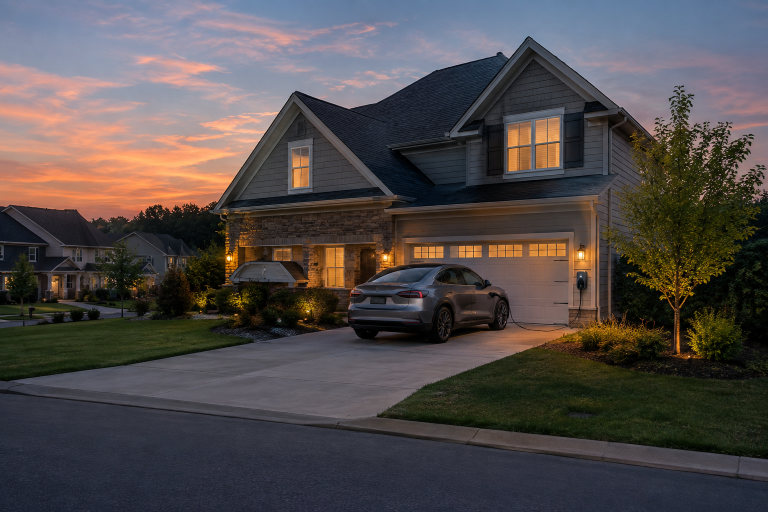
Placement affects the daily experience as much as charging speed. Plan around where the vehicle actually stops, not merely the closest wall to the electrical panel. The charging cable should reach the vehicle comfortably without stretching across a walking path, driveway, or area where tires could damage it.
Important Placement Factors
- The vehicle’s usual parking position and charge-port location.
- The distance between the parking space and electrical panel.
- Whether the equipment will be indoors, under a carport, or exposed to weather outdoors.
- A secure place to store the cable when it is not in use.
- Protection from impact, standing water, excessive heat, and routine vehicle traffic.
Plan For Equipment And Installation Costs
A charging budget includes more than the unit mounted on the wall. Equipment features, wiring, breakers, conduit, labor, panel modifications, and the length or complexity of the wire route can all affect the final scope. Outdoor installations may also require weather-appropriate equipment and mounting methods.
Fort Mill homeowners can compare estimates more clearly by asking what is included in the proposed circuit, how the charger will be connected, where cables will run, and whether any panel work is anticipated. The lowest charger price does not always result in the lowest total project cost.
Build Safety Into The Setup
EV charging can last for hours, so circuits and equipment should be rated for regular use. Use properly rated equipment, keep connectors and cables in good condition, and avoid extension cords for routine charging. If there are signs of damage, heat, tripping, or a burning smell, stop and have it checked. In Fort Mill, local permits and inspections may be needed, so check requirements beforehand to ensure proper installation.
Prepare For Future Charging Needs
Fort Mill households may change over time. A second EV, a larger-battery vehicle, electric appliances, solar equipment, or changes to work schedules can alter charging needs. Future planning does not require installing the largest possible charger today. It means leaving room for sensible upgrades where practical.
Useful questions include whether a second charger may be needed, whether charging can be scheduled during preferred hours, and whether the home’s electrical capacity will support planned improvements. A balanced plan avoids both undersizing the system and paying for unused capacity.
Common Questions About Home EV Charging
Can A Regular Outlet Charge An EV?
Yes, a suitable standard outlet can support Level 1 charging for some drivers. It may be adequate when daily travel is light, and the vehicle has long overnight parking periods.
Does Every Home Need A Level 2 Charger?
No. Level 2 charging is helpful for many households, but the right choice depends on driving habits, parking time, vehicle needs, and electrical capacity.
Can An EV Charger Be Installed Outdoors?
Yes, provided the equipment and installation method are rated and designed for outdoor conditions. Cable storage, mounting location, and protection from damage are especially important for driveway and carport setups in Fort Mill.
What Should Be Checked Before Installation?
Confirm vehicle compatibility, charger location, panel capacity, breaker requirements, wire distance, outdoor conditions, and any applicable local Fort Mill permitting rules. A setup that matches the home and the driver’s routine can provide reliable charging for years without adding unnecessary complexity.