A hit-and-run crash can leave a Casselberry driver shaken, injured, and unsure what to do next. Whether it happens at a busy intersection, in a shopping center parking lot, or on a residential street, the first minutes after the collision can affect safety, medical care, and the ability to document what happened. People dealing with injuries, vehicle damage, or insurance questions may choose to speak with Quattrochi & Torres P.A. about their circumstances.
The driver who left may not be identified immediately, but that does not mean there is nothing you can do. A calm, organized response can help law enforcement investigate, give your insurer useful information, and preserve details that may otherwise disappear. This article offers general information for people involved in a hit-and-run accident in Casselberry, Florida. It is not a substitute for personalized legal or medical advice.
Table of Contents
- 1 Put Safety Before Evidence Collection
- 2 Document the Scene Before Details Change
- 3 Get Medical Care and Monitor Symptoms
- 4 Protect Children and Damaged Safety Equipment
- 5 Notify Your Insurer Carefully
- 6 Build a Simple Accident File
- 7 Frequently Asked Questions
- 8 Moving Forward After a Casselberry Hit-and-Run
Put Safety Before Evidence Collection
First, check yourself, passengers, pedestrians, and anyone else involved for urgent injuries. Call 911 if someone may be hurt, if a vehicle is blocking traffic, or if the crash is serious. Do not move an injured person unless remaining where they are presents an immediate danger, such as fire or approaching traffic.
If your vehicle can be moved safely, turn on hazard lights and move it out of active travel lanes when possible. Florida law generally requires drivers involved in property-damage crashes to stop and remain at the scene, and it directs drivers to make a reasonable effort to avoid blocking traffic when a damaged vehicle obstructs the roadway.
Do not chase the fleeing driver. Pursuing another vehicle can create a second collision, make it harder to provide accurate information to dispatchers, and place you in a dangerous confrontation. Instead, tell 911 the direction of travel, the vehicle’s make, model, color, license plate characters, visible damage, and anything distinctive you noticed.
When law enforcement arrives, provide a straightforward account of the collision. Explain where you were traveling, what you observed before impact, where the other vehicle went, and whether you saw a driver or passenger. If you are unsure about a detail, say so rather than guessing.
Ask how to obtain the incident or crash-report information when it becomes available. A report can document the basic circumstances, the responding agency, the parties identified at the scene, and the information officers collected. It does not necessarily settle every dispute about fault or damages, but it can be an important record.
Document the Scene Before Details Change
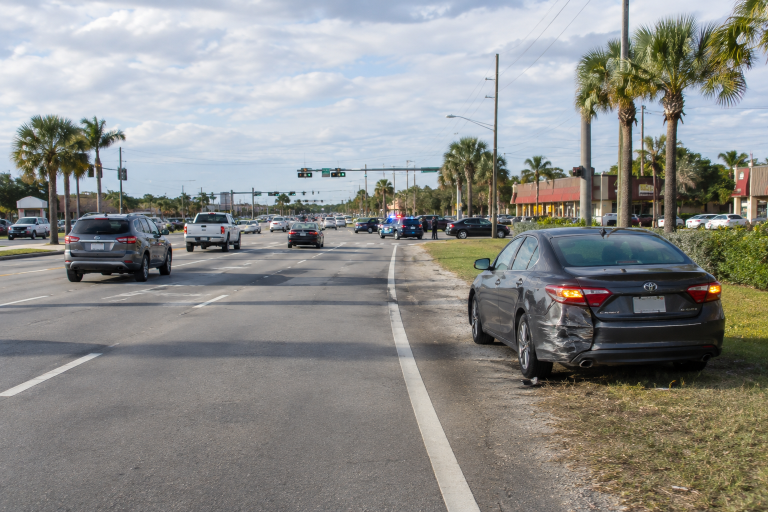
If it is safe to do so, use your phone to photograph the damage to your vehicle from several angles. Include wide photos of the roadway, lane markings, traffic signals, signs, debris, skid marks, lighting conditions, and nearby landmarks. Short videos can also show the traffic pattern and visibility at the location.
Write down your memory of the crash as soon as possible. Note the approximate time, weather, route, direction of travel, point of impact, and description of the fleeing vehicle. Small facts, such as a missing hubcap, a decal, a loud exhaust, or damage to a specific side of the vehicle, may help distinguish it from other cars.
Witnesses can be especially valuable in a hit-and-run case. Ask for their names, phone numbers, and email addresses. If they are willing, ask what they saw without suggesting an answer. Also, look around for businesses, homes, parking areas, or vehicles that may have security cameras, doorbell cameras, or dashcams. Record the locations so that footage can be requested before it is overwritten.
Get Medical Care and Monitor Symptoms
Some crash-related symptoms are not obvious at the scene. Headaches, neck pain, back pain, dizziness, numbness, stiffness, sleep problems, and confusion may develop later. Seek prompt medical evaluation if you experience symptoms or simply believe you may have been injured. Tell the medical provider that a motor-vehicle collision occurred and describe symptoms accurately.
Follow treatment recommendations and keep copies of visit summaries, prescriptions, referrals, bills, work restrictions, and receipts. These records may help establish the timeline of your care and document expenses. Children, older adults, and people with prior medical conditions should receive particular attention after a collision because they may have difficulty describing symptoms or may face added risks.
Protect Children and Damaged Safety Equipment
If a child is in the vehicle, inspect the car seat and follow the manufacturer’s instructions before using it again. Federal safety guidance recommends replacing a car seat after a moderate or severe crash, while a seat involved in a minor crash may not always require replacement if all listed conditions are met. Review the criteria for car seat use after a crash before making that decision.
Airbags, seat belts, helmets, glasses, bicycles, and other damaged items may also need professional inspection or replacement. Keep the damaged item when practical, and photograph it before discarding it.
Notify Your Insurer Carefully
Report the hit-and-run to your own insurer promptly, because insurance policies commonly require timely notice of an accident. Keep a written log of claim numbers, adjuster names, call dates, email dates, repair estimates, rental receipts, and any documents you send or receive.
Answer factual questions truthfully, but do not estimate speed, distance, medical prognosis, or fault when you do not know. Review requests for recorded statements, releases, or broad medical authorizations carefully. The other driver’s insurer, if one is later identified, does not represent your interests.
Build a Simple Accident File
Create a paper or digital folder and store copies of the crash report, photographs, videos, witness details, medical records, repair estimates, bills, missed-work documentation, and insurance correspondence. Back up electronic files in more than one secure location. Avoid posting opinions, jokes, photos, or speculation about the collision on social media while the matter is unresolved.
Frequently Asked Questions
What if the other driver is found later?
Provide law enforcement and your insurer with any additional information you receive. Identifying the vehicle or driver may create new investigative and insurance issues, so preserve prior records and avoid changing your account to fill in the gaps.
What if there was no visible injury?
Continue monitoring how you feel in the hours and days after the crash. Seek medical attention if symptoms arise, worsen, or interfere with normal activities.
Should I accept the first insurance offer?
Read the offer and any release carefully. An early payment may not account for later treatment, missed work, rental costs, repairs, or other losses that are still developing.
Moving Forward After a Casselberry Hit-and-Run
After a hit-and-run accident in Casselberry, focus on the next practical step: safety, reporting, documentation, medical care, and organized records. No two crashes are identical, particularly when the other driver leaves the scene. Careful action in the days ahead can reduce confusion and help protect important options while the investigation and insurance claim move forward.