Successfully blending multiple flooring types in a single area poses both practical and design challenges. Still, with careful planning, you can create a fluid and stylish space that meets your needs. Choosing the right approach ensures your home is both functional and visually pleasing. Working with knowledgeable flooring installers in Las Vegas can make a significant difference, as they guide the selection of the best materials and methods for seamless transitions.
Whether you want to delineate zones in an open concept plan or bridge different rooms, a thoughtful flooring transition is key to achieving harmony. The materials, colors, and transition techniques you select will not only influence the look but also the durability and comfort of your space. Planning allows you to accommodate both stylistic preferences and practical requirements.
Attention to the subtleties of flooring transitions—such as height, grain direction, and the function of each zone—prevents issues like tripping hazards or visual clutter. Good transitions also simplify cleaning and upkeep, adding value to your home over time. A smooth flooring flow helps create environments that feel deliberate and welcoming, even when multiple textures or colors are in use.
Flooring choices and their transitions are among the most impactful aspects of interior design, making it worthwhile to invest time and effort in the process. Carefully executed transitions contribute not only to the property’s cohesion but also to its resale value.
Table of Contents
- 1 Choose Complementary Colors and Textures
- 2 Utilize Transition Strips Effectively
- 3 Incorporate Pattern Changes to Define Spaces
- 4 Implement Decorative Borders or Inlays
- 5 Maintain Consistent Grain and Texture Flow
- 6 Limit the Number of Different Materials
- 7 Plan for Expansion Gaps
- 8 Seek Professional Installation
Choose Complementary Colors and Textures
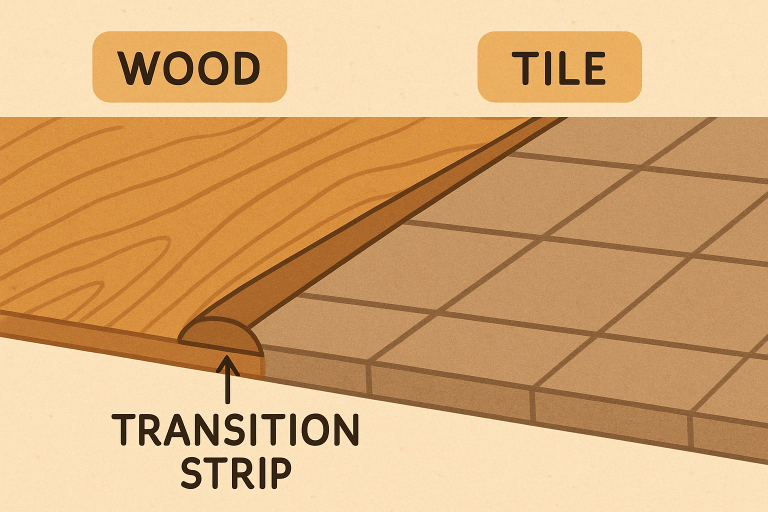
Unifying disparate flooring materials starts with selecting similar shades and textures. If your space features wood in one area and tile in another, opting for warm, earthy tones in both can bridge the visual gap. For example, beige or taupe tile paired with honey oak or walnut hardwood creates an organic flow from one zone to the next.
It’s also essential to assess the surface quality of each material. If you prefer a smooth, modern aesthetic, select tiles and wood planks with similar finishes. If rustic charm is your goal, mix textures thoughtfully to maintain harmony. Taking samples home and observing how they interact in your own lighting is a critical step in making confident decisions.
Utilize Transition Strips Effectively
Transition strips are practical solutions for merging different flooring types, particularly where there are height discrepancies. Proper installation not only makes transitions safer but also ensures a finished appearance. There are various options available:
- T-Molding: Ideal for connecting floors of equal height, such as laminate to wood, providing a seamless transition.
- Reducer Strips: Useful for areas where flooring heights vary, such as from tile to carpet, providing a smooth and gradual slope.
- Thresholds: Commonly used at entryways or at the edge of sliding doors, offering protection and a neat finish.
Choosing the right strip for each situation will enhance the longevity and safety of your flooring.
Incorporate Pattern Changes to Define Spaces
Switching layouts while using the same flooring material can subtly demarcate one area from another. For instance, a herringbone pattern in the kitchen transitions to straight planks in the adjoining living space, creating gentle definition without visual interruption. This method is especially useful in open concept homes, where you may wish to define functions for each area without the abruptness of changing materials.
Implement Decorative Borders or Inlays
Decorative inlays and borders work well when you want to create a visual pause between materials. For example, a row of mosaic tiles between hardwood and ceramic, or a strip of contrasting wood, can intentionally highlight the change. These elements not only serve as functional dividers but also as design features that add personality to your home.
Maintain Consistent Grain and Texture Flow
Paying attention to the grain direction or tile alignment as you move between zones helps maintain continuity. Placing planks or tiles so that their lines guide the eye across thresholds can make space feel larger and more connected. Conversely, changes that are too abrupt can result in a choppy or disjointed appearance.
Limit the Number of Different Materials
To keep a room from feeling disjointed, avoid using more than three different flooring types in a continuous area. Consistency breeds a sense of order and calm. This approach also helps avoid overwhelming guests or creating maintenance hassles down the line. Always prioritize simplicity in high-traffic or visually busy spaces.
Plan for Expansion Gaps
Materials like hardwood and laminate naturally expand and contract in response to environmental changes. When transitioning between these surfaces, leaving adequate expansion gaps (usually concealed by transition strips) is crucial. This practice helps prevent future warping and buckling. Professional installers often have the expertise to anticipate these issues, protecting your investment for years to come.
Seek Professional Installation
Though DIYers can tackle many aspects of flooring, transitions require careful attention to measurements, leveling, and trim work. Unprofessional transitions can quickly become trip hazards, attract dirt, or detract from the value of your home. Flooring specialists ensure that each transition is meticulously crafted for both beauty and practicality.
Thoughtfully planning how you transition between flooring types allows you to enjoy a home that feels unified and inviting. By keeping cohesion, maintenance, and safety in mind, you can maximize both style and performance across every room.