Rising claim severity, medical cost inflation, and complex regulatory demands have made manual claim handling a heavy burden for employers. Many forward‑thinking organizations are turning to digital platforms that blend automation with predictive analytics, allowing them to spot high‑risk cases early and speed up return‑to‑work outcomes. Beyond reducing administrative work, these systems turn claims data into valuable insights that guide safety spending and compliance planning. The move toward this technology signals a new era of proactive risk management built around workers compensation claims management software.
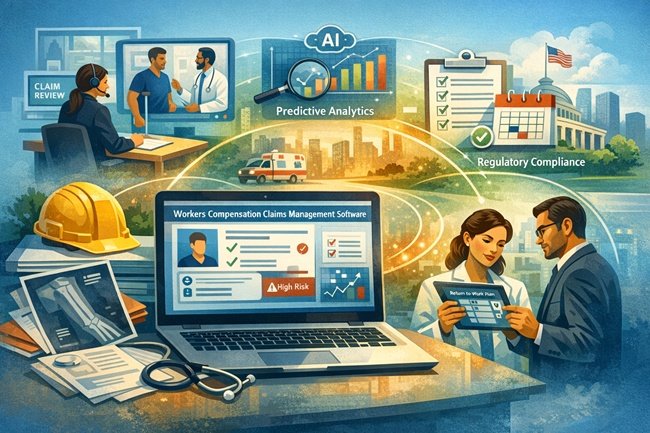
Table of Contents
- 1 Workers Compensation Claims Management Software
- 2 The Rising Complexity of Workers’ Compensation Claims
- 3 How Claims Management Software Streamlines the Workers’ Comp Process
- 4 Advanced Capabilities Transforming Claims Management
- 5 Integrating Claims Management Software with Enterprise Systems
- 6 Managing Emerging Risks: Mental Health and Demographic Shifts
- 7 Measuring ROI and Cost Savings
- 8 Implementation and Change Management
- 9 Selecting the Best Workers Compensation Claims Management Software
- 10 Real-World Examples and Benchmarks
- 11 The Future of Workers’ Comp Claims Technology
- 12 Our Take on Smarter Claims
- 13 FAQs about workers compensation claims management software
- 13.1 What tools are used for compensation management?
- 13.2 What is claims management software?
- 13.3 How to manage a workers’ compensation claim?
- 13.4 What software do insurers use?
- 13.5 What are the 3 P’s of compensation?
- 13.6 What is compensation management software?
- 13.7 What is workers’ compensation claims management software and how does it work?
- 13.8 How does claims management software reduce workers’ comp costs?
- 13.9 What role do AI and predictive analytics play in workers’ comp claims today?
- 13.10 How does telemedicine integrate with workers’ compensation claims platforms?
Workers Compensation Claims Management Software
Workers compensation claims management software is a specialized platform designed to manage every stage of the workers’ comp process—from the first notice of injury all the way through claim closure. Unlike generic HR or claims tools, it brings together regulatory workflows, documentation, and communication in one organized environment. This setup promotes accuracy, compliance, and visibility across multiple states or jurisdictions.
Developed for employers, third‑party administrators (TPAs), and insurers, high‑quality workers compensation software relies on automation and analytics to process large amounts of data quickly. Common features include digital injury intake forms, automated claims tracking, task routing, and compliance workflows that link adjusters, case managers, supervisors, and medical providers in real time.
By trimming routine tasks and accelerating decisions, workers’ compensation claims management software shortens recovery timelines and drives measurable cost reductions. What used to be a cumbersome manual process has turned into a streamlined, data‑driven function with real control over risk. As claim files grow more complex, this technology helps organizations maintain speed and stay compliant without sacrificing precision.
The Rising Complexity of Workers’ Compensation Claims
Today’s employers face a far more intricate risk landscape than they did just a few decades ago. Rising medical costs, higher wages, and emerging claim types like psychological injuries and repetitive strain cases are driving up expenses. According to PBA’s 2026 Industry Report, claim frequency is slowly dropping, but the severity and cost per claim are rising—largely fueled by increased medical and pharmacy spending that stretches recovery times.
The National Safety Council reported that the overall economic impact of workplace injuries hit $167 billion in 2021, accounting for lost productivity, medical bills, and administrative overhead. Combine that with an aging workforce and shortages in healthcare professionals, and it’s clearer than ever why manual claims handling causes expensive delays. Workers over 55 usually need more recovery time, while workers under 25 get injured more often due to inexperience. Together, these groups make up nearly 40% of the labor force, each with unique support and intervention needs.
Under these conditions, advanced claims management software delivers a unified way to track, analyze, and handle every factor influencing claim outcomes. It gives employers the visibility they need to stay adaptable and confident in a constantly changing regulatory environment.
How Claims Management Software Streamlines the Workers’ Comp Process
Automation is the heart of the modern workers’ comp system, connecting every participant and document through a transparent process. From the moment an incident is reported, the software triggers alerts, assigns tasks, and removes redundant handoffs. Automated updates replace long email chains and manual spreadsheets, saving countless administrative hours.
Each claim moves through defined stages—investigation, medical management, reserving, and return‑to‑work—while customizable dashboards provide real‑time updates. Managers can monitor performance metrics, find bottlenecks, and make sure filing requirements are met on time. What once took weeks of coordination can now flow smoothly through a digital workflow that keeps compliance fully on track.
Key Automation Features
Automation tools such as digital FNOL (first notice of loss) intake, dynamic task routing, diary alerts, and real‑time expense tracking keep everything consistent and prevent expensive mistakes. Integrated calendars ensure time‑critical deadlines—doctor visits, wage verification, or safety meetings—are never missed.
Tasks like payment authorization and reserve adjustments also run automatically, greatly reducing manual math errors. Many employers report annual savings in the tens of thousands thanks to fewer errors and faster resolutions. For large organizations processing thousands of cases, automation moves the focus from paperwork to problem‑solving.
Compliance and Regulatory Reporting
Workers’ compensation remains one of the most heavily regulated areas of insurance in the U.S., with every state having its own forms and timelines. Without automation, keeping up with those requirements can consume enormous time. The leading software platforms weave compliance right into the daily workflow.
Automated EDI (Electronic Data Interchange) submissions send required data directly to state agencies for timely filings. Built‑in audit trails and digital signatures document every step, creating reliable proof for audits or legal reviews. Dashboards spotlight missing forms or late submissions before they cause violations, while schedulers can generate compliance summaries in seconds. This proactive approach saves last‑minute chaos and shields employers from penalties or fines.
Advanced Capabilities Transforming Claims Management
The power of modern workers comp software goes far beyond automation. These systems now deliver the analytical depth of advanced risk management engines, featuring predictive analytics, AI‑driven triage, and sophisticated prevention tools. Historical data turns into future insight, helping safety, HR, and finance teams make better‑informed decisions.
Predictive Analytics and Risk Scoring
Machine learning models can forecast which claims are likely to become high‑cost cases. Factors like injury type, recovery time, prior history, and demographics feed into algorithms that assign a risk score to each claim.
For example, if an employee has suffered multiple injuries in the same department, the software might flag that case as high risk. This early alert allows managers to adjust reserves and start nurse case management before expenses spiral. Since a small fraction of claims frequently drive most costs, identifying those outliers early brings major savings along with better outcomes.
Injury Data Analytics for Prevention
Sophisticated platforms also turn claims data into prevention insight. Injury analytics can show which job roles, shifts, or departments experience the highest rates of incidents. When safety teams see patterns—say, increased strain injuries on assembly lines—they can direct training or ergonomic improvements exactly where they’ll have the most impact.
One manufacturing company, for example, discovered that more accidents occurred on night shifts, largely due to fatigue. With data from its claims platform, the firm revised scheduling policies and added fatigue monitoring tools. By connecting safety and claims data, this approach shifts the focus from reacting to problems to preventing them entirely.
Integration with Telemedicine and Early Intervention
Early intervention is essential to better outcomes. When telemedicine is built directly into claims management software, injured workers can connect with a doctor almost immediately—sometimes within minutes of reporting the injury. Systems such as those from CorVel show how automated triage connects employees to physicians virtually, cutting long wait times for clinic appointments.
The software records everything automatically, from initial nurse assessments to digital treatment notes, establishing a complete and accurate medical record. This quick response stage shortens recovery periods and gives employees faster, more compassionate care.
Integrating Claims Management Software with Enterprise Systems
Smooth integration ensures that claims management software functions as part of an organization’s overall digital environment. Linking it with HRIS, payroll, absence tracking, and safety systems lets employee data flow freely and eliminates the need for double entry.
For example, when payroll details feed directly into the claim file, adjusters can calculate wage replacement benefits instantly. Integration with medical billing systems helps finance teams reconcile invoices effortlessly. This connected workflow promotes collaboration, giving HR, legal, and risk teams access to the same case data, compliance records, and leave information at once.
Managing Emerging Risks: Mental Health and Demographic Shifts
Workers’ comp coverage now reaches into complex territory like psychological injuries and PTSD, which require specific workflows. Leading systems include templates for behavioral‑health claims, therapy updates, and provider communications.
Research from JAMA shows that up to one‑third of injured workers experience anxiety or depression during recovery, which underscores the value of timely mental‑health support. Claims software with psychosocial screening tools can signal when additional intervention might help.
Demographics also play a growing role. Younger employees often respond best to mobile apps and gamified safety tips, while older workers benefit from tighter coordination between therapists and medical experts. Predictive models factor these demographic elements into risk forecasts, helping employers tailor their prevention and recovery plans.
Measuring ROI and Cost Savings
A properly implemented digital claims platform offers very tangible returns. Automation speeds up claim cycles, cuts manual workload, and prevents errors. Employers frequently see quicker claim resolutions, stronger compliance, and lower overall leakage.
According to data from Recordables and The Workers’ Compensation Benchmarking Study, companies using strong digital platforms close claims nearly 20% faster than those relying on manual systems. Predictive tools reduce severe claim costs, while automation slashes documentation hours by up to 40%.
The value isn’t purely financial either. Better communication and transparency improve employee trust, which encourages quicker recoveries and fewer disputes. All these elements combine to make modern claims management a real engine of resilience.
Implementation and Change Management
Rolling out a new workers comp system is both a technical and cultural shift. Success starts with setting clear goals—like improving turnaround time or data accuracy—and measurable KPIs. Everyone from HR to IT needs to align on what success looks like.
Data migration must protect the accuracy of historical claims so analytics remain meaningful. Comprehensive training helps users gain confidence with digital workflows, while structured feedback loops support continuous improvement. Regular audits and progress reviews confirm that the new system continues to meet business and regulatory needs.
Selecting the Best Workers Compensation Claims Management Software
Choosing a system means evaluating scalability, integration options, user experience, and vendor service. Cloud‑based solutions deliver automatic legal updates, mobile access, and lower upkeep costs, which can be ideal for companies operating in several states. On‑premise solutions, on the other hand, give tighter control over data storage and security.
Flexibility is also vital. The most successful platforms let users tweak workflows, triggers, and reports without depending on developers. Vendors such as CorVel and Enlyte are blending AI automation with human expertise, proving that technology can be both powerful and empathetic. The right software should fit an organization’s operational needs as closely as it aligns with its values.
Real-World Examples and Benchmarks
Across sectors, the results of adopting AI‑driven claims systems are clear. In healthcare, predictive models identify staff who face greater ergonomic risks, reducing lost‑time injuries through targeted prevention programs. Manufacturing firms using automated triage have reported processing times cut by up to 50%, with significantly improved return‑to‑work results.
Research from The Workers’ Compensation Benchmarking Study shows that organizations investing deeply in digital transformation consistently outperform peers on closed claim rates, average claim cost, and worker recovery satisfaction. Employers combining automation and analytics into their strategy not only achieve operational efficiency but also cultivate a proactive, caring workplace culture.
The Future of Workers’ Comp Claims Technology
The next wave of innovation points to even smarter systems. Wearable devices could soon feed biometric and environmental information directly into claims dashboards, issuing early alerts for fatigue, heat stress, or overexertion. Machine learning models will refine prediction accuracy further, helping employers intervene much earlier in the claim lifecycle.
AI‑guided behavioral analysis will likely expand as well, identifying psychological or motivational barriers to recovery and directing personalized wellness programs. As prevention blends with analytics, tomorrow’s claims management will function like a live health ecosystem—built not just to resolve injuries faster but to stop them from happening in the first place.
Our Take on Smarter Claims
Workers compensation claims management software is reshaping how organizations handle workplace injuries by connecting automation, analytics, and compliance in one intelligent workflow. With efficiency built into every step of the process, companies can react faster and manage risk with greater confidence. Predictive tools and telemedicine features now allow early action that changes claim outcomes dramatically.
True success, though, depends on thoughtful implementation that aligns technology with people and process. As this field grows, organizations that view digital claims management as a long‑term part of safety and wellness strategy will not only control costs but also build a stronger, data‑driven culture of resilience.
FAQs about workers compensation claims management software
What tools are used for compensation management?
Common compensation management tools include platforms like Ravio, Pave, Beqom, Compport, Compa, PayScale, CompAnalyst by Salary.com, and HiBob, which help organizations manage pay structures, benchmarking, and compliance efficiently.
What is claims management software?
Claims management software automates the handling of insurance claims from start to finish, managing data collection, fraud detection, documentation, and payments to reduce manual work and administrative errors.
How to manage a workers’ compensation claim?
Managing a workers’ compensation claim usually involves reporting the incident promptly, filing the claim, conducting an investigation, documenting findings, tracking recovery, and finalizing compensation or return‑to‑work steps—tasks that software platforms can automate and monitor easily.
What software do insurers use?
Many insurers use platforms like Guidewire InsuranceSuite, which streamlines billing, claims, and policy administration through configurable, cloud-based solutions built for property and casualty carriers.
What are the 3 P’s of compensation?
The three P’s of compensation stand for pay for position, pay for person, and pay for performance—balancing job responsibility, individual contribution, and measurable results.
What is compensation management software?
Compensation management software helps HR teams build and manage equitable pay programs using centralized data, analytics, and budgeting tools for fair and cost-effective decisions.
What is workers’ compensation claims management software and how does it work?
Workers’ comp claims management software automates every stage of a workplace injury claim—from initial injury reporting and medical coordination to recovery tracking and settlement—keeping data synchronized for faster, compliant outcomes.
How does claims management software reduce workers’ comp costs?
It cuts leakage, speeds up claim handling, identifies potential high-risk cases, and reduces administrative and legal costs through automation, predictive analytics, and streamlined communication.
What role do AI and predictive analytics play in workers’ comp claims today?
AI models analyze injury details to identify potentially serious claims early, enabling proactive care coordination, accurate reserve setting, and better outcomes for injured employees and insurers alike.
How does telemedicine integrate with workers’ compensation claims platforms?
Modern claims management systems connect directly to telemedicine providers, enabling virtual consultations, updating medical notes instantly, and letting managers track recovery in real time—all of which reduces downtime and improves return‑to‑work speed.