With growing environmental consciousness, homeowners are now seeking stylish yet sustainable solutions for their living spaces. Among the top choices is hardwood flooring, reimagined for the eco-aware generation. This shift prioritizes not only the planet but also indoor health and design aesthetics. If you’re looking to upgrade your floors, Hardwood flooring installation in Raleigh can help bring eco-friendly selections into your home while achieving timeless beauty.
As the market evolves, new materials and finishing techniques have emerged that promote sustainability without sacrificing durability or style. These trends make it easier for homeowners to select flooring that aligns with their ecological values while enhancing the comfort and appeal of their homes.
Today’s choices blend environmental responsibility with innovative design. Materials like bamboo, cork, and reclaimed wood reduce the ecological footprint of interior renovations. Advances in engineered hardwood and low-VOC finishes enhance living conditions and promote healthier indoor air, a growing priority identified by Consumer Reports experts.
This article guides you through the most compelling eco-friendly hardwood flooring trends for modern homes, outlining necessary certifications, natural finishes, and popular design movements to consider as you plan your next project.
Table of Contents
Sustainable Materials
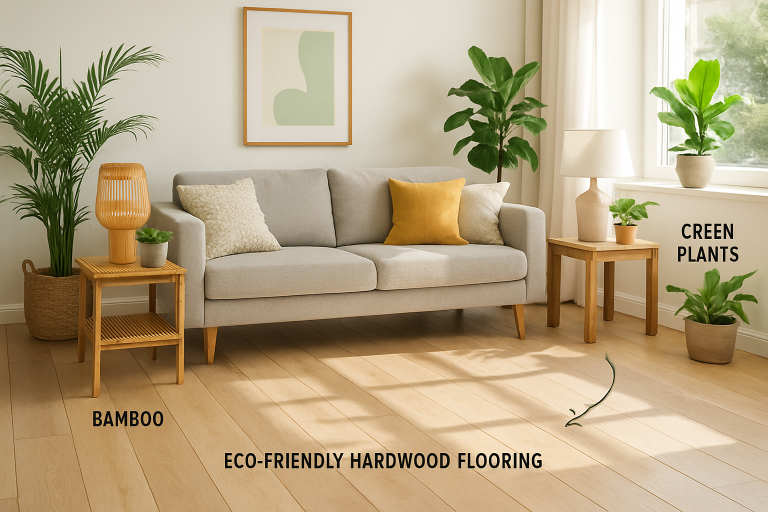
Bamboo and cork are standout options in the eco-friendly flooring market for their renewability and unique visual appeal. Bamboo, which matures in as little as 3 years, is both hard-wearing and rapidly renewable, making it a leading green renovation material. Cork, meanwhile, is derived from the bark of cork oak trees without harming the trees themselves, allowing periodic harvests that conserve forest resources. Both options offer impressive durability and a fresh, contemporary look, ideal for modern interiors.
Reclaimed Wood
For those who cherish character and history, reclaimed wood offers a sustainable second life to timber salvaged from old barns, factories, and warehouses. By reusing existing materials, this choice actively reduces reliance on new logging and helps conserve forests. Each plank’s original marks and patinas tell a story, making reclaimed wood a favorite for homeowners desiring warmth, texture, and individuality in their floors. This trend isn’t simply about nostalgia; it demonstrates a commitment to conservation by giving materials new purpose in vibrant, updated settings.
Low-VOC Finishes
Indoor air quality is a growing concern, and floor finishes can often be a source of volatile organic compounds (VOCs) that compromise indoor air quality. Low-VOC and plant-based finishes are now standard among eco-conscious products, reducing harmful emissions in your living environment. These innovative finishes, available in an array of sheens and colors, provide peace of mind by minimizing pollutants while maintaining the high aesthetic standards demanded by today’s homeowners.
Engineered Hardwood
Engineered hardwood flooring ingeniously combines a layer of genuine hardwood with a stable plywood base, dramatically reducing the amount of slow-growing hardwood required. Not only does this design economize on resources, but it also enhances resilience and moisture resistance, making engineered hardwood an excellent choice for areas prone to temperature fluctuations or humidity, such as kitchens and basements. Modern manufacturing ensures these floors rival the beauty and toughness of solid hardwood, while supporting sustainable forestry practices.
Natural Finishes
In alignment with minimalist and organic design trends, many are turning to unfinished or lightly finished floors that show off the natural variations in wood grain and tone. This approach avoids heavy chemical treatments and lets the material’s inherent beauty become the room’s focal point. Homes boasting these natural finishes convey warmth and authenticity, contributing to serene, toxin-free environments preferred by health- and design-conscious homeowners.
Certifications
Navigating eco-labels can be confusing, but a few key certifications can help guide responsible decisions. The Forest Stewardship Council (FSC) certification signifies wood sourced from forests managed with a focus on environmental stewardship and social responsibility. GreenGuard certification further assures customers that flooring products meet stringent requirements for low chemical emissions, contributing to healthier indoor air. These widely recognized labels empower buyers to select eco-friendly options for their families and homes confidently. For a deeper understanding, consult the Architectural Digest guide to wood flooring.
Design Trends
Design-forward homeowners are gravitating toward eco-friendly options that provide visual impact while upholding sustainable values. Notably, parquet-style floors, recently popularized by actress Zooey Deschanel, combine intricate elegance with the natural beauty of responsibly sourced wood. Parquet patterns, particularly in lighter tones, easily fit both classic and contemporary décors, showcasing craftsmanship and environmental accountability. Deschanel’s Instagram reveals how such flooring, paired with modern furnishings, can create an inviting mix of luxury and eco-awareness, reinforcing that green choices don’t mean sacrificing sophistication.
Conclusion
Today’s eco-friendly hardwood flooring trends offer the perfect intersection of aesthetics, sustainability, and health. By selecting renewable materials such as bamboo or cork, repurposing heritage timber through reclaimed wood, and prioritizing low-emission products, homeowners make choices that support a more responsible future. Paying attention to trusted certifications and mindful design ensures that your flooring upgrade not only looks beautiful but also positively impacts your home and the planet. The evolution of hardwood floors demonstrates that environmental responsibility and cutting-edge style can be seamlessly integrated in modern living.