Student apartment living offers a unique blend of independence, responsibility, and community that can shape both academic and personal growth. Adjusting to shared spaces, managing daily routines, and balancing coursework with social life are all part of the experience. Understanding basic expectations, such as respecting roommates, organizing personal space, and maintaining clear communication, can help reduce common stressors and create a more comfortable living environment from the start.
Housing options connected to campus life, including ASU university housing, often place students near academic buildings, resources, and peer networks, which can influence daily habits and time management. Regardless of location, thriving in a student apartment involves developing practical skills like budgeting, cleanliness, and conflict resolution. Being mindful of personal well-being, safety, and study needs can also make apartment living more productive and enjoyable. With thoughtful preparation and adaptable habits, students can build a stable home base that supports both learning and independence.
Table of Contents
Choosing the Right Apartment
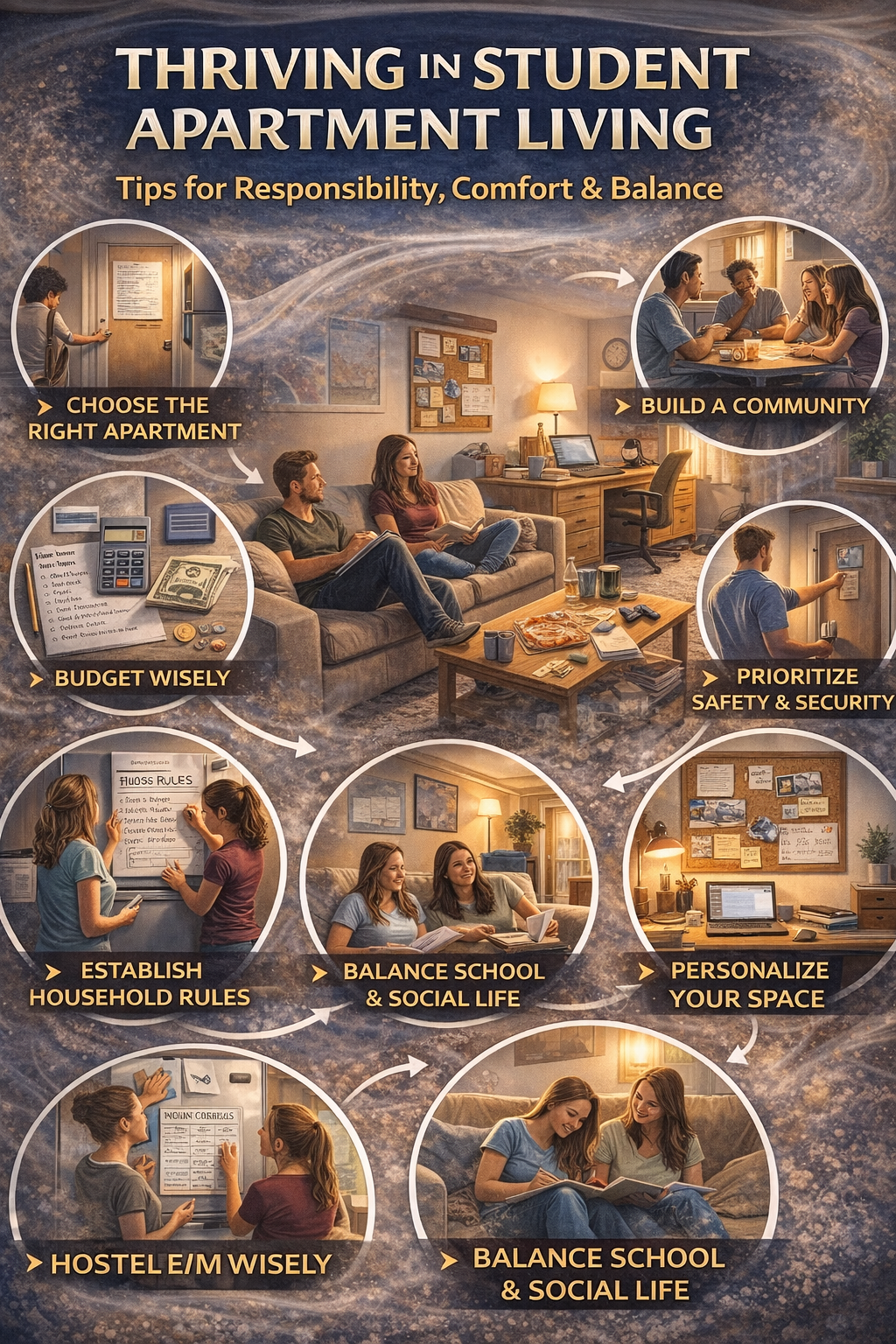
Finding a suitable student apartment involves thorough research and organization. Begin by reading online reviews and talking with current tenants to get honest feedback about the living situation. Tour several complexes, taking careful note of the property’s condition, included amenities, and proximity to your campus. Make sure you see the exact unit you will rent to avoid misrepresentation. Amenities may appear attractive, but do not let them distract you from evaluating the apartment’s fundamental features, such as security, maintenance support, and noise levels.
Budgeting Wisely
Keeping a close eye on your finances is vital when managing rent, utilities, groceries, and social activities. Start by building a monthly budget that accounts for all fixed and variable expenses. Use budgeting tools and mobile apps like Mint or Splitwise to easily track your spending and identify cost-cutting opportunities. Consider splitting rent and utilities with roommates. Some apartments even offer inclusive packages to simplify payments.
Establishing Household Rules
Living with roommates can enrich your college years, but it also requires open communication and setting expectations early to prevent misunderstandings. Before move-in, hold a discussion with your roommates about maintaining common areas, handling chores, enforcing quiet hours, and defining a guest policy. Agree on how often you will clean shared spaces and how you will split responsibilities. Putting these agreements in writing can help hold everyone accountable and foster a pleasant living environment that allows you all to thrive academically and personally.
Personalizing Your Space
Your apartment should feel like a retreat from the demands of college life. Start with removable décor, such as wall hooks for art or posters, to make the room feel personal without risking your security deposit. Add pillows, throws, or string lights to infuse your space with comfort. Bringing in houseplants or small rugs can enhance mood and warmth. If you are serious about studying, invest in a desk lamp and create a clutter-free workstation to improve focus. Making your space your own not only boosts morale but also creates an environment tailored to your needs.
Maintaining a Clean Environment
Regular cleaning can significantly reduce stress and create a healthier environment. Set up a weekly or bi-weekly cleaning schedule with your roommates, alternating tasks to ensure fairness. Focus on shared spaces like the kitchen, living area, and bathroom. Keep supplies like disinfectant wipes, an all-purpose cleaner, and a good vacuum on hand to make quick cleanups easier. By sticking to your schedule, you avoid the buildup of chores and create a more inviting space for both yourself and your guests.
Prioritizing Safety and Security
Feeling safe in your apartment is paramount. Inspect all the locks on doors and windows to ensure they are secure, and do not hesitate to report maintenance issues immediately. Familiarizing yourself with the locations of fire exits, extinguishers, and emergency contact numbers can help you respond calmly in a crisis. Avoid sharing access codes or spare keys indiscriminately, and keep your personal belongings out of sight from windows. Practicing these common-sense safety measures enhances peace of mind so you can focus on your studies and social life.
Building a Community
Living off campus does not mean you have to miss out on building meaningful connections. Introduce yourself to neighbors and take part in apartment complex social events or other campus gatherings. These relationships can provide practical benefits, including study partners, emergency support, or simply friendly faces to greet after a tough day. Developing a support system can make your apartment feel more like home and foster lasting friendships. Check your complex bulletin board or website for activities that interest you.
Balancing Academics and Social Life
It is natural to want to make the most of both academic and social opportunities. To maintain balance, create a schedule that blocks out time for focused study sessions as well as relaxation and recreation. Prioritize your coursework, but also set aside moments for activities like club meetings, outings, or downtime with friends. Practicing mindfulness and self-care helps ensure you do not burn out.
Conclusion
Thriving in student apartment living comes down to preparation, communication, and balance. Choosing the right space, managing finances responsibly, and setting clear expectations with roommates lay a strong foundation for daily life. By maintaining cleanliness, prioritizing safety, and creating a personalized, supportive environment, students can reduce stress and stay focused on their goals. When combined with community involvement and healthy time management, these habits help transform an apartment into a comfortable home that supports both academic success and personal growth.