Fostering a culture of respect and safety should be a cornerstone for any successful organization. In today’s diverse and dynamic work environments, addressing and preventing harassment is not only a legal obligation but also a path toward greater productivity and staff satisfaction. One of the most effective ways to achieve this is through in-person workplace harassment training, which enables organizations to engage employees on a deeper, more interactive level.
In-person harassment prevention programs are designed to deliver immediate and actionable lessons that benefit both employees and leadership. These trainings go beyond checking a compliance box—they set a tone that everyone in the workplace deserves dignity and respect. Unlike virtual formats, in-person training offers opportunities for nuanced discussions, policy clarification, and the development of emotional intelligence in real-time.
Comprehensive training equips individuals with the necessary tools to recognize, prevent, and address harassment in the workplace. Employees leave these sessions more knowledgeable, confident, and prepared to foster an inclusive environment. Investing in quality in-person training is not simply about compliance; it’s about building a healthy organizational culture that attracts and retains top talent.
For further reading on why in-person strategies yield better learning outcomes, see this insightful article from SHRM on addressing harassment through training.
Table of Contents
Importance of In-Person Training
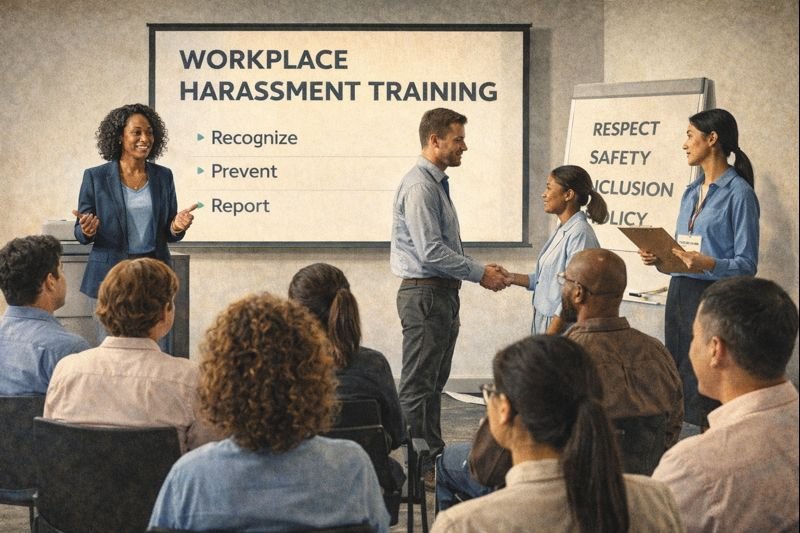
Interactive, in-person workplace harassment prevention training enables participants to practice skills and navigate challenging scenarios in a safe and supportive environment. Unlike e-learning modules, in-person sessions facilitate two-way communication and allow immediate clarification. Trainers can address real-world situations relevant to the organization and tailor the response to each team’s dynamics.
These programs often employ diverse methods, such as role-playing, group discussions, and Q&A sessions, ensuring that material is absorbed and retained long after the training concludes. Employees witness real-world examples that illustrate why certain behaviors are unacceptable and how to intervene or report misconduct effectively. The shared experience of in-person learning also helps participants see training not as punitive, but as a commitment to a positive workplace culture.
Key Components of Effective Training
For harassment prevention training to be practical, it must reflect current laws, ethical standards, and the company’s values. Core components typically include:
- Clear definitions: Explaining what constitutes harassment and discrimination, supported by practical examples.
- Recognizing behaviors: Demonstrating what unacceptable conduct looks like, from overt actions to subtle microaggressions.
- Reporting processes: Outlining step-by-step procedures for reporting incidents confidentially and without fear of retaliation.
- Building a Respectful Culture: Strategies and Actions Employees and Management Can Take to Nurture Inclusivity and Courtesy in Every Interaction.
Continuous updates to content keep training relevant as workplace norms and legal standards evolve. Incorporating real case studies can also strengthen the connection between policy and daily practices. For more insights into creating robust training, read the CalChamber guide to harassment in the workplace.
Legal Requirements and Compliance
Harassment prevention training is mandatory in many states and industries across the United States. Meeting these requirements reduces liability, but the goal should reach further—organizations that promote respect and inclusion distinguish themselves as employers of choice. The U.S. Equal Employment Opportunity Commission (EEOC) recommends regular, interactive training for all staff, with content that evolves as laws and best practices change.
Training should align with regional and federal regulations and provide information about reporting channels—both internally and externally—ensuring that every employee knows how and where to get help. The EEOC’s “Leading for Respect” and “Respect in the Workplace” programs are prime examples of modern, compliance-driven approaches to training.
Benefits of a Respectful Workplace
Promoting respect and safety in the workplace creates measurable business benefits, including:
- Higher employee retention rates due to increased job satisfaction.
- Greater productivity and engagement when team members feel secure and valued.
- Lower risk of costly legal claims and reputational harm.
- A culture where diverse perspectives lead to creativity and innovation.
This investment in people leads to a virtuous cycle: happy employees are more likely to contribute positively, recommend the company to others, and help drive organizational goals.
Challenges in Implementing Training
Successful implementation is not without obstacles. Common challenges include:
- Employee skepticism or resistance, particularly if training is viewed as merely a means for legal protection rather than a means for cultural improvement.
- Resource constraints can limit the frequency, quality, or customization of sessions.
- Staying current, as evolving social norms, regulations, and best practices require regular updates to content and delivery.
Overcoming these barriers requires visible executive support, careful planning, and soliciting ongoing feedback from participants.
Best Practices for Successful Training
- Customize the curriculum to reflect the unique values, demographics, and challenges present in your workplace.
- Encourage active participation with real-world scenarios, group exercises, and safe spaces for open discussion.
- Invest in continual learning through refresher courses and ongoing awareness campaigns, rather than relying solely on annual check-ins.
- Assess effectiveness regularly by conducting follow-up surveys and monitoring incident reporting metrics.
Embedding these practices into your workplace not only sustains compliance but also establishes a lasting commitment to mutual respect and safety.
Role of Leadership in Promoting Respect
Leadership commitment is the linchpin for workplace culture change. When executives and managers model respectful behavior and prioritize swift responses to incidents, employees recognize that the values taught in training are truly organizational priorities. Leaders should be visible participants in training sessions, provide clear communication about expectations, and establish accountability at every level of the organization.
Consistent support from leadership drives culture change more quickly and sustainably than policy changes alone. A top-down approach helps dismantle entrenched attitudes, gain buy-in, and signal that respect is non-negotiable.
Conclusion
Prioritizing in-person workplace harassment prevention training is the foundation for a positive and productive environment. Organizations that invest in interactive training not only meet legal requirements but also shape a workplace where every voice is valued and counts. By committing to ongoing education, transparent leadership, and a culture of respect, employers set themselves up for long-term success and a more engaged, harmonious workforce.