Today’s oral surgery procedures for implant placement are advancing quickly, with new technologies that deliver more accurate results, faster healing, and a better overall patient experience. For anyone considering dental implants, understanding these innovations can help you make more informed choices and set realistic expectations for your treatment journey.
With cutting-edge surgical tools and techniques, dental implantology is now less invasive and more predictable than ever. Surgeons can achieve higher precision while reducing complications and discomfort. The increasing integration of robotics, digital planning, and AI-driven workflows is fundamentally changing how dental professionals approach implant procedures.
New developments in implant materials offer alternatives that provide both strength and aesthetics while expanding access for individuals with specific needs, such as metal sensitivities. Complementing these advancements, improved bone-regeneration approaches are enabling implants for patients with significant bone loss who previously may not have been candidates for treatment.
All these changes are reshaping modern dental care. Guided by innovations in oral surgery, the future of dental implants is bright for both patients and dental professionals alike.
Table of Contents
Robotic-Assisted Surgeries
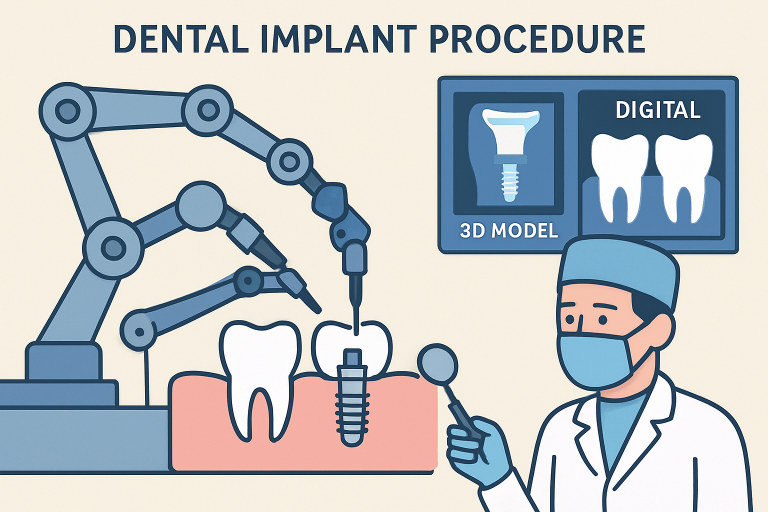
Robotic technology is quickly becoming a hallmark of precision in implant surgeries. Systems like the Yomi robotic platform provide real-time haptic guidance to direct the dental surgeon’s movements during implant placement. Robotic-assisted surgeries consistently deliver greater accuracy and fewer placement errors than traditional freehand techniques or static guides. This results in more predictable clinical outcomes, fewer surgical complications, and improved overall patient outcomes.
3D Printing and Guided Surgery
3D printing is revolutionizing dental surgery by making custom-fit surgical guides available for each patient. Using digital scans, these guides are printed to fit precisely in a patient’s mouth and direct the surgeon’s hand to the planned position, angle, and depth. This approach allows for minimally invasive procedures, often through ‘keyhole’ incisions that are less traumatic to tissues. 3D printing and guided surgery not only make the process safer and faster but also enable more reliable implant outcomes with reduced healing times and recovery complications.
Advancements in Implant Materials
The past decade has seen major changes in the materials used for dental implants. While titanium remains the most widely used, zirconia implants are emerging as a highly aesthetic, metal-free option for patients who wish to avoid metals or have allergies. New titanium alloys are also being developed to support smaller, stronger implants for situations where bone is limited. This reduces the need for extensive bone grafting, making dental implant surgery more accessible to a wider range of patients. The latest materials offer improved biocompatibility, strength, and longevity, supporting long-term oral health and patient satisfaction.
AI and Digital Workflows
Artificial intelligence is playing an ever-larger role in implant dentistry. Modern AI tools are adept at analyzing 3D scans and radiographs, helping dental surgeons identify anatomical features, assess bone density, and determine optimal implant placement and size. AI-powered navigation can also adjust drilling in real time if patient movement is detected, reducing the risk of misplacement. As digital workflows grow more sophisticated, patients receive more personalized care with a higher likelihood of success and fewer clinical surprises along the way.
Minimally Invasive Techniques
Minimally invasive surgery is increasingly becoming the standard of care for implant placement. These techniques use smaller incisions and cause less trauma to the gum and bone. As a result, patients experience less bleeding, swelling, discomfort, and downtime after surgery. Surgeons can more accurately assess bone with new imaging and navigation tools, permitting implant placement through limited openings while still achieving reliable results. This patient-focused advancement is especially important for those concerned about post-operative pain or those with complex medical histories.
Bone Regeneration and Growth Factors
Successful dental implants require sufficient jawbone to anchor the artificial teeth. For patients with bone loss, advancements in bone regeneration are critical. Innovative techniques such as guided bone regeneration, sinus lifts, and the use of platelet-rich fibrin or bone morphogenetic proteins (BMPs) promote natural bone growth and healing. These therapies can significantly improve the likelihood of successful implant integration and long-term stability, offering hope to patients previously considered unsuitable for dental implant surgery.
Immediate Load Implants
Immediate load implants offer faster results by placing a temporary crown or bridge on the day of implant surgery. This approach minimizes the waiting period between surgery and restoration, providing immediate function and esthetics. Success depends on the primary stability of the implant and careful patient selection, but for those eligible, immediate load implants are a convenient solution that significantly shortens the timeline to a confident smile.
Conclusion
Innovation continues to drive the field of oral surgery for implant placement, making the entire process safer, more comfortable, and more predictable. Robotic-assisted methods, digital and AI-supported planning, advanced materials, and bone regeneration have all contributed to raising the standard of care. With ongoing research and the integration of new technologies, the future of dental implantology is exceptionally promising for patients seeking durable, natural-looking tooth replacement solutions.